Ma Ning Reflects on His World Cup Journey and Persistence
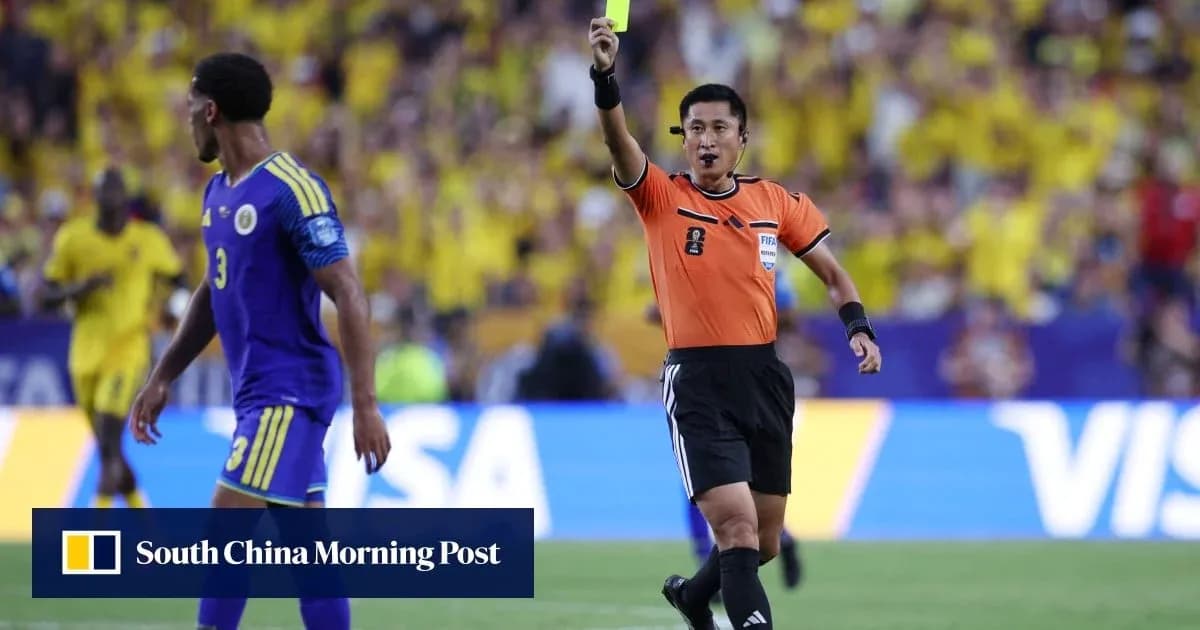
China’s final whistle at this World Cup did not come from a player, a coach, or an official statement. It came from a referee’s farewell video.
Ma Ning and assistant referee Zhou Fei have returned home after being left off Fifa’s list of officials for the semi-finals and the remaining matches of the tournament. Their exit, following video assistant referee Fu Ming’s earlier departure last week, closes the book on China’s on-field involvement in this World Cup.
No Chinese players. No Chinese head coach. For a few weeks, the country’s presence lived in the officials’ fluorescent kits and the sharp blast of Ma’s whistle. Now even that chapter is over.
Final list, final call
Fifa confirmed its trimmed roster of referees for the decisive stages on Sunday. Ma and Zhou were not on it. Their work was done, their assignments completed, their tournament over.
For referees, there is no knockout draw, no dramatic announcement. You simply stop getting games. The call doesn’t come; the email doesn’t land. The silence tells you everything.
Ma accepted that reality with a message that went far beyond the usual polite sign-off. On Monday, he posted a video on Chinese social media, saying goodbye to the World Cup and speaking directly to the people who have watched, criticised, defended and, eventually, respected him.
“Twenty years proving the meaning of persistence”
In the video, Ma looked back on a career that started far from the global spotlight.
“From the campus to the World Cup stage, from youthful ignorance to composure and calm, I have spent 20 years proving the meaning of persistence,” he said.
It was not the language of a man ticking off a bucket-list item. It was the voice of someone who knows how long and how lonely the road to the elite can be for a referee, especially from a country still fighting for football relevance on the world stage.
At 47, Ma is at the upper end of a referee’s prime. He knows it. He addressed it head-on.
“At 47, many people say it is too late, but I always believe that as long as there is faith, we can turn the impossible into the possible.”
Those words carried the weight of every late fitness test, every long-haul flight, every night spent replaying big calls in his head. They also sounded like a quiet challenge to a football culture at home that often questions, ridicules and doubts before it believes.
Family, then football
Ma did not dwell on specific matches or decisions. He went somewhere more personal.
He reserved special thanks for his family, crediting them for the strength that kept him “resolute and fearless” as he chased his ambitions. For referees, whose mistakes are magnified and whose names trend for all the wrong reasons, that support can be the difference between walking away and walking back out for the next game.
This was not a victory lap. It was a nod to the people who saw the bad days as clearly as the good ones and still told him to keep going.
From “card master” to respected official
Then Ma turned to the fans.
Chinese supporters have not always treated him kindly. His reputation as a strict disciplinarian earned him the nickname “card master”, a label that followed him from the domestic league to the international stage.
Instead of bristling at it, he folded it into his story.
“From teasing me as the ‘card master’ to recognising my officiating standard, it is your rationality and tolerance that have shown me the most lovely side of Chinese football,” he said.
That line cut through the usual distance between referee and crowd. It acknowledged the jokes, the memes, the anger. It also acknowledged something rarer: a fan base willing, over time, to separate emotion from evaluation and to accept that a referee doing his job well is part of a serious football culture.
“You are not only watching the games,” he added, “but also truly understanding the value of refereeing.”
For a sport that often treats officials as necessary villains, those words landed as both appreciation and a quiet plea. If China wants to grow in football, it must grow in how it sees referees too.
China’s World Cup role, for now
With Ma, Zhou and Fu all back home, China’s direct involvement in this World Cup is officially over. No more Chinese officials in the VAR booth. No more Chinese accents in the referee team briefings. The tournament will reach its climax without them.
Yet the image that lingers is not of a missed call or a controversial booking. It is of a 47-year-old referee, standing in front of a camera, talking about faith, persistence and a two-decade climb from campus pitches to the sport’s biggest stage.
China’s national team is still watching this World Cup from afar. Its referees, for a brief moment, stood in the centre circle. The question now is simple: who in Chinese football will be next to follow that path, and will the country be ready to match that level not just with the whistle, but with the ball?