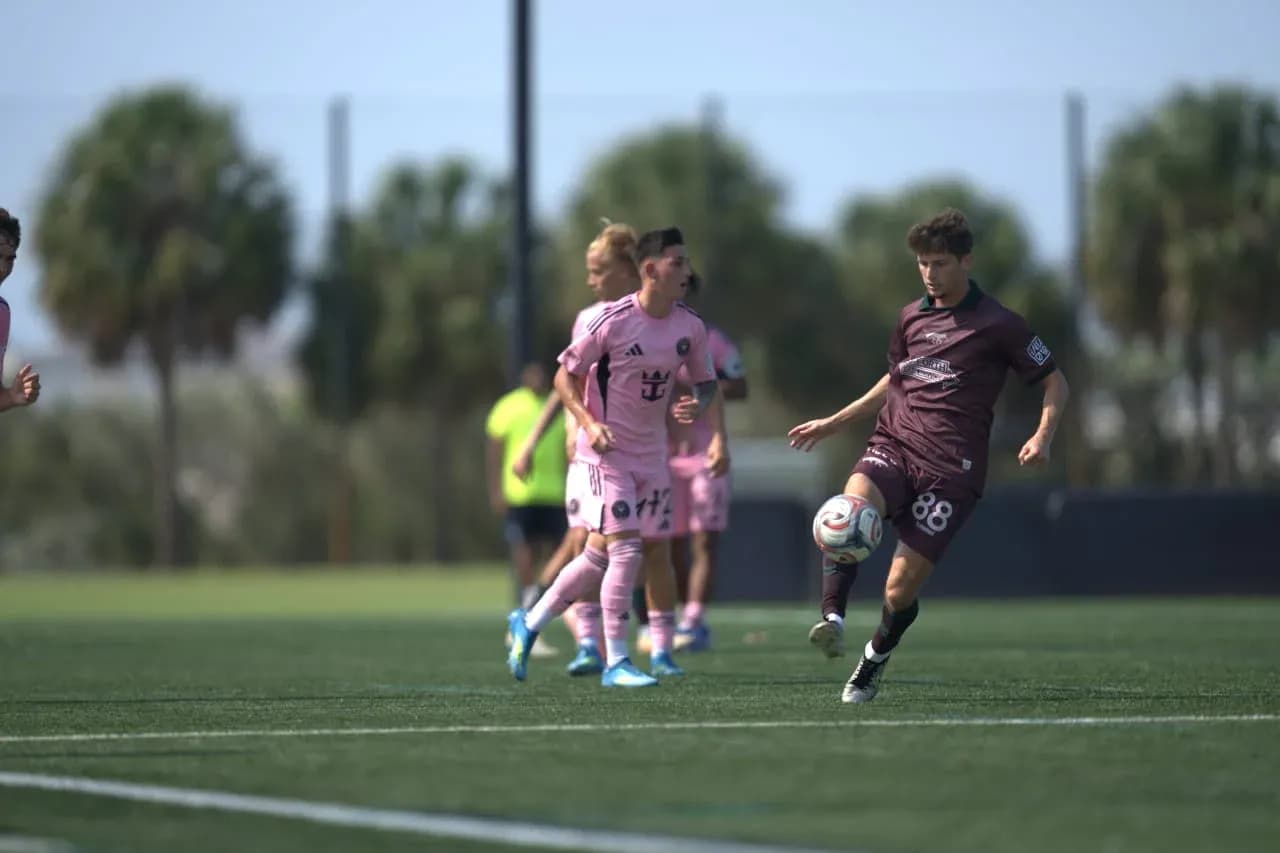
Los Angeles FC II vs St. Louis City II: A Penalty Thriller
Titan Stadium under the lights, 120 minutes in the legs, and a penalty shootout to split two of MLS Next Pro’s most volatile young sides. Following this result, Los Angeles FC II edge St. Louis City II 7-6 on penalties after a 1-1 draw, a scoreline that barely hints at the collision of styles and temperaments on display.
I. The Big Picture: Two Contenders with Different Flaws
Heading into this game, the standings framed it as a clash of heavyweights. Los Angeles FC II sat 1st in the Pacific Division and 4th in the Eastern Conference group with 21 points from 12 matches, but with a negative overall goal difference of -1 (22 scored, 23 conceded). On their travels they had been fragile, yet at home they were a different beast: 5 wins from 6, with 11 goals for and 7 against.
St. Louis City II arrived as a form paradox. In the Frontier Division they were 3rd, and also 3rd in the Eastern Conference group with 24 points from 12, boasting a positive overall goal difference of 6 (23 scored, 17 conceded). Their season split into two clear acts: an eight-game winning streak followed by a four-game losing run, a side oscillating between ruthless efficiency and alarming vulnerability.
Statistically, both teams came in with sharp attacking profiles. Overall, Los Angeles FC II averaged 2.0 goals for and 2.1 goals against per match, while St. Louis City II posted 2.1 goals for and 1.6 against. At home, Los Angeles FC II were scoring 2.0 and conceding 1.2 per match; on their travels, St. Louis City II were scoring 1.5 and conceding 1.7. This was never going to be a cagey stalemate by design; if it became one, it would be the product of tension and fatigue rather than caution.
II. Tactical Voids and Disciplinary Shadows
With no official absences listed, both coaches had their full squads available, yet the lineups revealed as much about identity as any missing name might have. Los Angeles FC II’s starting group leaned into technical and transitional profiles: E. Scally and C. Kosakoff offered width and energy, while the presence of T. Mihalic and M. Evans hinted at a front line built to attack space and press high. Behind them, S. Nava and J. Terry suggested a midfield willing to trade structure for aggression.
St. Louis City II’s XI looked more balanced on paper. The spine of P. Ault, C. Pearson, and P. McDonald promised aerial presence and defensive discipline, while A. Gbadehan and R. Lynch brought legs and ball-carrying options between the lines. Out wide, E. Carlock and L. Cornelius were tasked with stretching the game and testing Los Angeles FC II’s fullbacks.
Yet the deeper tactical void for both sides this season has not been personnel but discipline. Heading into this game, Los Angeles FC II had not kept a single clean sheet in total, and their card profile was telling: 30.43% of their yellows arrived between 46-60 minutes, with another 17.39% in the final 15 of regulation. St. Louis City II were scarcely more restrained, with a combined 51.86% of their yellows coming between 46-75 minutes. Both teams also carried a red-card risk in that same window, with St. Louis City II showing reds in the 46-60, 61-75, and 76-90 ranges across the season.
In a knockout environment, that mid-second-half storm was always likely to shape substitutions and tempo. Coaches had to manage not just legs, but emotional spikes.
III. Key Matchups: Hunter vs Shield, Engine Room vs Enforcer
Without official top-scorer data, the “Hunter vs Shield” battle in this fixture was more about collective profiles than a single marksman. For Los Angeles FC II, the attacking threat was spread across a fluid front unit: Mihalic’s movement, Evans’ ability to link, and E. Rodriguez’s willingness to drift into pockets forced St. Louis City II’s back line to defend horizontally as much as vertically.
The “Shield” for St. Louis City II was their season-long defensive record: only 19 goals conceded overall, with 10 on their travels. Players like Ault and Pearson were central to that. Ault’s presence at the back allowed the visitors to hold a slightly higher line, trusting his reading of long balls into Mihalic and Kosakoff. Pearson, operating in the defensive unit, had to manage the channels where Los Angeles FC II like to overload with wide runners.
In the “Engine Room” duel, S. Nava and J. Terry were pitted against McDonald and Gbadehan. Nava and Terry’s mandate was to keep Los Angeles FC II on the front foot, accepting the risk that their side, which had already conceded 25 goals overall, might be exposed in transition. McDonald and Gbadehan, by contrast, were tasked with turning St. Louis City II’s more controlled attacking numbers into territorial dominance, especially given that on their travels they averaged 1.5 goals for but only 1.7 against.
The game’s 1-1 scoreline after 90 and 120 minutes suggests neither midfield truly suffocated the other. Instead, the contest swung in phases: periods where Los Angeles FC II’s pressing hemmed St. Louis City II in, followed by stretches where the visitors’ more mature structure forced the hosts deeper and probed for errors.
IV. Statistical Prognosis and the Penalty Denouement
From a pure numbers lens, St. Louis City II might have been slight favorites heading into this game. Overall, they had a better goal difference (+6 versus Los Angeles FC II’s -1), more points (24 to 21), and a stronger defensive record both home and away. Their 3 clean sheets in total, compared to Los Angeles FC II’s 0, suggested a side more capable of managing tight knockout margins.
Yet the venue and attacking rhythm tilted the balance back toward Los Angeles FC II. At home they were scoring 2.0 goals per match and conceding only 1.2, and their form line—WLLLWLWLWWWW—revealed a team that had found a late surge of wins after turbulence. St. Louis City II’s recent “LLLLW” sequence hinted at a group searching for the certainty that had defined their eight-game winning streak.
In open play, the expected goals narrative would likely reflect that tension: Los Angeles FC II generating volume through pressure and transitions, St. Louis City II crafting fewer but cleaner looks through structured build-up. Defensively, neither side carried the profile of a lockdown unit; both were more “bend and hope not to break” than impermeable.
Ultimately, it was fitting that this contest went to penalties. Los Angeles FC II, who had not been awarded a penalty in total this season according to the data, were thrown into a high-stakes shootout against a side that had scored their only penalty of the campaign with a 100.00% record. The shootout flipped that script: St. Louis City II’s prior perfection from the spot offered no guarantee when fatigue, pressure, and the long walk from halfway entered the equation.
Following this result, Los Angeles FC II emerge not just as group leaders on paper, but as a side hardened by crisis moments—comfortable in chaos, resilient under duress. St. Louis City II leave with their underlying numbers still strong, but with another reminder that in knockout football, the margins between dominance and heartbreak can be measured in a single kick from twelve yards.