Kylian Mbappé Eyes World Cup Glory Amid Record Chase
Kylian Mbappé is hunting history, but he has his eyes fixed on a different prize.
The French forward moved to within one goal of Lionel Messi’s all-time World Cup scoring record on Tuesday night, yet every time he spoke, every time he gestured, the message was the same: July 19 in New York, the final, the trophy. The rest is noise.
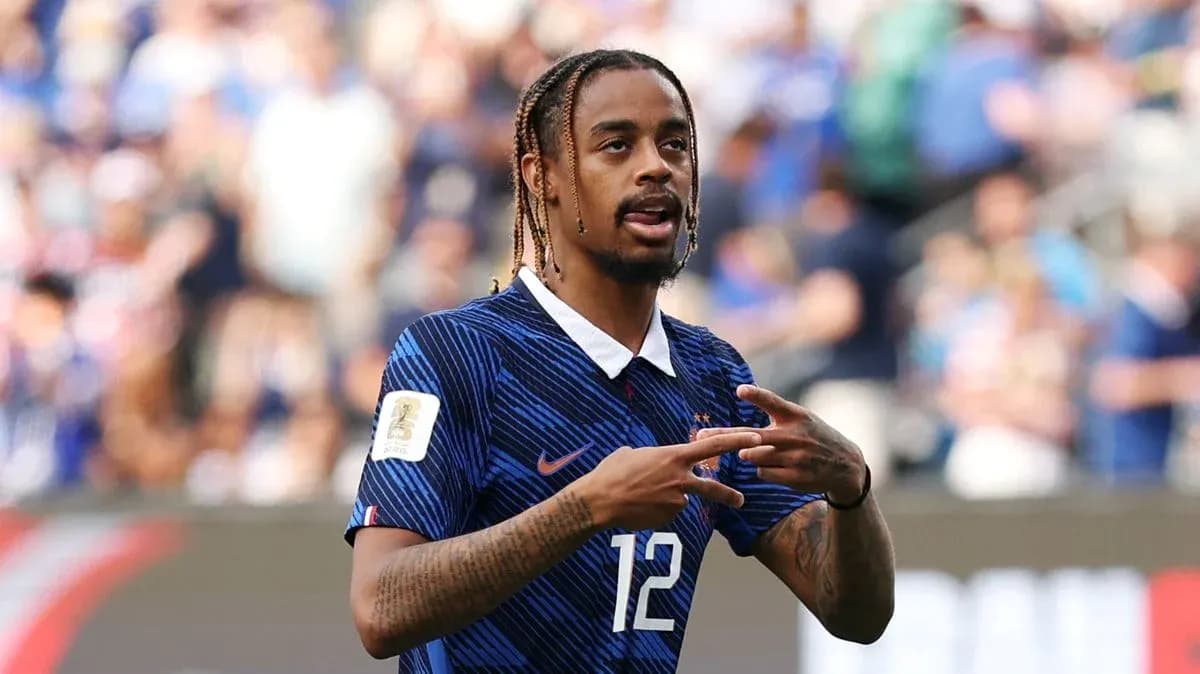
In Philadelphia, Mbappé scored twice as France swept aside Sweden 3-0 in the round of 32, a performance that felt as ruthless as it was routine. Those goals took him to 18 in 18 World Cup games, one shy of Messi’s record 19, and level with the Argentine on six strikes at this tournament.
“I think the goal is to go as far as possible – to make it to July 19th and come back here,” he told reporters, brushing off the personal chase. The numbers scream for attention; Mbappé refuses to.
He acknowledged the obvious – goals drag you up the rankings – but quickly turned the spotlight away. Messi, he insisted, will “score more goals,” and that is why he prefers to think about the opponents in front of France and the path to the final. The duel on the scoring charts is a global storyline; inside the French camp, it is treated like a subplot.
Messi’s Argentina now face Cape Verde in the last 32, a mismatch on paper. France, meanwhile, step into something far more awkward: Paraguay in Philadelphia on Saturday, a team that has already shown how to suffocate giants.
Paraguay’s ultra-defensive masterclass against Germany – and the penalty shootout that sent the four-time champions home – has been replayed across every analyst’s screen this week. There is no expectation they will suddenly turn into entertainers against Mbappé and company.
France know it. Mbappé made sure to underline it.
“We’ll keep working between now and the Paraguay match to see what we can improve, because there are still some sequences that aren't quite clear enough,” he said. “There’s room for improvement.” The scoreline against Sweden suggests comfort; the tone from the dressing room suggests anything but complacency.
What France do have is firepower. “Our ability to score goals means we always have the chance to take the lead in matches,” Mbappé added. In knockout football, that edge often decides everything.
Belgium’s reset, Senegal’s shot
Elsewhere, another European heavyweight is trying to redefine its story.
Belgium arrived at this World Cup under the long shadow of 2018’s high and 2022’s low – a bronze medal in Russia followed by a group-stage exit in Qatar. This time, they have cleared the first hurdle with authority, topping Group G after a 5-1 demolition of New Zealand on Friday.
Coach Rudi Garcia set a simple target for the group stage: finish first. Job done. Now comes the part that has haunted this so-called golden generation – the knockout rounds.
On Wednesday, Belgium meet Senegal in the last 32, a tie that looks straightforward on paper but feels anything but after the chaos of recent days. Belgium took one win and two draws from their group, steady rather than spectacular, but Garcia sounded content with the platform.
“We wanted to finish first in the group stage and we succeeded,” he said. “Now it is time for the knockout phase. Senegal is a big team. But you have to beat them, too, if you want to go far in a World Cup.”
Senegal arrive as the third-placed side from a brutal Group I, emerging with three points and a plus-2 goal difference from a section that included tournament favorite France and an Erling Haaland-led Norway. That alone demands respect.
Romelu Lukaku, who knows a trap when he sees one, did not dress this up.
“Senegal has a lot of top-level players, and the coach is, too. I think it’s 50-50. We really shouldn’t underestimate them,” he said.
Events elsewhere have already underlined the danger of doing so. Germany, four-time world champions, were ambushed by Paraguay and knocked out on penalties. The Netherlands, another European heavyweight, were dumped out by Morocco in their earliest World Cup exit.
Belgium have been warned in real time.
“It doesn’t matter who the favorite is,” forward Charles De Ketelaere insisted. “We have confidence and need to be sharp. Yesterday showed that it doesn’t matter if you are the favorite.”
Belgium’s defensive platform has been solid so far, with Thibaut Courtois conceding just two goals in three games. That will be tested by a Senegal side riding the high of a 5-0 rout of Iraq, led by Sadio Mané and brimming with attacking intent.
Senegal’s problem lies at the other end. First-choice goalkeeper Édouard Mendy, injured in a 3-2 defeat to Norway, will not feature. Coach Pape Thiaw confirmed that reserve Mory Diaw, who kept a clean sheet against Iraq, is set to start again.
“Mory had a great performance,” Thiaw said. “He kept a clean sheet and I think as the goalkeeper tomorrow, we hope that we’ll also come up with a clean sheet.”
The mood in the Senegal camp is not one of deference. Monday’s shocks have emboldened them.
“It’s not because you finished top of your group that you’re not going to be knocked out in the next round,” Thiaw said. “That’s exactly what happened with the Netherlands. It’s another tournament starting. We are looking for the win tomorrow so that we can continue our journey.”
Belgium have received a minor boost at the back, with center back Zeno Debast finally back in full training after a left leg injury and MRI checks. He worked with tape on his left knee on Tuesday, but Garcia has no intention of rushing him.
“Zeno Debast is with the group, but tomorrow is still too soon,” the coach said. “He is making progress, though. He still needs time to get fully fit. I am very satisfied with the defenders we have already called upon.”
The golden generation’s window is narrowing. Senegal, in Seattle, will test just how much is left in those legs.
England walk the tightrope, USA brace for a watershed night
If Europe’s giants needed a reminder of the World Cup’s cruelty, Germany and the Netherlands provided it. England have been watching.
On Wednesday, the Three Lions face the Democratic Republic of Congo in Atlanta, a last-16 place on the line and a 60-year wait for a major trophy still hanging over them. Two traditional powers are already gone. England are desperate not to join them.
Thomas Tuchel did not dodge the reality of the situation.
“I think we can just accept it, we are the favorites (against DR Congo),” he said. Then came the caution. “The games so far in round of 32 speak a very clear language. It’s narrow, narrow margins.”
England will lean heavily on Jude Bellingham and Harry Kane, their twin pillars in midfield and attack. At the back, they will be without influential defender Reece James, ruled out through injury, a significant blow against a side that can hurt you on the break.
DR Congo, though, are playing with house money. Few expected them to emerge from their group. Their squad is a tapestry of the global game: 20 of the 26 players were born outside the country, many in France, including Premier League forward Yoane Wissa. Aaron Wan-Bissaka and Axel Tuanzebe, both born in England and former England youth internationals, add another twist.
Coach Sébastien Desabre made it clear where he thinks the burden lies.
“Our World Cup is already a success relative to our goals,” he said. “The pressure is on the England team.”
If England needed a psychological test before the footballing one, this is it.
Across the Atlantic, another nation is confronting its own moment of truth.
The USA’s clash with Bosnia-Herzegovina in the San Francisco Bay Area is being billed as the biggest game in the country’s football history. The numbers match the hype: up to 30 million Americans are expected to tune in for a primetime knockout tie, as Christian Pulisic and his teammates chase the nation’s first World Cup knockout win in almost 25 years.
“Everyone knows in the back of our minds what this could do for this country,” midfielder Gio Reyna said. He spoke of a nation “rallying around” the team, of momentum already felt during the group stage, and of what “a nice run in this tournament” could do for the sport’s place in American life.
This is about more than a result. It is about a shift.
France purr, Haaland breaks through
Back on the pitch, France delivered one of the tournament’s most complete attacking displays in their dismissal of Sweden. Mbappé’s brace took the headlines, his tally in this World Cup now up to six, but the night carried a deeper emotional weight.
After one of his goals, Mbappé and his teammates sprinted straight to Didier Deschamps on the touchline, wrapping their coach in a long embrace. Deschamps is still grieving the death of his mother this month. The celebration was not choreographed; it was instinctive.
“I think that reflects the spirit of this group – it’s part of our DNA. We are all together,” Mbappé told broadcaster beIN Sports. He acknowledged the pain his coach has carried into this tournament. “We know the coach has been through a difficult experience; unfortunately, everyone goes through that at some point and it’s very hard.”
France looked united, sharp, and merciless. Paraguay will not care. They have already shown they can drag a giant into deep water.
On the other side of the bracket, Erling Haaland finally has his World Cup breakthrough. The Norway striker poked home the decisive goal in a 2-1 win over Ivory Coast, a strike that carried his country into the last 16 for the first time.
Mbappé chasing Messi. Belgium clinging to their window. England tiptoeing through a minefield. The USA staring at a night that could change everything.
The World Cup is starting to bare its teeth.