Korea's World Cup Countdown: A Team in Turmoil
Thirty days to go, and Korea walks into a World Cup with the mood of a team on trial rather than on tour.
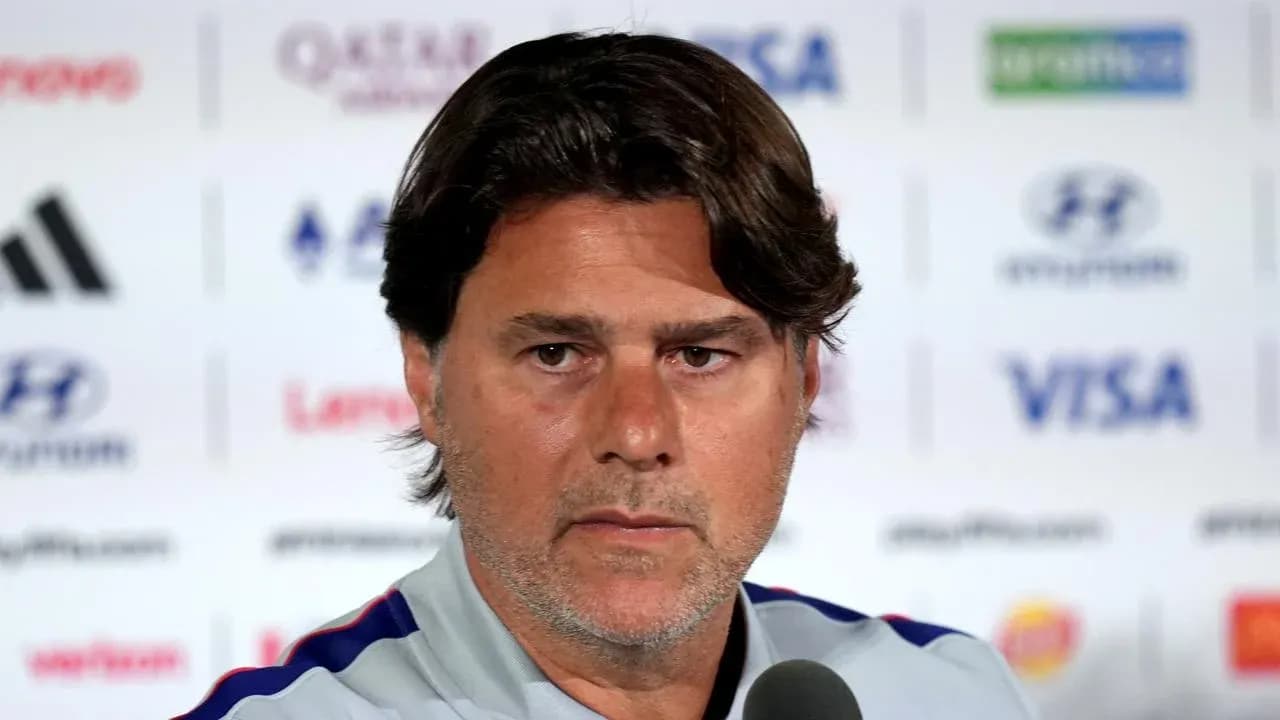
The countdown has hit the one‑month mark in Korea, but the usual swell of optimism around the men’s national team has been replaced by suspicion, fatigue and, at times, open revolt. Since the controversial appointment of Hong Myung-bo in the summer of 2024, the Taegeuk Warriors have been playing under a cloud of discontent they cannot quite clear.
A coach under fire, and stands that speak
The backlash began early and loudly. When fans did turn up, they did not come to celebrate. They came to boo.
Hong has been targeted relentlessly, with jeers raining down from packed stands and banners demanding the resignation of Korea Football Association president Chung Mong-gyu. The anger has not been subtle. It has been sustained.
Then came the more damning verdict: silence.
On Oct. 14 last year, only 22,206 fans drifted into the 66,000-seat Seoul World Cup Stadium for a friendly against Paraguay – the smallest crowd for a men’s international in a decade. A month later, 33,256 showed up for Ghana at the same ground. Respectable numbers on paper, but in a country that routinely fills stadiums for the national team, they felt like a protest.
Korea won both of those games, and another against Bolivia in Daejeon in between, backed by around 33,000 supporters. The results looked fine on a fixture list. The performances did not. The team stumbled through those friendlies without conviction, and when the World Cup year finally began, the warning signs turned into alarms.
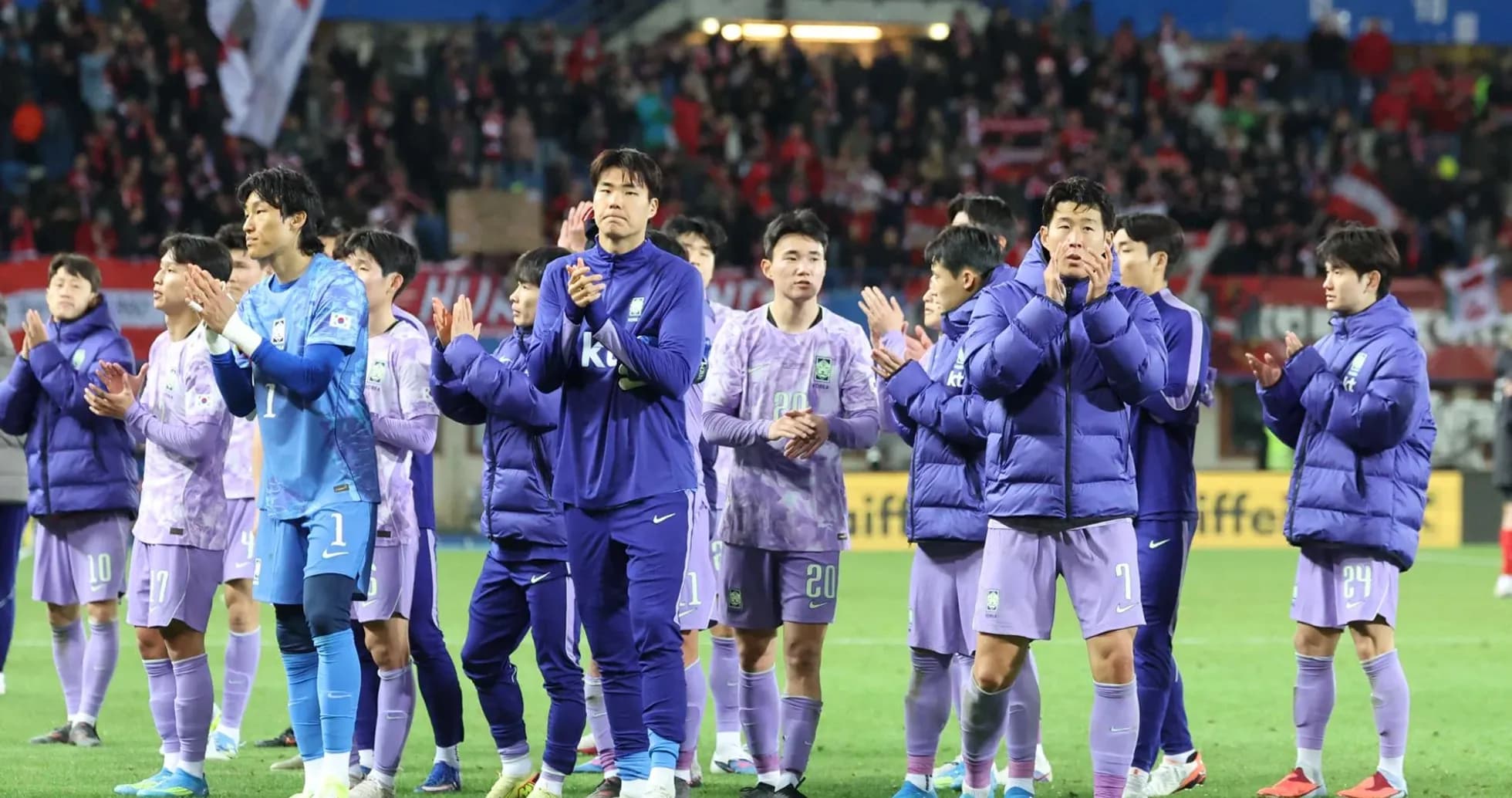
A 4-0 hammering by Ivory Coast on March 28. A 1-0 defeat to Austria three days later. Two away friendlies, two losses, and a fan base that had already started to lose faith saw little reason to believe.
A soft group, a hard sell
On paper, the draw has been kind. Korea, ranked 25th in the world, landed in Group A with Mexico (15th), Czechia (41st) and South Africa (60th). Many pundits have labelled it one of the softer pools of the expanded tournament.
The schedule adds another layer of comfort. Korea open against Czechia in Guadalajara at 8 p.m. on June 11 (11 a.m. on June 12 in Korea), stay in the same city for Mexico at 7 p.m. on June 18 (10 a.m. on June 19 in Korea), then head to Monterrey to face South Africa at 7 p.m. on June 24 (10 a.m. on June 25 in Korea).
Three group matches, all in Mexico. Two in the same city. Minimal travel in a World Cup spread across Mexico, Canada and the United States. Logistically, it is as gentle a route as Korea could have hoped for.
This is also a different kind of World Cup. Forty-eight nations instead of 32. Twelve groups. A round of 32 that welcomes the top two teams from each group plus the eight best third-placed sides. With that structure, simply escaping the group stage is no longer the Everest it once was.
Put those factors together and the consensus among many experts is blunt: Korea should get out of the group. What happens after that is where the debate begins.
History, hope and a fragile core
This will be Korea’s 11th consecutive World Cup. Away from home, they have twice made it past the group stage: in South Africa in 2010 and in Qatar in 2022. That pedigree, coupled with a forgiving draw, has some analysts backing a familiar path.
“I think Korea will get to at least the round of 16,” said television analyst Kim Dae-gil. His reasoning is cold and calculated. “Just looking at the group stage opponents, Korea won't have to expend as much energy as in some previous tournaments. We can beat Czechia and South Africa six times out of 10. And if we qualify for the knockouts as the top seed or No. 2 seed, then we will meet a beatable opponent in the round of 32.”
Kim points to the obvious pillars. Captain Son Heung-min, now at Los Angeles Football Club, and Paris Saint-Germain midfielder Lee Kang-in give Korea genuine star power. They are the “game changers,” as Kim calls them, the players who can conjure chances from scraps.
But his optimism comes with a warning label.
“The gap between the starters and backups is substantial,” he said. If Korea are to push beyond the round of 16, he believes, the supporting cast must rise. The regulars need help. Above all, Son and Lee must stay fit. There is little margin for injury in a squad so top-heavy.
Injuries, form and a thinning elite
Not everyone shares Kim’s relatively upbeat outlook.
Analyst Seo Hyung-wook has already scaled back his expectations. He had initially pencilled Korea in for the round of 16. Now, with key midfielder Hwang In-beom nursing an ankle injury, he has shifted his prediction down to an exit in the round of 32.
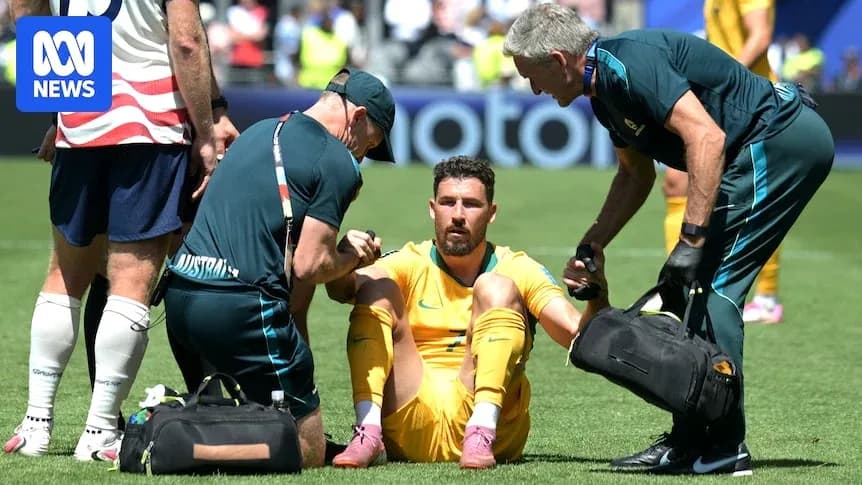
Hwang, the two-way heartbeat of this side, hurt his right ankle in March playing for Feyenoord. He is rehabbing with help from the national team medical staff, but his importance is such that any limitation feels like a structural problem, not a minor inconvenience.
“Other mainstays have not been playing well,” Seo said. Lee Kang-in and Bayern Munich defender Kim Min-jae have not been getting regular minutes at club level. That lack of rhythm looms over Korea’s preparations.
Seo still sees a strength in the chemistry among the Europe-based core – Son, Lee, Kim and others who have built an understanding over years together. Yet he circles back to the same issue.
“The problem is there just aren't many of them,” he said. “At this moment, I don't think you could say anyone can play at a world-class level at the World Cup.”
It is a brutal assessment. It is also hard to argue with when the team’s form and fitness charts are laid side by side.
Style questions and a decisive opener
Analyst Park Chan-ha arrives at a similar conclusion to Seo. For him, Korea’s journey ends in the round of 32.
“Hong Myung-bo's team has some talented players,” Park said. “And yet, they often have trouble creating scoring chances. The team relies on players' individual skills to try to capitalize on those few opportunities, but you can only do so much of that at the World Cup. I think we already saw problems with this approach in the two losses in March.”
The defeats to Ivory Coast and Austria did not just dent confidence; they exposed tactical fault lines. A side that leans heavily on individual inspiration will always be vulnerable when opponents close space, slow the tempo and refuse to open up.
Park believes all of that makes the first match against Czechia absolutely pivotal.
“I think the first match against Czechia will be the most important one,” he said. “This is the one Korea must win, and they will be in trouble if they don't get it done. Czechia are not an offensive-minded team, and Korea may have difficulty breaking through their defense.”
If Hwang cannot play or is clearly limited, Park expects those attacking issues to deepen. A cautious Czech side, a Korea team struggling to create, and a tournament opener already carrying the weight of a knockout tie.
Seo echoes that sense of jeopardy.
“In our World Cup history, the outcome of the first match often determined the fate for the rest of the tournament,” he said. With Mexico looming in the second game, he sees little room for error. “Mexico will be a tough test in the second match, and if we don't win the first match, we will be in big trouble.”
Kim Dae-gil, though, looks at the same schedule and circles a different date.
For him, the Mexico game will shape everything. “I think Korea and Mexico will battle for the top spot in the group,” he said. Beat Czechia, handle South Africa, and the clash with Mexico becomes more than a hurdle. It becomes a statement opportunity.
So Korea stand here: a favourable draw, a forgiving format, a restless public, a fragile squad. Thirty days to kick-off, and a simple, ruthless question hangs over Hong Myung-bo and his players.
Is this the start of another deep run, or the moment the discontent in the stands is finally matched on the world’s biggest stage?