India's Challenges at Unity Cup 2026: A Depleted Squad Faces Jamaica
India head to London light on numbers, heavy on questions. The Unity Cup 2026, a compact four-team invitational at The Valley, will offer answers very quickly.
On Thursday, just after midnight in India, Khalid Jamil will send out a depleted national side against Jamaica in the second semi-final. A team ranked 136 in the world against the Reggae Boyz at 71. On paper, the gap is clear. On the pitch, India will try to turn scarcity into edge.
India return to Britain with a bare-bones squad
This is India’s first outing on British soil since 2002. It should have been a landmark moment. Instead, the build-up has been dominated by withdrawals and absences.
Mohun Bagan Super Giant pulled seven players out of the national camp midway through preparations, shredding Jamil’s plans and, crucially, his midfield.
Lalengmawia Ralte, Sahal Abdul Samad, Anirudh Thapa, Vishal Kaith, Abhishek Singh Tekcham, Manvir Singh and Liston Colaco are all missing from the London squad. Add Ashique Kuruniyan’s injury to that list and the spine of the side looks worryingly thin.
Jamil now walks into an international tournament with only 18 players. For a coach who likes structure and balance, this is a tactical jigsaw with several pieces gone missing.
Midfield stripped, youngsters thrown in
The damage is most obvious in the middle of the park. India arrive with just three specialist midfielders: Jeakson Singh Thounaojam, Noufal PN and Ricky Shabong.
Jeakson carries experience and responsibility. The other two carry uncertainty and potential. Noufal and Ricky are yet to win a senior cap; their first taste of international football could come against a physically strong, athletic Jamaican side on neutral territory.
There is no safety net. If the game stretches, if legs tire, Jamil’s options are brutally limited. One injury or early booking could force a complete reshuffle.
Yet this is where international careers often begin. A late tackle, a clean interception, a brave forward pass under pressure – the kind of details that stick in a coach’s mind long after a tournament ends.
Gurpreet, Jhingan and a familiar backbone
India do at least retain experience in the areas that matter most under pressure.
Gurpreet Singh Sandhu anchors the goalkeeping group, joined by Hrithik Tiwari and Albino Gomes. In front of him, Sandesh Jhingan leads a defensive unit that also includes Rahul Bheke, Nikhil Poojary, Roshan Singh Naorem, Akash Mishra, Bijoy Varghese and Pramveer.
The back line will have to absorb long spells without the ball. Nigeria (ranked 26th) and Zimbabwe (130th), who meet in the first semi-final, bring their own threats, but Jamaica’s pace and direct running are the immediate concern.
If India are to survive, Gurpreet’s command of his box and Jhingan’s organisation will need to be close to flawless.
Goals must come from a lean attack
Up front, Jamil turns to a mix of proven quality and fresh momentum.
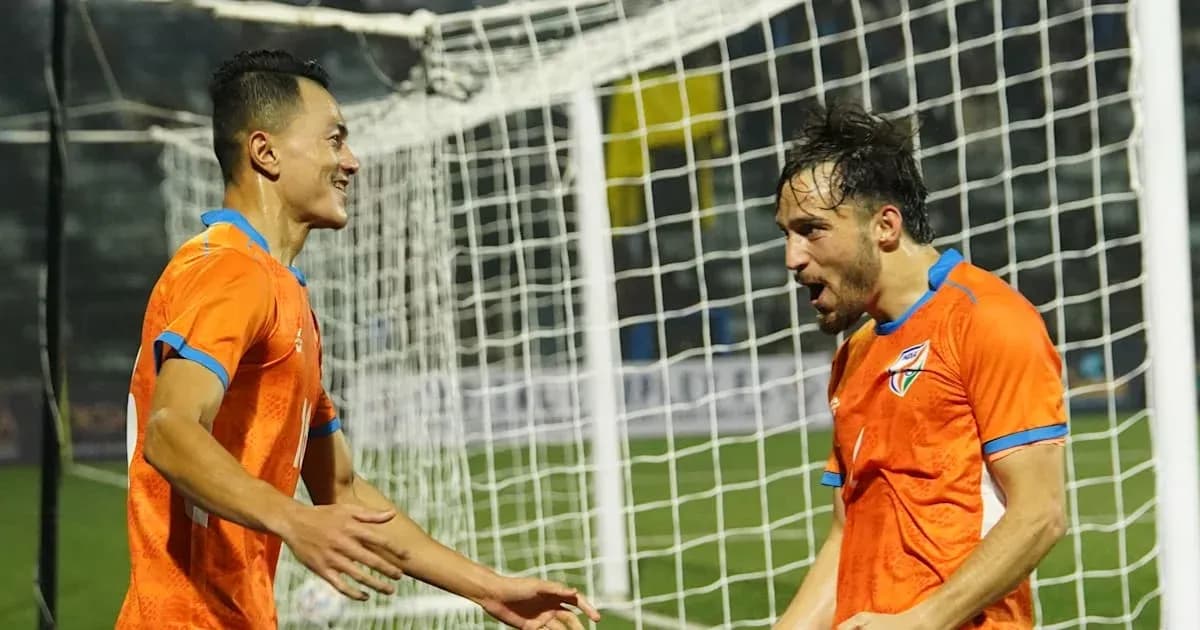
Ryan Williams and Lallianzuala Chhangte will spearhead the attack. Chhangte’s ability to carry the ball and attack full-backs gives India an outlet when they are pinned back. Williams, with his movement and link play, becomes vital in knitting together a midfield that may struggle to hold the ball.
Edmund Lalrindika arrives buoyed by an ISL-winning campaign with East Bengal and will look to ride that form in national colours. Rahim Ali and Farukh Choudhary round out the forward options, giving Jamil a handful of different profiles but not a lot of depth.
With such a thin squad, every attacking decision carries weight. Do India sit deep and counter, leaning on Chhangte’s speed? Or do they try to keep the ball and risk exposing an inexperienced midfield?
A sharp format, no room for error
The Unity Cup’s format is ruthless in its simplicity. Four teams. Two semi-finals. Winners meet in the final, losers drop into a third-place play-off.
All matches are at The Valley, home of Charlton Athletic FC, turning the London ground into a brief crossroads for Asian, African and Caribbean football.
Nigeria face Zimbabwe at 12:00 AM IST on Wednesday, May 27. Jamaica meet India at 12:00 AM IST on Thursday, May 28. The third-place play-off and final follow on Saturday, May 30, with kick-off times yet to be confirmed.
For Indian fans back home, every minute streams live on FanCode. There is no television broadcast, so the entire campaign lives online.
A test of depth, resolve and direction
Strip away the noise and the picture is stark. A reduced 18-man squad. A gutted midfield. Two uncapped players thrown into a key area. A higher-ranked opponent in the opening game. And behind all of that, the bigger question: what does this say about India’s ability to navigate club-country fault lines and still compete?
The stage is set in south-east London. The Valley will not be full of Indian supporters, the conditions will not be familiar, and the margin for error is almost non-existent.
But for Gurpreet, Jhingan, Chhangte and a clutch of newcomers, this is more than a short tournament. It is a chance to show that, even stripped down and short-handed, India can still land a punch when the football world isn’t looking.