FIFA Revises World Cup Water Bottle Policy Amid Fan Backlash
FIFA has rowed back on its controversial World Cup water bottle policy, allowing supporters to bring a single disposable bottle into stadiums in the USA and Canada after a wave of criticism over fan safety and costs.
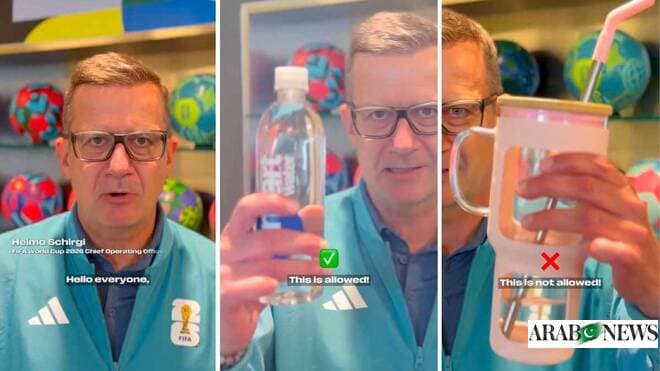
In a video posted on FIFA’s X account on Friday, World Cup chief operating officer Heimo Schirgi confirmed that every fan will now be allowed to carry in “one, soft, plastic 20 ounces (590ml), factory sealed disposable water bottle” at any FIFA World Cup 2026 match in the United States and Canada.
The governing body framed the move as a “clarification” rather than a U-turn, but the timing tells its own story. Just two days earlier, FIFA had updated its official stadium code of conduct to ban all refillable bottles, a shift that left supporters furious at the prospect of having to buy all their water inside venues.
The initial stance was justified on security grounds. FIFA argued that outside bottles are already prohibited at several host venues and said it was simply applying that standard “across its tournament stadiums” to “prevent risk and injury to players and attendees.”
Those safety concerns, FIFA insists, have not gone away. Schirgi stressed that “fans will not be permitted to bring in hard sided, reusable water bottles due to safety and security reasons,” and in the video he held up examples of what will and will not be allowed through the turnstiles.
So the compromise is clear: soft, sealed, disposable plastic in; solid, reusable containers out.
The debate arrives against a worrying backdrop. Forecasters have warned that fans could face genuine health risks from extreme heat at open-air venues across the 2026 tournament, which will be co-hosted by the United States, Canada and Mexico.
Research from the World Weather Attribution group, published last month, estimated that 26 of the 104 World Cup matches are likely to be played in conditions where the Wet Bulb Global Temperature (WBGT) exceeds 26 degrees. WBGT is a composite measure of heat stress on the human body, factoring in temperature, humidity, wind and sunlight. Once it climbs, the strain on players and supporters rises sharply.
The warning is not theoretical. At last year’s FIFA Club World Cup in the United States, fans complained of searing temperatures and were still barred from bringing water bottles into stadiums. The images of sweltering supporters, stuck buying expensive drinks or queuing at limited hydration points, have lingered.
This time, FIFA has been keen to stress the infrastructure that will be in place. The organization says misting stations, fans, hydration stations and cooling tents will be available “in the stadium footprint” to help spectators cope with the heat.
Inside the venues, bottled water will be sold at prices that, according to FIFA, “remain consistent with other events held at each stadium.” That line is unlikely to quiet every critic, but it signals that the tournament organizer will lean heavily on local pricing norms rather than impose a uniform World Cup tariff.
The new guidance does not solve every concern about heat, safety and cost at a World Cup spread across a vast continent and a range of climates. It does, however, mark a rare and rapid adjustment from FIFA in response to fan outcry, with the battle over what supporters can carry through the gates now settled, at least on paper, long before the first ball is kicked.