England's World Cup Journey: Tuchel's Tactical Dilemma
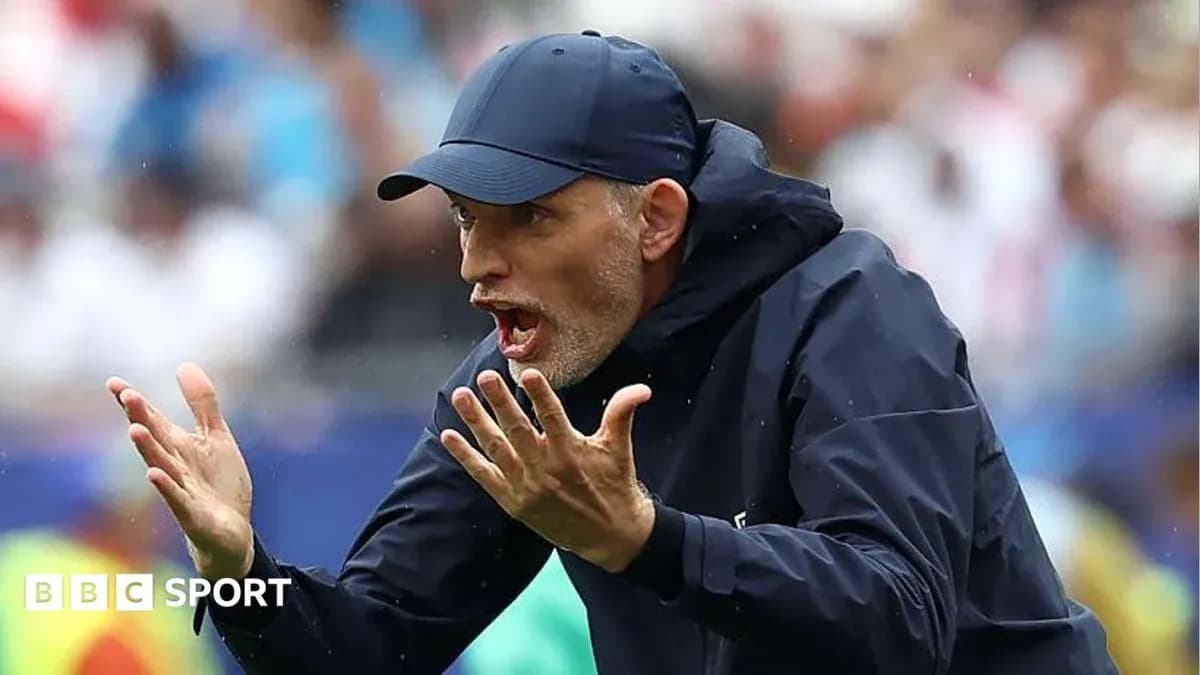
Thomas Tuchel has always loved a storyline. Now his England team have reached the part of the script where one wrong line sends them home.
The World Cup knockout stage, as he calls it, is “the third chapter” of a tale he hopes ends with a trophy England have not touched since 1966. Chapter One was the hard running and heat of Miami. Chapter Two, the group stage, brought top spot in Group L but little in the way of theatre: workmanlike wins over Croatia and Panama wrapped around a flat, goalless draw with Ghana.
Now comes the dangerous bit. Lose once and the book slams shut.
On Wednesday in Atlanta, under the closed roof and cool, conditioned air of the $1.6bn Atlanta Stadium, England face DR Congo in the last 32. The setting is futuristic; the jeopardy is old-fashioned. This is sudden death in a World Cup that has already turned on some of its biggest names.
Defensive fault line
For all Tuchel’s talk of chapters and arcs, one theme has run through England’s tournament: a defence that looks one injury away from collapse.
“The area of the pitch you want stability in is your goalkeeper and back four,” Wayne Rooney told BBC Sport. “With the back four we haven’t had that.” He is right. Jordan Pickford is the one constant. Everything in front of him has been shuffled, patched and reimagined.
The warnings were there before a ball was kicked. Tino Livramento’s fitness issues. Reece James’ long record of breakdowns. Livramento never made it to the tournament. James did, only to suffer a hamstring problem against Croatia that surprised Tuchel, but few others.
When Jarell Quansah, James’ deputy at right-back, then limped off against Panama, the thin ice turned transparent. Both James and Quansah are out of the DR Congo tie. Tuchel insists “they are getting closer and closer. Jarell is a bit ahead of Reece, but the race is close.” For now, the race is irrelevant. Neither can help him.
That leaves Djed Spence as the last specialist right-back, or the option of sliding Ezri Konsa across and reopening the door for John Stones in central defence. Each solution carries a risk.
Tuchel has already been juggling. Stones and Konsa started the 4-2 win over Croatia. Then Stones was dropped and Marc Guehi came in. Part of that is down to Stones’ rust: a 32-year-old who started only five Premier League games before leaving Manchester City at the end of last season. James, another pillar Tuchel wanted to build around, managed just 20 league starts for Chelsea.
The German has leaned heavily into versatility, favouring defenders who can cover both flanks and centre-backs who can step out to full-back. It has given him options on paper, but in reality it has left England light on specialists in the very area most likely to be exposed by elite opposition.
If England do what is expected of them and reach a quarter-final in Miami, Brazil and Vinicius Jr could be waiting. That is not a night for improvisation at right-back. Tuchel will be desperate that by then he is not relying on hope and optimistic updates about James’ hamstring.
Rice and the fragile balance
At the other end of the pitch, the puzzle looks different but just as delicate.
Tuchel must decide whether Bukayo Saka is ready to start again. The Arsenal forward, nursing an Achilles tendon issue, was given his first start of the tournament against Panama and lasted 63 minutes. England need his incision. They also need him available beyond the round of 32.
“We know these are the moments where we have to find ways to win. We need to dig in and to play at the highest level,” Tuchel said in Atlanta. He did not shy away from the weight on his team. “We are the favourites. We play against our own expectations. We expect to go further than the round of 32, so why should the public not expect that?”
That expectation rests heavily on one man in particular. Declan Rice has quietly become as untouchable as Harry Kane and Jude Bellingham.
Tuchel left Rice out against Panama, a sensible decision given the Arsenal midfielder was on a yellow card and managing a hamstring concern, as well as a sore calf from a kick against Ghana. England’s performance without him told its own story.
Panama, limited but fearless, carved out 13 shots. England looked loose, easy to counter. The attacking thrust of Bellingham and Aston Villa’s Morgan Rogers brought flair and goals, but left Elliot Anderson to plug too many gaps in central midfield. He was overrun through no fault of his own. A more ruthless side would have cashed in.
Rice is the plug. He screens a back line that does not fully convince, reads danger before it forms, and still finds the time and quality to dictate from deep. His passing sets the tempo, his set-piece delivery adds another weapon. Remove him and the whole structure wobbles.
If England are to carry this campaign all the way to the final, Rice will have to carry them through games like this one. He is not just important. Right now, he is irreplaceable.
Lessons from others’ pain
Tuchel’s intensity leaves little room for complacency, but if anyone needed a reminder of how fast a World Cup can turn, this round has provided it.
Germany, under Julian Nagelsmann, fell to Paraguay on penalties. The defeat has already thrown Nagelsmann’s future into doubt, with a powerful lobby in Germany pushing for Jurgen Klopp. The Netherlands, packed with Premier League names, crashed out against a vibrant Morocco. Ronald Koeman resigned within 24 hours.
The message to every heavyweight is brutal and clear: fail once, and the fallout is immediate.
Tuchel has been watching. “There is no percentage of over-confidence in our approach,” he said. “The games in the round of 32 speak a very clear language. It is very narrow margins. It actually makes me more calm than nervous.”
He pointed to the quality of ties that have already gone: “This is the nature of knockout football. Netherlands and Morocco could have been a quarter-final or semi-final, and Japan and Brazil could have been a quarter-final. I think it can actually calm our minds. It just shows these are games of narrow margins. It can help us not to over-expect. Teams are well prepared. It is difficult for any team to break another down.”
Even Brazil, with Carlo Ancelotti on the touchline and a squad brimming with stars, needed a stoppage-time winner from Gabriel Martinelli to squeeze past Japan. No one is strolling through this tournament.
England’s group campaign was filed under “job done”. They qualified with a game to spare, managed minutes, protected key players. Now that comfort has gone. Every selection Tuchel makes from here is loaded. Every risk is magnified.
The third chapter of his World Cup story starts in Atlanta, against a DR Congo side with nothing to lose and a tournament full of shocks behind it. The question is not whether England have the talent to progress.
It is whether, with a patched-up defence and an indispensable midfielder walking a tightrope, they can keep the story alive long enough to reach the ending Tuchel has in mind.