England’s Selection Circus and Ronaldo’s Storm: Media Misrepresentation
This is what passes for an international break now: imaginary England back fours, invented Ronaldo “storms” and an “unwritten” BBC rule apparently shattered by Mark Chapman saying… goodbye.
Let’s start with the fantasy football.
England’s defence, rewritten by wishful thinking
According to Charlie Wyett in The Sun, if Thomas Tuchel could somehow drop Arsenal’s entire back four of Jurrien Timber, William Saliba, Gabriel and Riccardo Calafiori into the England team, the World Cup would be as good as won. The logic: England’s midfield and attack are already so strong that all they need is that particular defensive unit and the trophy is basically on the plane.
Why stop there? If we’re shopping at the Emirates, throw in David Raya. While we’re at it, Kylian Mbappé and Lionel Messi can rotate as impact subs with Djed Spence. Once you’re in the realm of pure hypotheticals, there’s no real reason to stop at four defenders.
Wyett’s wider point is that England’s full-back situation is “a mess”. His evidence? Tino Livramento’s injury and Tuchel’s decision to call up Trevoh Chalobah rather than a like-for-like replacement. The implication is that this 25th man, who was unlikely to see meaningful minutes, has somehow destabilised the entire campaign.
That’s a stretch. Replacing a fringe option with another fringe option does not constitute a structural crisis. It’s an admin note on the squad list.
Wyett then escalates: “England do not have a fully fit, in-form, natural full-back.” That line needs a fair amount of creative trimming to sidestep the two full-backs who actually started in the win over Croatia. You can argue about Reece James’ fitness if you really want to, but to pretend the role is vacant takes some doing.
The criticism of Nico O’Reilly underlines the point. Wyett describes him as a midfielder “being squeezed in at the back”. In reality, he’s the starting left-back for Manchester City. Pep Guardiola trusts him there in games that decide titles. If that’s being “squeezed in”, it’s an unusually high-end squeeze.
And if “natural full-backs” are now sacred, that dream back four of Timber, Saliba, Gabriel and Calafiori contains precisely none of them in the traditional sense. It’s a nice idea. It’s just not the standard being applied to the players who actually wear the England shirt.
Luke Shaw: outrage without a case
Wyett also brands it “ridiculous” that Tuchel left Luke Shaw out after a good season at left-back for Manchester United, before conceding in the very next breath that Shaw “has not featured for the Three Lions since the Euro 2024 final” and that his omission was therefore “not a surprise”.
You can’t have both. If a player hasn’t played for his country since a major final, his absence from a new squad may be many things – unfortunate, debatable, even overdue for review – but it isn’t shocking. Calling it ridiculous while acknowledging it was expected is just dressing up a non-story in big language.
Ronaldo ‘blasted’, or just treated like a teammate
The same inflation of language appears in the coverage of Cristiano Ronaldo.
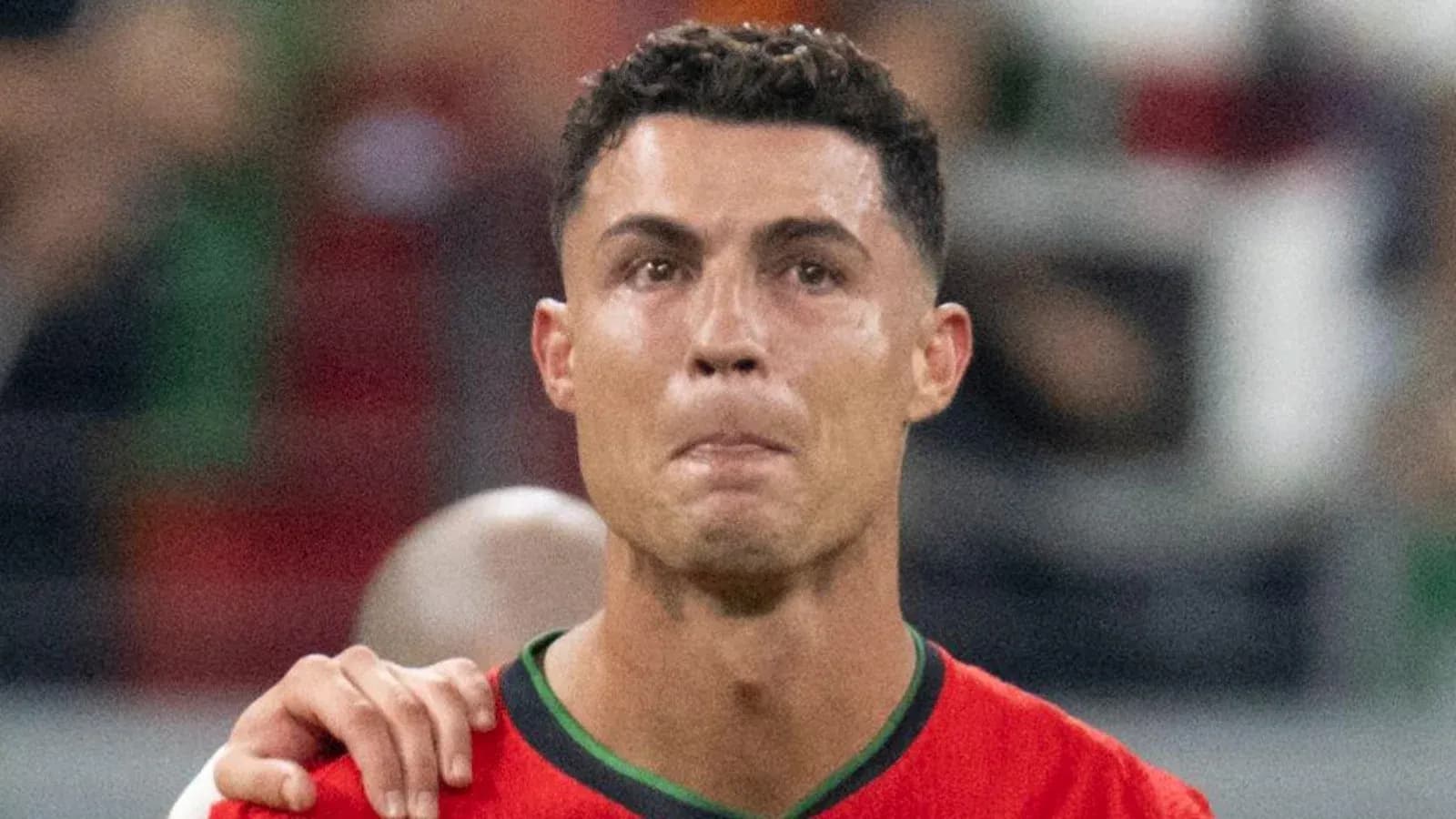
On The Sun’s website, Joao Neves’ comments about his captain are sold with all the subtlety of a fire alarm: “Portugal World Cup star sparks storm with brutal comments on Ronaldo” and “He’s just another player – Cristiano Ronaldo blasted by Portugal World Cup team-mate after DR Congo horror show.”
You’d think Bruno Fernandes had finally snapped and called Ronaldo selfish on live TV.
Neves’ actual words?
“We know what Cristiano has done for us, for our national team, and for the world of football. But at this moment, he and we know that he is no different. He is just another player here to help. He is no different from the others. He is here to contribute, just like all of us.”
That’s not brutal. That’s a young midfielder trying to say, as respectfully as possible, that even the greatest player in Portugal’s history is part of a collective. It’s the kind of thing coaches beg their squads to believe.
“Blasted”? Only if you think any suggestion Ronaldo is part of a team rather than above it counts as an attack. As for the “storm”, if a few overexcited social media accounts now qualify, the bar has been buried somewhere under the pitch.
Cole Palmer, Jet2 and selective humility
The Sun is far more generous when it likes the protagonist. Cole Palmer flies with Jet2 and suddenly he’s the “humble star”. Same act, very different framing.
Compare that with the treatment Raheem Sterling received when he flew with easyJet. Back then, he was accused of “penny pinching” and “slumming it on the budget airline” – complete with capital letters for EASYJET and a reminder that he “rakes in a staggering £200,000 a week”.
Two footballers. Two budget airlines. Two completely different stories. The behaviour is identical; the narrative is not. The difference isn’t on the boarding pass.
Mark Chapman and the ‘unwritten’ Match of the Day rule
Then there’s the BBC’s supposed sacrilege.
“BBC host Mark Chapman makes feelings perfectly clear after World Cup clash as he breaks unwritten MOTD rule,” screams another Sun headline. It sounds grave, like he’s torched the running order or sworn at the camera.
What did he actually do? After Czechia’s draw with South Africa, Chapman closed the programme with: “Sometimes a game does not deserve a really clever closing link. Goodbye.”
That’s it. No rant. No meltdown. Just a wry admission that not every 90 minutes deserves a perfectly crafted sign-off.
This apparently breaches an “unwritten rule in the BBC that there is always a clever link at the end of match coverage”. As if “good broadcasting” is some mystical internal code rather than, you know, the job. And for what it’s worth, his line was a clever link – a neat, self-aware shrug that fit the game.
If that’s breaking the rules, they’re not rules worth keeping.
Emma Hayes and the ‘tiny blackboard’
Emma Hayes has barely started her new chapter and already the discourse is unhinged.
One Sun line in particular stands out: “Hayes was forced to do her tactical analysis on a tiny blackboard on a set that looked like a little kitchen, sparking outrage online.”
“Forced” is doing a lot of work there. Hayes, one of the sharpest tactical minds in the sport, drawing on a small board in a studio is hardly a human rights violation. The “tiny blackboard” phrasing makes it sound like she’s been banished to a corner with a prop from a primary school.
It’s not exactly Michael Scott’s prized plasma TV, ripped from the wall in a moment of crisis. It’s a broadcast tool. A slightly quaint one, maybe, but hardly a symbol of disrespect.
From imaginary England back fours to invented Ronaldo feuds and mythical BBC laws, the gap between what’s said and what actually happened has rarely felt wider. The games are complicated enough; the stories around them don’t need this much embroidery.