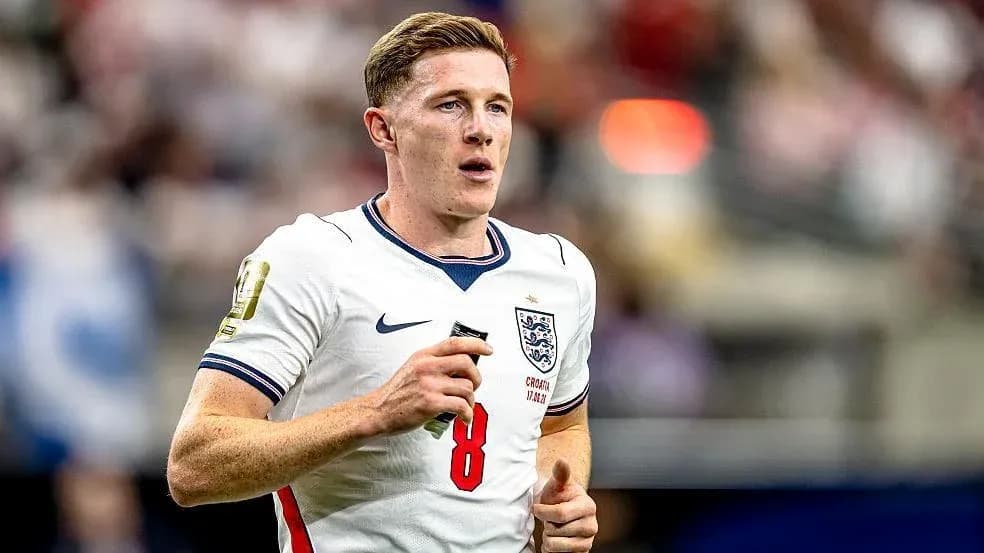
Elliot Anderson: The Rise of a World-Class Midfielder
Elliot Anderson grew up so gifted that his teachers half-joked about sticking money on him one day playing for England. They never placed the bet. Thomas Tuchel might be about to cash it in for them at a World Cup.
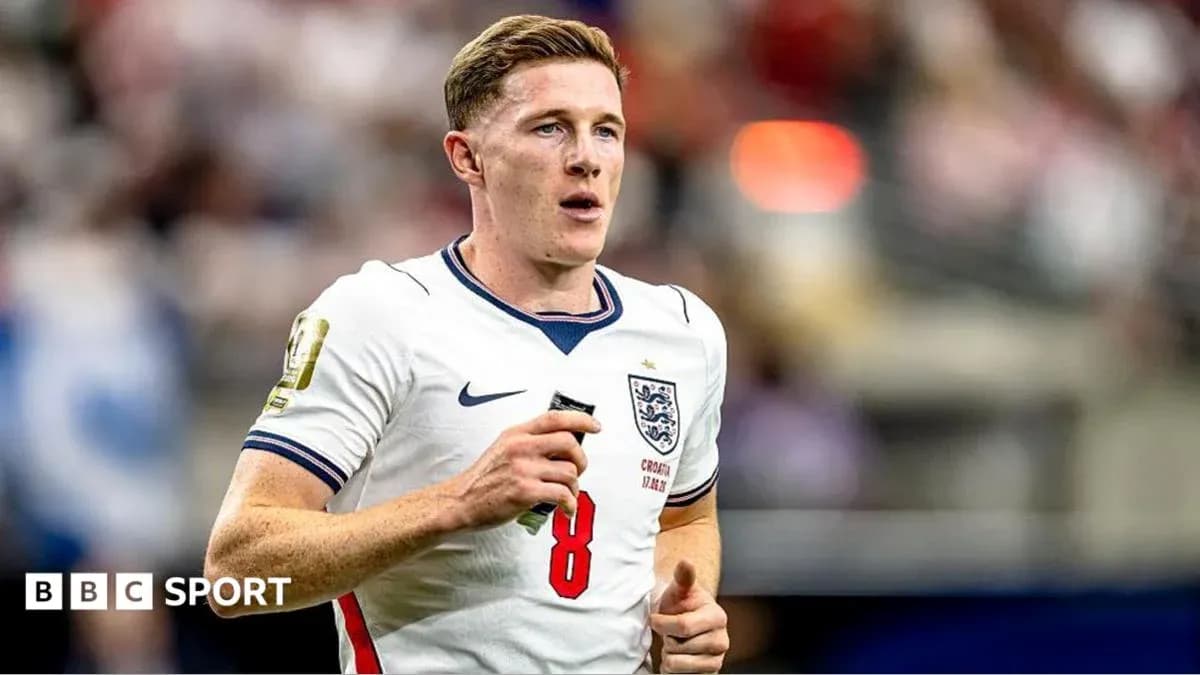
On Tuesday in Boston, when England face Ghana, the quiet kid from Tyneside walks into another chapter of a story that now stretches from school fields in Whitley Bay to the biggest stage in the game – and towards a fee that could make him the most expensive player in British football history.
For Newcastle United, he is the one that got away. Painfully so.
Eddie Howe called Anderson’s £30m sale to Nottingham Forest in July 2024 “the most reluctant in my career”, a transfer Newcastle felt compelled to sanction as they scrambled to stay on the right side of profit and sustainability rules and avoid a points deduction. It was business driven by spreadsheets, not football sense, and it stung.
It hurts even more now. At 23, Anderson is a central pillar of Tuchel’s World Cup plans. The England head coach has labelled him “the full package”, and Manchester City are circling. Forest have already rejected an offer in the region of £120m. The next bid may have to go beyond the £125m that took Alexander Isak from Newcastle to Liverpool last summer.
Scotland feel the loss as keenly as Newcastle. Anderson, eligible through a Scottish grandmother, represented them at junior and under-21 level and was called up for Euro 2024 qualifiers against Cyprus and a friendly with England in September 2023, only to withdraw injured. He later committed his international future to England. For Steve Clarke and the Scottish FA, that door slammed shut just as he was walking through it.
From Valley Gardens to the world
Long before the numbers became eye-watering, Anderson was simply the youngest of three football-mad brothers, kicking a ball around wherever there was space. Louie and Wil went through Valley Gardens Middle School before him; Wil later found his own fame on reality TV show Love Island. Elliot’s path always looked like it would be drawn in white lines and green grass.
Jonathan Roys, his former English and PE teacher at Valley Gardens – and his head of year – watched the youngest Anderson grow up at close quarters.
“His brothers were decent,” Roys recalled to BBC Sport, “but being the youngest of three he was used to getting bossed about a little bit, but he took no quarter off anybody. He’d get stuck right in.”
The school saw the first real glimpse of what might be coming in 2014, when Anderson captained Valley Gardens to victory in the English leg of the Danone Nations Cup, scoring a hat-trick in a 3-0 win in the final. It is a prestigious global youth tournament. He treated it like a local kickabout. Same intensity. Same swagger with the ball.
At home, his parents, Iain and Helen, made sure football never swallowed everything. Newcastle United’s academy commitments were fitted around schoolwork, not the other way around. The boy who adored his local club still had to hand in his homework.
“Elliot was quiet, self-effacing,” Roys said. “He came from a great family. They made sure we organised his lessons around time he spent at Newcastle’s academy. As head of year you can sometimes deal with kids who might be causing problems but he was never any trouble. He just got on with it. Reports were usually glowing, both from school and Newcastle’s academy.”
He shone in almost any sport. Athletics. Cross country. Indoor events. Cricket. But everything came back to football.
“You could see he had something special,” Roys said. “He was standard size, not a massive lad, but he more than held his own. He was the stand-out player despite not being the biggest.”
The staff joked among themselves. Maybe they should put a bet on him playing for England. They never did. Scotland got him first, at least on paper. England would come later.
When that senior England call finally arrived, and he debuted against Andorra in September 2025, his mother Helen captured the family’s sense of it all: “It would be a day we would never forget or take for granted. To think our son has walked out there to represent his country would be nothing short of incredible. It will be so emotional.”
None of it surprised Roys.
“Elliot was very hard working and determined. It was football for him, though. We just put him in midfield as he was our best player, although he actually also even played in goal for us once when we played Wallsend Boys Club.”
The Wallsend connection matters in these parts. That famous boys’ club – where Alan Shearer, Peter Beardsley and Michael Carrick once learned the game – is another stop on Anderson’s journey off the Geordie production line. Different era, same pipeline.
And he has not forgotten where it all started. Roys still remembers bumping into him at a local shop a couple of years ago.
“He said: ‘All right sir.’ I just thought ‘thanks mate’. He’s a real inspiration to the new generation and everyone is proud of him.”
Bristol Rovers and a pivotal afternoon
Anderson’s senior Newcastle career flickered rather than blazed. Fifty-five appearances in all competitions, a debut in an FA Cup defeat at Arsenal in January 2021, flashes of the talent, but no extended run. The next step had to come elsewhere.
It arrived in the shape of a loan to Bristol Rovers. In League Two, in tight grounds and on heavy pitches, he found exactly what he needed: responsibility, rough edges, and the chance to run games.
Glenn Whelan, then player-coach at Rovers and a veteran of the Premier League and international football with the Republic of Ireland, saw the impact immediately.
“He just came into the building and showed his potential straight away,” Whelan told BBC Sport. “Nothing seemed to faze him. You could see straight away this boy was different.”
Whelan tested him in training, cranking up the pressure, waiting to see if the teenager would shrink or stand up.
“Some kids would be a little bit more reserved and fall back. Elliot was right on the front foot. He took the bull by the horns.”
One date stands out for Whelan: 5 February 2022. Rovers away at Sutton United, a hardened, streetwise side chasing promotion.
“They were doing well and were a proper men’s team with a lot of grit,” Whelan said. “Some of the coaching team were a little wary of throwing him in against them.
“We were losing at half-time and I basically said ‘we need to get this lad on because he’s a game-changer.’ He came on and made an impact. He won a penalty and we drew. I think he played pretty much every minute after that.”
From that afternoon, Anderson stopped being a promising loanee and became the heartbeat of Joey Barton’s team. He played off the left, but never stayed where he was told if the game demanded more.
“He just had a confidence about him to show everyone how good he was,” Whelan said. “It was not arrogance. He’d obviously had a great upbringing from his family and he had that Geordie in him.
“He played off the left wing, but if the ball wasn’t coming to him he would go and look for it. He didn’t care who was marking him. He could take the ball under pressure and make things happen.
“Elliot loved training. He wanted to learn, do the extras. He had the attitude to stay behind and get better. We could tell straight away he was going to be a top player.”
The season ended with a match that will follow Anderson around for the rest of his career. On the final day, Rovers needed to better Northampton’s result or win by five goals more to clinch automatic promotion to League One. They won 7-0. Anderson scored the seventh, five minutes from time, the goal that finally dragged them into the top three for the first time all season.
He left the pitch that day on the shoulders of jubilant supporters, chaired off in a scene that looked like a farewell to a player destined for much bigger stages. It was.
The numbers of a £100m midfielder
Back in the Premier League, Anderson’s rise has accelerated to the point where even as he prepares for knockout football at a World Cup, his club future sits at the centre of the market.
Forest have already turned down a bid from Manchester City worth around £120m. City, with Enzo Maresca expected to take over, are unlikely to walk away. To get him, they may have to pay a fee that would eclipse Isak’s British-record move.
This is not just about hype or an England badge. The data from last season is brutal in its clarity. Anderson had more touches than any other player in the Premier League (3,300). He won possession more times than anyone else (306). He topped the charts for duels won (297) and fouls drawn (80).
Those numbers tell the story of a midfielder who lives at the heart of the game. Always on the ball. Always in the fight. Always involved.
The likelihood is that he will start next season at the Etihad, under Maresca, in a side built to dominate the ball. A player who demands it as much as Anderson does tends to thrive in that environment.
Whelan has no doubt he will cope with the scale of it all.
“The sky’s the limit,” he said. “I don’t think it will faze him at all. He just loves playing football. I think if he wasn’t playing for Nottingham Forest or England at the World Cup, he’d be playing grassroots with his mates.
“He’s going to be around for a very long time. We see what he’s doing at the World Cup but I think in time the top teams in the Champions League and all over the world will be sitting up to watch this boy play.”
For now, the stage is Boston, the opponent Ghana, the shirt an England one. The teachers at Valley Gardens never did place that bet. They do not need to. The evidence is already there, written across a World Cup and a transfer market that has finally caught up with what a quiet lad from Tyneside always looked destined to become.