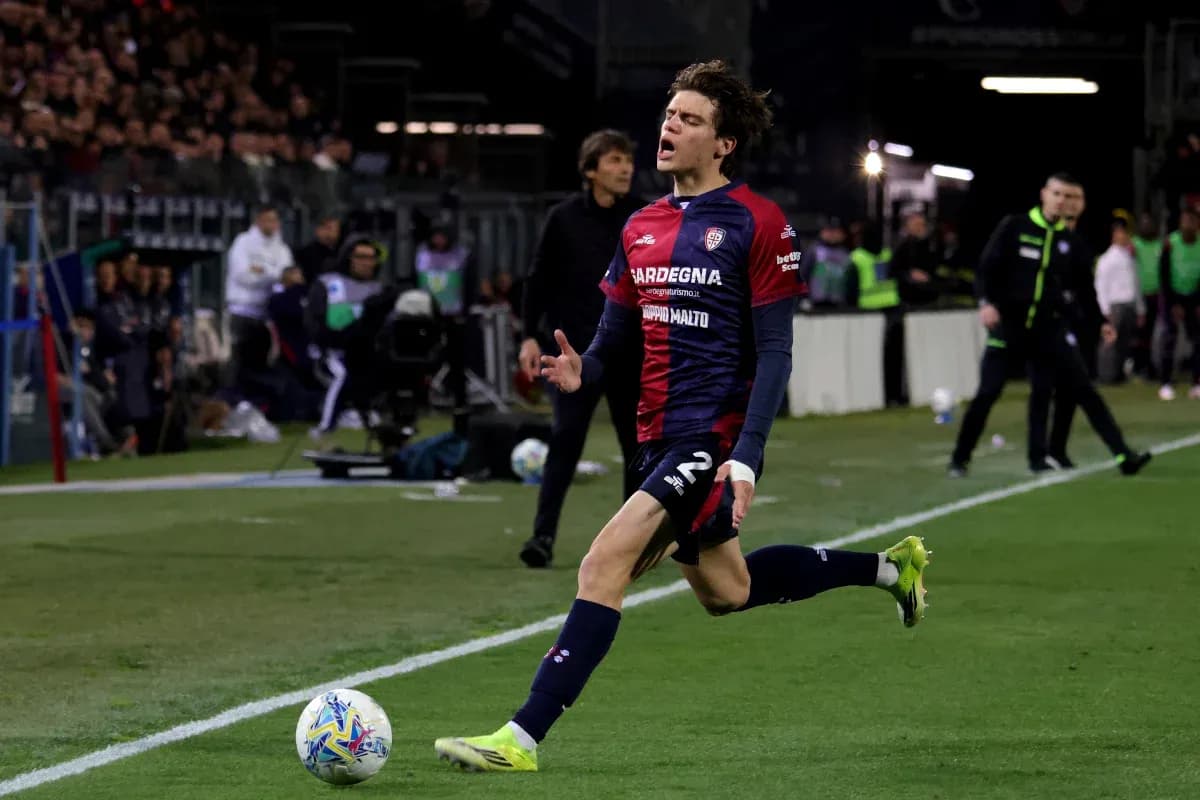
Elliot Anderson: From Fringe Player to Record-Breaking Midfielder
At Bristol Rovers, they used to scrap to be on Elliot Anderson’s side in five-a-sides. It wasn’t superstition. It was simple logic: if you played with the kid, you usually won.
Even as a teenager, he looked like he’d been dropped into League Two from a higher plane. Stronger in the duels, sharper on the half-turn, braver with the ball. He drove Rovers’ promotion to League One and looked destined for a quick ascent. Instead, the path kinked.
Back at Newcastle, the boyhood dream collided with cold reality. Eddie Howe’s midfield was loaded, the standards brutal, the minutes scarce. Anderson flickered in and out, a talent you could see but never quite grab hold of. His most significant contribution ended up being on the balance sheet: a homegrown asset who helped Newcastle avoid financial penalties when he moved to Nottingham Forest in 2024, in a deal effectively valuing him at £15m.
It felt like a quiet exit. It has turned into the launch point of a remarkable rise.
From undervalued to record-breaker
At the City Ground, Anderson did what young midfielders rarely get the chance to do at the top: he played. And played. And kept playing.
He started all but one of Forest’s league matches this season, coming off the bench in the other, racking up 3,334 minutes out of a possible 3,420. In real terms, that’s the equivalent of five more full games than Manchester City’s most-used midfielder, Bernardo Silva. While Forest fought relegation, Anderson just kept running, tackling, passing, dragging them up the pitch.
Now that relentless engine has made him the most expensive British footballer in history. Manchester City have agreed to pay £116m to prise him away, installing him as the first major pillar of their post-Pep Guardiola era.
For Enzo Maresca, it is quite a first signing.
The midfielder City have been missing
City did not just buy a highlight reel. They bought availability, aggression and intelligence in one package.
Anderson barely misses a game. He covers ground with a purpose that jumps off the screen, snapping into tackles and then demanding the ball again two seconds later. He won 297 duels for Forest and intercepted passes at a higher rate than any of City’s current midfielders. In a side that often had to defend deep and scrap for every point, he turned those moments into a weapon.
That edge matters at City now. Rodri’s future is uncertain and his body has started to creak. Nico González has not fully convinced. Mateo Kovacic has spent too much time in the treatment room. When Rodri has been missing, Guardiola has typically been forced into structural tweaks, doubling up with more defensive-minded players to protect the back four.
The idea with Anderson is different. The plan is to trust one man.
City see a midfielder who can sit alone in front of the defence, read danger early, slide across the pitch to smother counters, and still have the composure to turn defence into attack in a heartbeat. He is more combative than Rodri, less of a metronome, more of a disruptor. For a coach like Maresca, who wants his side to press high and dominate territory, that profile is gold.
Forward thrust, not sideways safety
Defensive numbers only tell half the story. Anderson does not hide behind safe passes or easy angles. He wants to hurt teams.
At Forest he played more passes into the box, and into threatening areas, than any of City’s midfielders managed. He lives on the half-turn, constantly trying to move his team up the pitch instead of recycling possession for the sake of it. In a City side loaded with movement ahead of the ball, that instinct could be devastating.
Give him Erling Haaland’s runs, Phil Foden’s drifting, Jeremy Doku’s chaos, and you give him targets to find. City are not buying a tempo-setter who will stroke it sideways and keep the numbers tidy. They are buying a risk-taker who believes the ball belongs near the opposition goal.
That is precisely the kind of personality Maresca wants threading his positional play together.
Versatility and a sharp football brain
Anderson’s intelligence might be his most underrated quality. He can operate as a No 6, a No 8 or a No 10, shifting between roles without losing clarity. At Forest he worked under four head coaches in eight months and adapted quicker than anyone to the subtle tweaks each demanded.
From the caution and structure of Nuno Espírito Santo to the full-throttle attacking demands of Ange Postecoglou, the tactical whiplash could have broken a lesser player. Anderson rode it. He adjusted his pressing angles, his starting positions, his risk level on the ball, and remained one of the few constants in a turbulent season.
When Forest were wobbling, he never accepted the script. He chased lost causes, crashed into challenges he had no right to win, and dragged the crowd into the game with sheer energy. That refusal to back down is not just a trait; it is a leadership tool.
Body of steel, mind of flint
The durability is no accident. Anderson is a meticulous professional, a player whose training habits and lifestyle choices show up every weekend in the team sheet.
Leaving Newcastle hurt him. Walking away from the club you grew up in, the stands you dreamed of, leaves a scar. He used it. The move to Forest hardened his resolve to prove he belonged at the elite level, not as a squad filler but as a central figure.
Forest knew they had acquired a player with serious upside. Even they did not expect his trajectory to spike this fast. The next obvious step in his evolution is to add more goals and assists, and life at a more attack-minded club, surrounded by higher-calibre finishers, should accelerate that development.
A new leader for a changing City
City’s dressing room has thinned out at the top end of the experience scale. Over the past two summers, Kevin De Bruyne, Kyle Walker, Ilkay Gündogan and Bernardo Silva have all departed. Those are not just names; they are reference points, standards, voices.
Maresca needs new anchors, players who can set the tone without needing a spotlight. Anderson fits that brief. He is humble, quiet, but ruthless about his work. He leads by repetition – the extra yards, the extra duel, the extra sprint in the 90th minute when legs are heavy and minds are foggy.
In a squad getting younger, that sort of example can shape a culture as much as any team talk.
From fringe to flagship
Elliot Anderson’s story is a case study in what minutes can do. Two years ago he was a peripheral figure at Newcastle, a promising academy product struggling to find a lane. Today he is the most expensive British footballer ever and a World Cup regular, walking into the midfield of the most demanding club side in Europe.
For every young player staring at a crowded pathway and wondering whether to stay or go, his journey sends a clear message: stepping out of your comfort zone can change everything.
It has already changed his life. Now we find out just how much it can change Manchester City.