Eddie Howe's Challenge: Newcastle United's Season Review
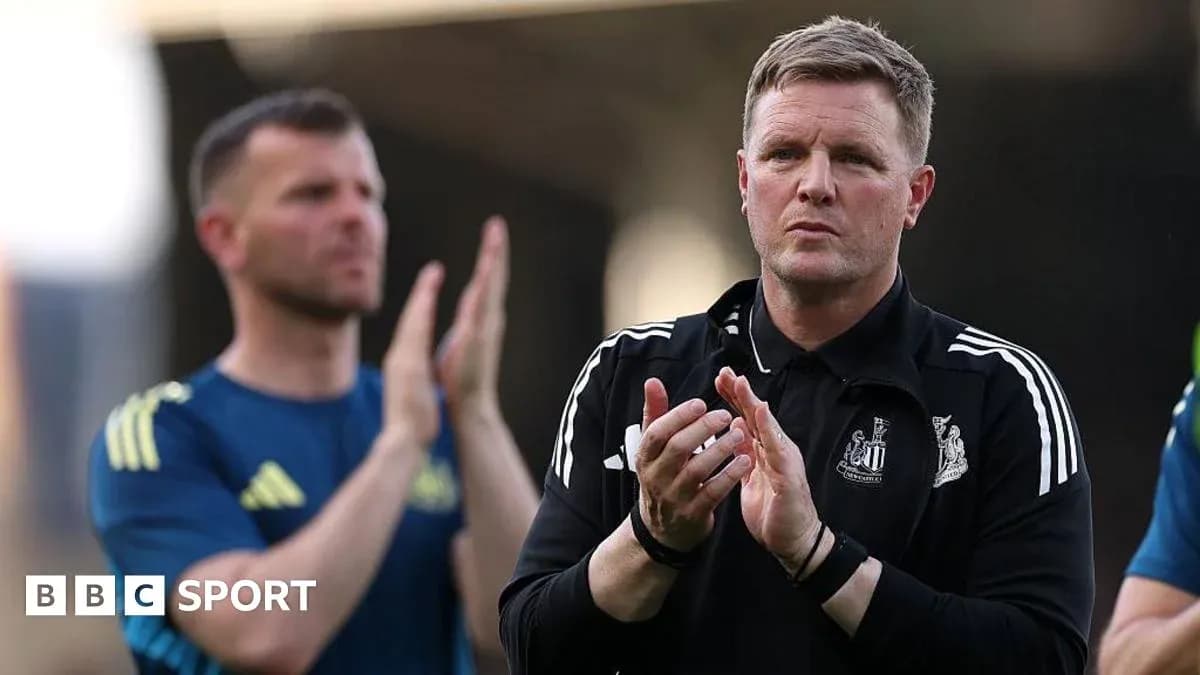
Eddie Howe walked alone.
Or at least that is how it looked when he set off on Newcastle United’s lap of appreciation after the final home game of the season. In reality, he was anything but. St James’ Park wrapped itself around him in song.
“Eddie Howe’s black and white army.”
The chant has become a soundtrack to the club’s rebirth under him, belted out on nights when Champions League qualification was sealed in 2023 and 2025. This time it sounded different. Louder. More defiant. It came at the end of his hardest season on Tyneside, after a draining campaign that had stripped away certainty and exposed old frailties.
The crowd stayed. They backed him. They backed the players. They backed the idea that this is still going somewhere.
For a moment, it felt like Newcastle had found a bit of rhythm again. Seven points from nine, a late-season surge hinting at momentum rediscovered.
But there was still Fulham away.
And Fulham away brought them crashing back to earth.
A limp ending to a bruising year
The final day at Craven Cottage was supposed to be a small step towards renewal. Instead, it was a familiar stumble. Newcastle, flat and disjointed, slipped to a 2-0 defeat – their 17th league loss of the campaign.
Heads dropped as players and staff trudged towards the away end at full-time. There was applause, of course, but the scene carried a weary familiarity. Groundhog Day in black and white.
“There have been a lot of bruises this season,” Howe admitted.
That barely scratches the surface. This was a campaign that forced the club’s new hierarchy to confront uncomfortable truths.
Earlier in May, owners, executives and senior figures gathered in Northumberland for an annual summit that, this time, felt more like a post-mortem. The message from the top was clear: they wanted to know what had gone wrong, what was being done about it, and how to fix it.
Emotion stayed out of the room. Analysis did not. Newcastle’s leadership have gone forensic rather than furious, picking apart the season with the cold eye of people who know they cannot afford to get the next phase wrong.
Big changes are coming. This squad will not look the same when next season starts.
A squad on the brink of a reset
The most striking potential change is at the sharp end. There remains a gap in valuation between Bayern Munich and Newcastle over Anthony Gordon, but the direction of travel is obvious: he looks one of the likeliest to go, and only on Newcastle’s terms.
Factor in other possible exits, and the shopping list is long. At least one goalkeeper. A full-back. A midfielder. A couple of forwards. And that is just the minimum.
Howe has not hidden his irritation. He has grown “frustrated” with recurring on-pitch issues he has not managed to solve, and says the club are now “very clear” about what they need this summer after finishing 12th – his worst domestic season at Newcastle.
New signings alone will not fix everything. Howe knows that. But he has pointed to other clubs who have climbed the table off the back of one smart window. The model is there. The question is whether Newcastle can follow it.
Sporting director Ross Wilson will lead what amounts to a rebuild, with Howe viewed not as a man on the brink but as both part of the diagnosis and the solution.
That makes sense. This is the manager who, only last season, ended a 70-year wait for a major domestic trophy by winning the Carabao Cup. He lifted the club into the Champions League. He reset standards.
This year, those standards slipped. Inside the club, nobody is pretending otherwise.
From ruthless to flaky
Newcastle used to suffocate opponents. Under Howe, they built a reputation as a side that, once in front, did not let go. In 2024-25, no team in the Premier League threw away fewer points than Newcastle – just seven. Alexander Isak would strike first, or drag them level, or stretch a lead, and a drilled, disciplined unit would do the rest.
Then came the summer, the protracted £125m sale of Isak to Liverpool on deadline day, and a season where that edge simply disappeared.
This year, the numbers are brutal. Newcastle have surrendered more points from winning positions than anyone else in the league: 27. They have conceded more goals in the final 15 minutes of games than any other side: 21.
A fierce team turned flaky.
Unlike Aston Villa, who juggled Europe and the league and still emerged with a Europa League title, Newcastle struggled to live with the weight of multiple fronts for most of the season. Villa exited the domestic cups early; Newcastle did not. The load told.
There were flashes of something new, late in the campaign, when the fixture list finally eased and Howe had more time on the training ground. But those glimpses came too late and proved too fragile. Even with more space between games, the revival never truly stuck.
For many in that dressing room, this was their first taste of a 58-game season, mentally and physically draining from September to spring.
“Bloody hell, it’s not easy,” said a source close to one regular.
The staff felt it too. Even in victory, there was little room for joy. One bad result a few days later, and the mood would lurch again. Newcastle never found the kind of long, defining run that had previously powered them up the table. Instead, they lived on the wrong side of fine margins: 71% of their league defeats came by a single goal.
Those are the details Howe has to flip – fast.
A fanbase ready to back, and to judge
For all the frustration, patience has not completely snapped on Tyneside. Season-ticket holder Liam Phillips believes what is needed is simple: a reset.
“He badly needs a good start next season,” he said. “If Newcastle are not in the top six or seven in the first few games, I think the crowd will quickly turn.
“There has been a patience and understanding this season but if the team start badly after spending more money in the transfer market, I don’t think people will be quite as forgiving.”
That is the tightrope Howe now walks. The goodwill he has earned is real. So is the expectation.
Last summer’s window did not help him. Newcastle missed out on several first-choice targets. Most of the players they did land arrived late. There was no chief executive or sporting director in place to steady the process. And when the pressure cranked up, they blinked and sold Isak on deadline day, having held firm for so long.
Clubs like Brentford and Bournemouth have shown how to rebuild with clarity after selling stars. Newcastle, after a net spend north of £100m that Howe heavily influenced, cannot say the same. Only Malick Thiaw has been an unqualified success.
The schedule did those signings no favours. Between September and March, the relentlessness of games meant there was little time for heavy training. Much of the adaptation to Howe’s intense, structured style came via analysis sessions rather than on the grass.
Jacob Ramsey, for instance, had only a brief spell under Howe on the training pitch before the fixtures piled up. Even in that short window, the midfielder is understood to have been jolted by the sheer volume of high-intensity running in drills, despite having worked under the demanding Unai Emery at Aston Villa.
It was a snapshot of the adjustment new arrivals face. Howe believes those who came in last summer will be better for the experience. They may have to be.
No room for another boom-and-bust
Howe has made a career of overachieving against bigger wage bills. This season, that trick deserted him. Newcastle sank into the bottom half and stayed there.
To make matters worse, while bitter rivals Sunderland beat them home and away and secured their own European place, Newcastle failed to qualify for Europe at all in a year when eight spots were available.
That kind of boom-and-bust cycle does not fit with the long-term project the ownership has in mind. They want a team that lives in the top end of the table, not one that visits it.
Howe has shown he can build that kind of side when he has clear weeks to prepare for Premier League games, time to drill his players and fine-tune the plan. He needs that rhythm again, even if the schedule refuses to cooperate.
“It’s something we need to address and we need to address it very quickly,” he said. “Every experience makes you stronger and makes you appreciate the good times. We will all try and come back a better team.”
The lap of appreciation in May ended with Howe walking alone in front of a fanbase that refused to abandon him. The next one, a year from now, will tell a sharper story.
Will he still be the man they sing for – or the man they decide has taken them as far as he can?