Cristiano Ronaldo's Last Chance at World Cup Glory
Cristiano Ronaldo is heading for a sixth World Cup at 41, and Portugal can feel the clock ticking.
The numbers alone are staggering. Six tournaments. More than two decades at the top. Yet for all the medals, records and Ballon d’Ors, one prize still sits out of reach: the World Cup. That is the stage on which many in Portuguese football hope he will say goodbye.
For Godinho, the former national team director who spent half a century inside the Portuguese Football Federation, the hope is simple and immense: Ronaldo walking away with the only trophy missing from his collection.
“Let’s hope he’s in a position to retire – I don’t know when, but the body isn’t eternal – with a title of this magnitude,” he told Lusa. There was no sentimentality in his warning, just realism. The end is coming, even for Ronaldo. And the road to that dream finish will be brutal.
A farewell on the hardest stage
The 2026 World Cup, spread across the United States, Canada and Mexico, is already being framed as one of the most demanding tournaments in history. Distances are huge. Climates shift wildly. European teams, used to compact travel and familiar conditions, will be stretched in ways they haven’t been for generations.
Godinho did not sugar-coat it. “The World Cup will be difficult … because of the fatigue they will bring,” he said, pointing directly at the toll of long seasons in elite club competitions. The best players arrive exhausted. Then come the flights, time zones, and heat.
“The continental change is a disadvantage, as it will be for other countries on other continents,” he added. The message was clear: Europe will be stepping into someone else’s comfort zone. “The most powerful teams have players in major club competitions and arrive there fatigued, which is compounded by long journeys, schedule changes and climate, all of which influence performance. Careful preparation is needed. It’s much more difficult to play in the United States than in Germany.”
For Portugal, that means more than just tactical plans and training camps. It means managing legs and minds, protecting a core group already loaded with minutes, and squeezing one last peak out of a generation led by a 41‑year‑old phenomenon.
From teenager among giants to standard-bearer
If anyone understands how long this journey has been, it is Godinho. He watched it from the first day Ronaldo walked into the national team camp in 2003, a skinny teenager suddenly sharing a dressing room with Luis Figo, Rui Costa and Fernando Couto.
“It wasn’t difficult to work with Cristiano,” he recalled. Ronaldo’s debut came at 18, against Kazakhstan, but what mattered just as much was the environment around him. A golden generation, battle-hardened and demanding, shaped the mentality that would define him.
“He had a group of players who helped him a lot to understand the dimension of where he was,” Godinho said. The youngster was “extraordinary” from the start, quick to absorb advice, even when that advice came wrapped in “tough talk” from older voices in the dressing room.
Those early lessons forged the ruthless edge that has carried Ronaldo through five World Cups and countless defining nights. Now, as he prepares for a sixth, the dynamic is reversed. He is the elder statesman. The one delivering the tough talk. The one others look to when the legs are heavy and the stakes are suffocating.
Group K and the long road from Houston
Portugal’s campaign in 2026 begins far from Lisbon, in Houston, where they open Group K against the Democratic Republic of Congo on June 17. It is the kind of fixture that can look straightforward on paper and turn awkward on the pitch, especially in the heat and intensity of a World Cup opener.
“The first game is always very important,” Godinho stressed. He knows how a tournament can tilt on a single result, a single moment. Still, he pointed back to Euro 2016, when Portugal staggered through the group stage without a win and still ended up lifting the trophy in Paris. A slow start does not always kill a dream.
Everything, he insisted, will depend on “the state of mind, fatigue, and mentality.” That trio will decide whether this team can navigate the group, which also includes Uzbekistan and Colombia, and push deep into the knockout rounds.
Godinho’s belief in the structure around the squad remains strong. “I am convinced that with the players and organisational capacity we can get there,” he said, before drawing a firm line. “But saying we are going to win is premature.”
Hope, yes. Certainty, no. Not in a tournament this big, this stretched, this unforgiving.
One last shot at the missing crown
As 2026 edges closer, everything around Portugal’s national team carries a double meaning. Every qualifier, every camp, every friendly is another step toward a World Cup that feels like both an opportunity and a farewell tour.
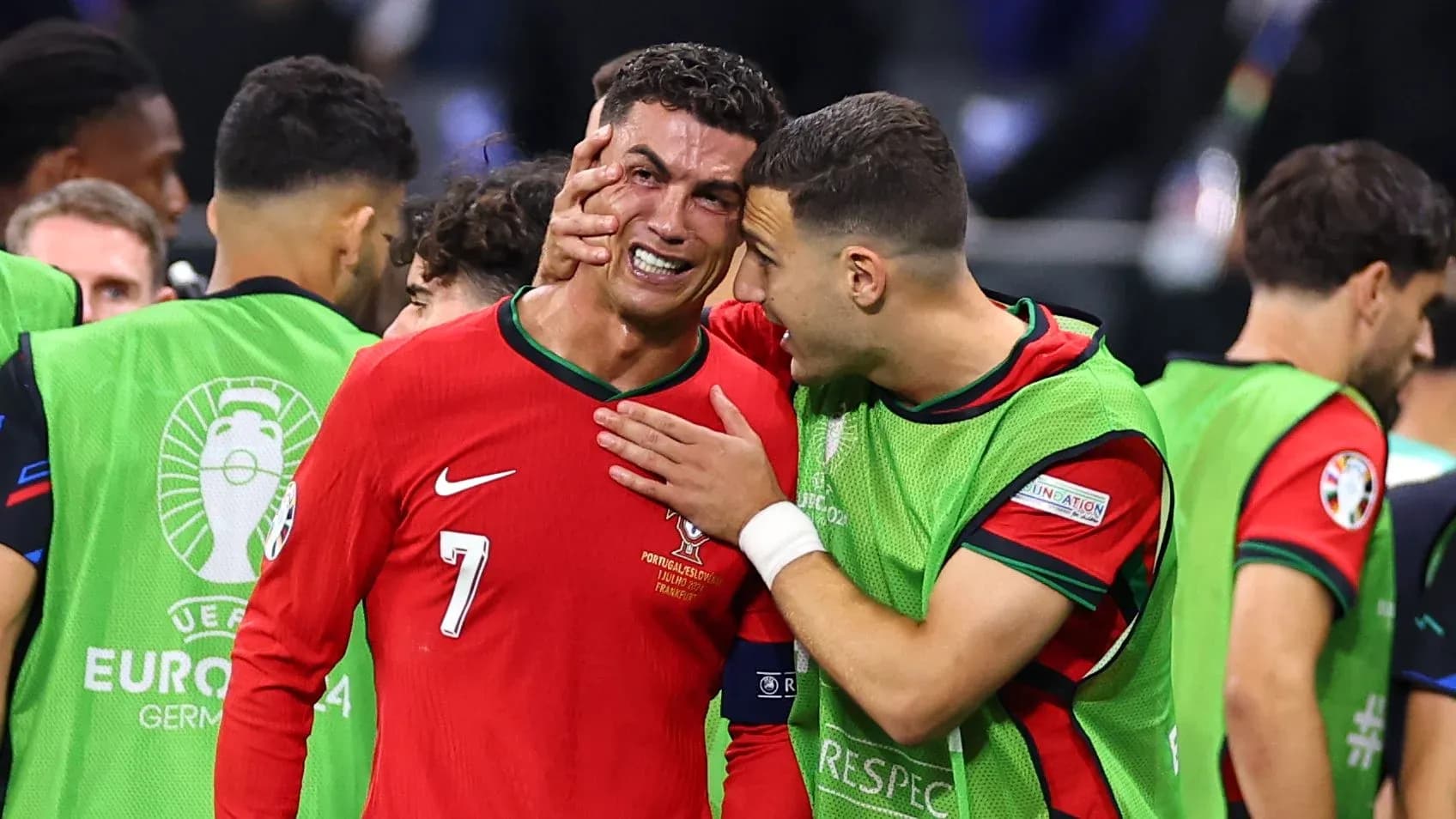
The squad will evolve. New names will emerge. Roles will shift. Yet the image that lingers over it all is the same: Ronaldo, in that red shirt, chasing the one trophy that has always escaped him.
The dream, as Godinho framed it, is not subtle. It is to see Cristiano Ronaldo, after a career that has bent records out of shape, finally lift the World Cup before his body decides the fight is over. The question now is whether Portugal can build a platform strong enough, organised enough, and resilient enough to give him that last shot on the hardest stage of all.