Chelsea W vs Manchester United W: FA WSL Clash Preview
Stamford Bridge stages a heavyweight FA WSL clash on 16 May 2026 as third-placed Chelsea W host fourth-placed Manchester United W. With one round left in the regular season (Round 22), the stakes are clear: Chelsea are closing in on Champions League qualification and looking to lock down a top‑three finish, while United chase a statement result against a side that has repeatedly blocked their path in cups and league.
Chelsea arrive with 46 points, a +23 goal difference and Champions League Qualification status already marked in the table. Manchester United sit six points back on 40 with a +17 goal difference. The gap underlines Chelsea’s greater consistency across the season, but United’s away record suggests this is far from a formality in west London.
Form and momentum
Across all phases, Chelsea’s form line of “WWWWDWWDDLWWLLWWWDWWW” tells the story of a side that has largely rolled through the campaign. In the league table, their recent form reads “WWWDW” over the last five, reflecting just one slip and a strong late-season push. At home, they have been particularly ruthless: 8 wins and 2 defeats from 10, scoring 19 and conceding only 8.
Manchester United’s league form string “DDLWD” hints at a more uneven recent spell, but the broader season pattern “WWDWDWWLLWDDWWWWDWLDD” shows they are still difficult to beat. Their away numbers are outstanding: 6 wins, 3 draws and just 1 defeat from 10 on the road, with 20 goals scored and only 8 conceded. In simple terms, Chelsea are one of the division’s best home sides; United are one of its best travellers.
Both teams have lost only 3 league matches all season, and both concede on average 1.0 goal per game across all phases. The margins here are likely to be fine.
Tactical outlook: structures and styles
Chelsea have shown notable tactical flexibility. They have used a 4‑1‑4‑1 most often (6 times), but also 4‑2‑3‑1 (3), plus occasional switches to back‑three systems such as 3‑4‑2‑1, 3‑5‑2 and 3‑4‑1‑2. That suggests a side comfortable adjusting its structure to opponent and game state. At Stamford Bridge, the 4‑1‑4‑1 and 4‑2‑3‑1 shapes point towards a controlled, possession‑based approach with a clear midfield platform.
Manchester United, by contrast, have a more settled identity. They have lined up 10 times in 4‑2‑3‑1, with 4‑1‑4‑1 and 4‑4‑2 used more sparingly. The double pivot and a creative line of three behind the striker have been the backbone of their season, giving them balance between pressing, counter‑attacks and structured build‑up.
Chelsea’s attacking numbers underline their threat: 43 goals in 21 league games (2.0 per match), with an even split between home (1.9 per game) and away (2.2). Defensively they allow just 1.0 per match, and at home only 0.8. They have kept 8 clean sheets overall, 5 of them at home, and have failed to score in only 2 league matches all season.
United are only slightly behind in attack, with 38 goals (1.8 per match) and an even stronger away scoring rate of 2.0 per game. They concede at the same 1.0 per match across all phases, and their away defence is notably tight at 0.8 goals per game, with 5 clean sheets on the road. However, they have failed to score in 7 league fixtures, including 4 away, which hints at occasional attacking flatness when their patterns are disrupted.
Discipline could matter late in the season. Chelsea’s yellow card distribution is weighted heavily around the 31‑45 minute window, while United’s bookings are more spread, with a notable cluster between 46‑60 minutes. United also have one red card in the 61‑75 range, suggesting their aggression can tip over under pressure. Chelsea, by contrast, have no red cards recorded.
Both sides have taken one league penalty and scored it; there are no recorded misses for either team in the team statistics.
Key players and creative hubs
For Chelsea, Alyssa Paola Thompson has been a central attacking figure. With 6 goals and 3 assists in 19 league appearances, she combines end product with all‑round contribution: 23 shots (13 on target), 21 key passes and a passing accuracy of 79% from 358 passes. Her 7.07 average rating and ability to both finish and create make her a focal point in any of Chelsea’s systems, whether as the lone striker in a 4‑1‑4‑1 or as part of a more fluid 4‑2‑3‑1 front line.
Her dribbling numbers (20 attempts, 7 successes) and 11 fouls drawn suggest she can destabilise United’s defensive block and win territory high up the pitch. Against an away side that often thrives in transition, Thompson’s capacity to pin centre‑backs and link with advanced midfielders will be crucial.
For Manchester United, creativity is more distributed, but Jessica Park stands out. The midfielder has 4 goals and 3 assists in 21 appearances, with 21 shots (13 on target) and 17 key passes. Her passing accuracy of 83% from 443 passes, plus 31 successful dribbles from 54 attempts, shows a player who can carry the ball through lines and still make the right final decision.
Elisabeth Terland adds a more direct goal threat from the front line, with 4 goals in 17 appearances and 27 shots (17 on target). Between them, Park and Terland provide United with both a ball‑carrying playmaker and a penalty‑area finisher, well suited to exploiting any space left by Chelsea’s attacking full‑backs or rotations in midfield.
Head‑to‑head: recent competitive record
The last five competitive meetings (no friendlies included) underline Chelsea’s psychological edge:
- 15 March 2026, WSL Cup Final at Ashton Gate Stadium: Chelsea W 2‑0 Manchester United W – Chelsea won.
- 22 February 2026, FA Women’s Cup Round 5 at Kingsmeadow: Chelsea W 2‑1 Manchester United W after extra time (1‑1 in 90 minutes) – Chelsea won.
- 3 October 2025, FA WSL at Leigh Sports Village: Manchester United W 1‑1 Chelsea W – draw.
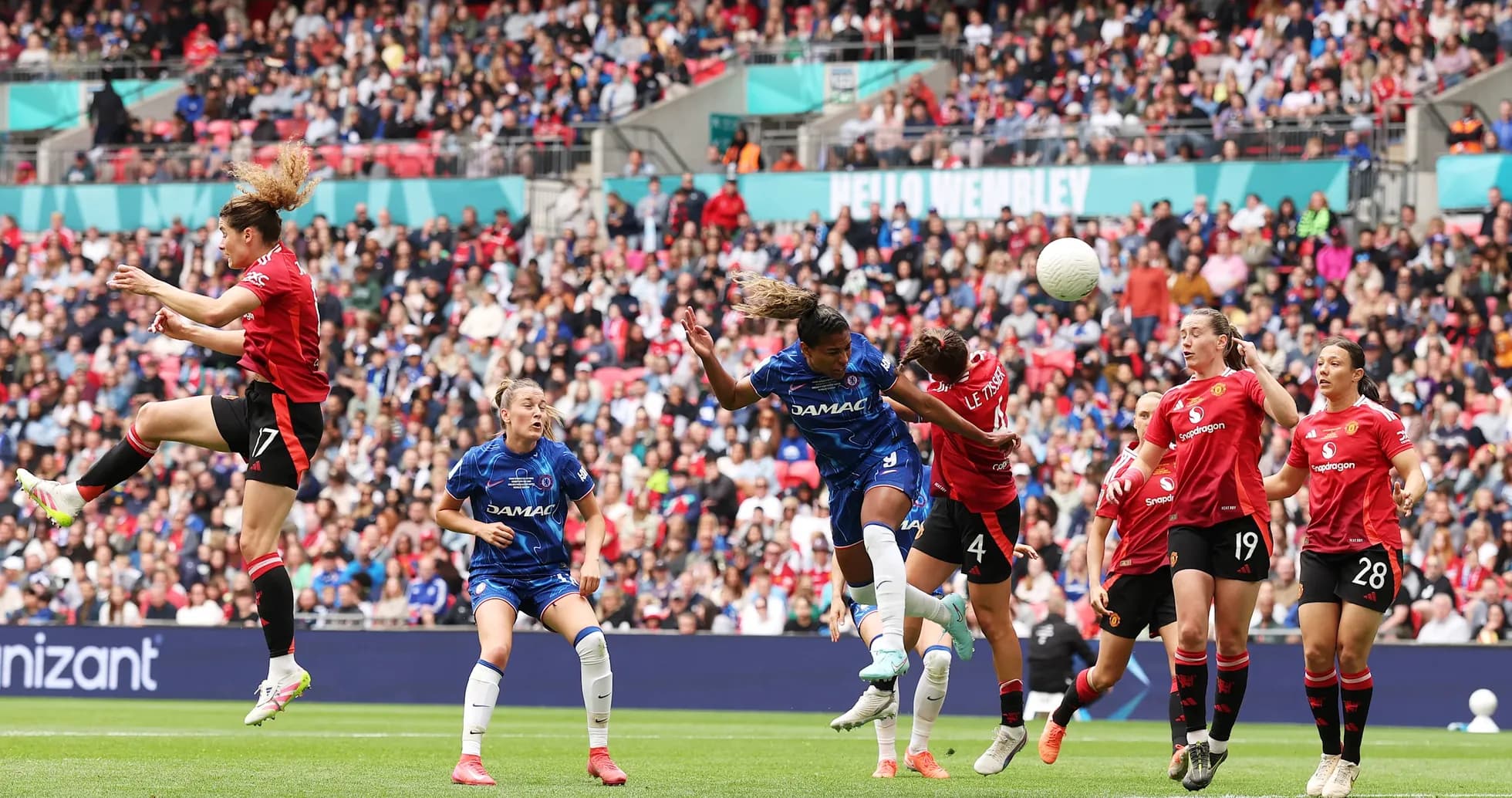
- 18 May 2025, FA Women’s Cup Final at Wembley Stadium: Chelsea W 3‑0 Manchester United W – Chelsea won.
- 30 April 2025, FA WSL at Leigh Sports Village Stadium: Manchester United W 0‑1 Chelsea W – Chelsea won.
Across these five matches, Chelsea have 4 wins, Manchester United have 0, and there has been 1 draw. United have not beaten Chelsea in this sequence, and they have failed to score in three of the five.
The scorelines also show Chelsea’s defensive resilience in big games: three clean sheets, and only two goals conceded across all five fixtures, including two cup finals and a cup tie that went to extra time.
Strategic keys
For Chelsea:
- Use their flexible formations to overload United’s double pivot and pin back the full‑backs.
- Leverage their strong home defensive record and 5 home clean sheets to control territory and tempo.
- Feed Alyssa Thompson between the lines and into the box, using her movement to drag United’s centre‑backs out of position.
For Manchester United:
- Lean into their excellent away record and comfort in 4‑2‑3‑1 to press selectively and break quickly.
- Maximise Jessica Park’s ball progression between Chelsea’s midfield and defence, especially when Chelsea commit numbers forward.
- Keep the game tight defensively; their 5 away clean sheets and 0.8 goals against per away match show they can frustrate strong home sides.
The verdict
On the numbers, Chelsea have the edge: better overall record, stronger home form, a superior goal difference, and a dominant recent head‑to‑head record that includes two cup finals and a cup tie won after extra time. Their attack is slightly more prolific, their defence marginally tighter at home, and they have more variety in their tactical setups.
Manchester United’s away profile, though, demands respect. With only one away defeat and a well‑drilled 4‑2‑3‑1 built around Jessica Park’s creativity, they have the tools to take something from Stamford Bridge if they are clinical.
Expect a high‑level, finely balanced contest, but the data and recent history point towards Chelsea extending their strong run over United and consolidating third place with a narrow home win.