Burnley vs Aston Villa: A Draw Defying Expectations
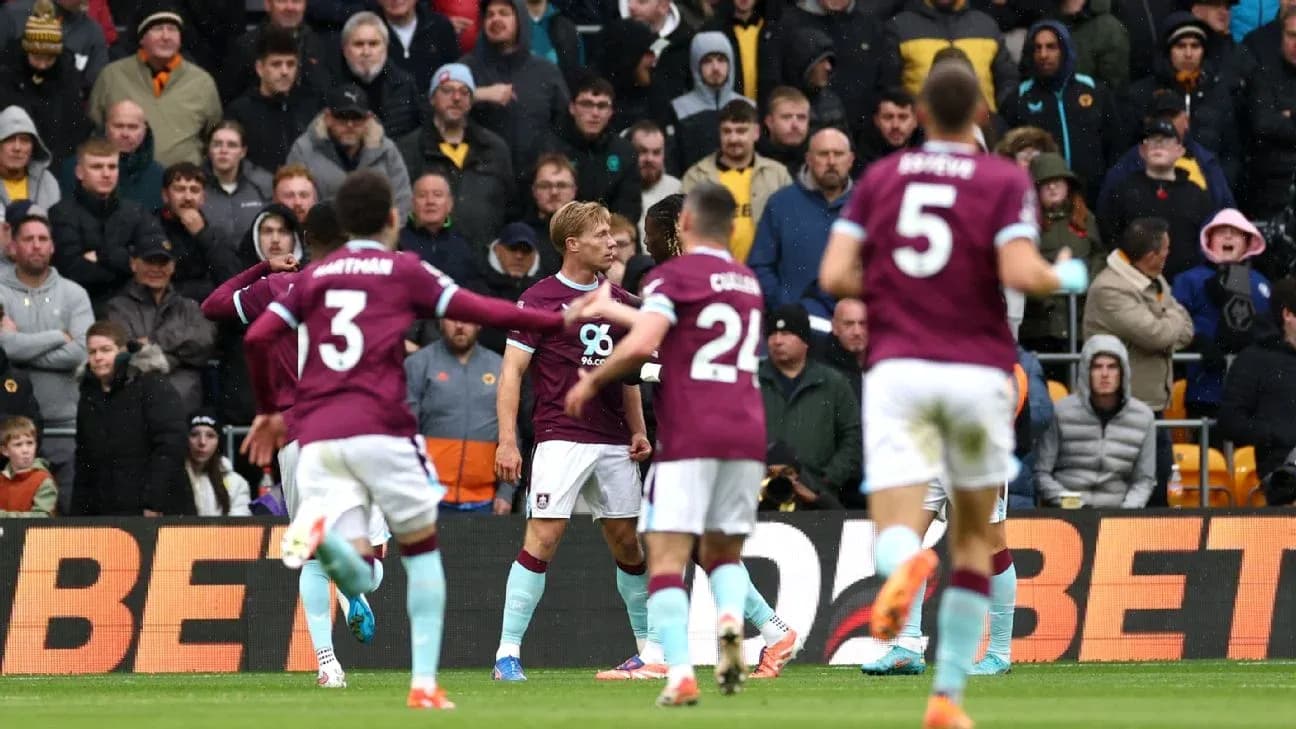
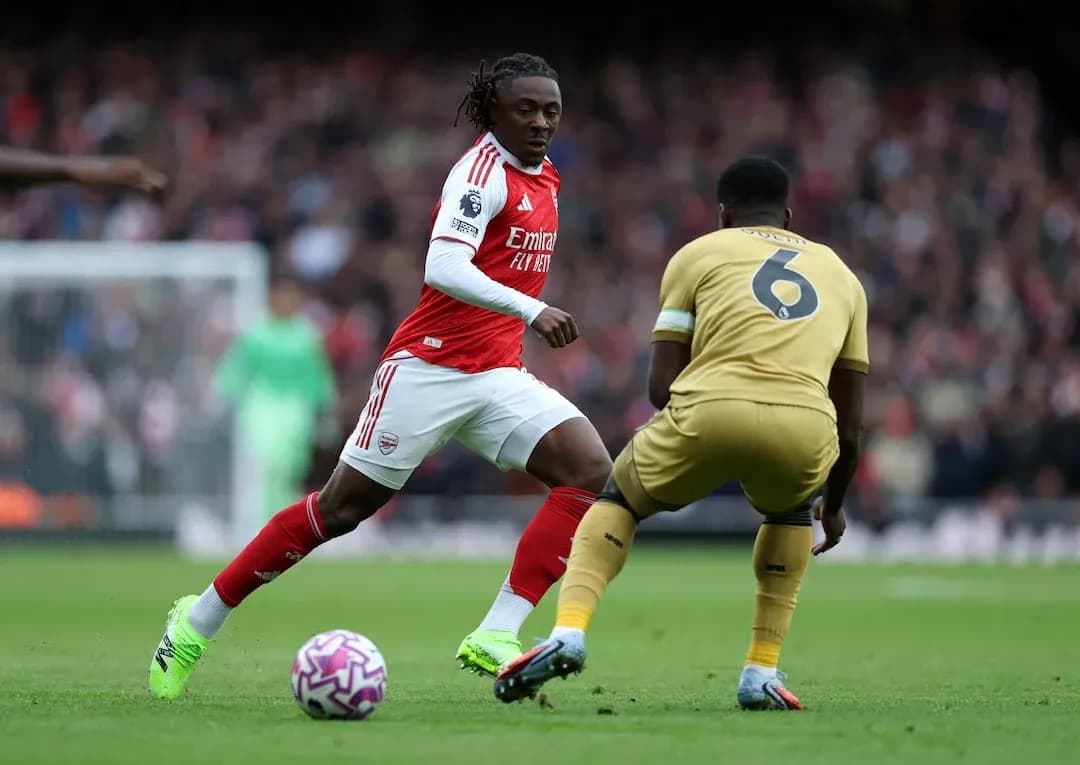
On a grey afternoon at Turf Moor, a relegation-threatened Burnley met a Champions League-chasing Aston Villa and refused to follow the script. Following this result, the table says 19th against 5th, a 2-2 draw between a side with 21 points and a goal difference of -36, and another for a team sitting on 59 points with a goal difference of 4. But the way both squads were constructed and deployed told a richer story than the standings alone.
I. The Big Picture – Two 4-2-3-1s, two very different worlds
Both managers mirrored each other on the whiteboard. Mike Jackson set Burnley up in a 4-2-3-1, the same shape that has been his most-used system this season (11 league games in that formation). Unai Emery did likewise, leaning into a structure Villa have used in 32 league matches. On paper, symmetry; in reality, contrasting footballing identities.
Burnley’s seasonal DNA is that of a side constantly on the brink. Heading into this game they had played 36 matches, winning 4, drawing 9 and losing 23. Overall they scored 37 and conceded 73, an average of 1.0 goals for and 2.0 against per game. At home, those numbers shrink and tighten: 17 goals for and 28 against across 18 fixtures, with averages of 0.9 scored and 1.6 conceded. Turf Moor has not been a fortress; it has been a survival trench.
Villa arrived as a high-functioning, if occasionally erratic, contender. Across 36 matches they had 17 wins, 8 draws, 11 defeats, scoring 50 and conceding 46 – 1.4 goals for and 1.3 against on average. On their travels, the balance remained positive if more cautious: 22 scored, 26 conceded in 18 away games, with 1.2 for and 1.4 against. Emery’s side is built to control, to surge in spells, and to live with a little defensive risk.
The 2-2 scoreline, after a 1-1 half-time, felt like the midpoint between those profiles: Burnley stretching beyond their usual attacking ceiling, Villa unable to fully assert their statistical superiority.
II. Tactical Voids – Absences and discipline shaping the contest
Both squads came into this fixture with notable absentees that subtly reshaped their tactical options.
Burnley were without J. Beyer (hamstring), J. Cullen (knee) and C. Roberts (muscle injury). For a team that has already conceded 73 goals overall, losing defensive and midfield stability is not a minor detail. It placed more responsibility on the starting back four of K. Walker, A. Tuanzebe, M. Esteve and Lucas Pires, and on the double pivot of Florentino and L. Ugochukwu to protect the central lane.
Villa, meanwhile, travelled without Alysson (muscle injury), B. Kamara (knee) and A. Onana (calf). The absence of Kamara and Onana stripped Emery of two natural ball-winners and screeners. Into that void stepped V. Lindelof and Y. Tielemans as the double pivot – a pairing more inclined to circulate and step in front than to destroy and dominate.
Disciplinary tendencies also hung over the match. Burnley’s season card map is scattered but telling: yellow cards peak in the 16-30 and 76-90 minute ranges (both 19.67%), with additional late spikes between 91-105 (16.39%). Red cards are evenly split across 31-45, 76-90 and 91-105 minutes (each 33.33%). This is a side that gets dragged into physical, emotional contests, especially as halves reach boiling point.
Individually, K. Walker embodies that edge: 9 yellow cards in 34 appearances, a defender who engages duels aggressively and steps high to contest. J. Laurent, though only on the bench here, carries a red card on his seasonal record, a reminder of Burnley’s thin margin between intensity and indiscipline.
Villa, by contrast, compress much of their card risk into the heart of the second half. Their yellow cards spike between 46-60 minutes at 29.09%, then again late (61-75 at 16.36%, 91-105 at 18.18%). Their lone red card this season came between 61-75 minutes (100.00% of their reds), aligning with the phase when Emery often pushes his line and presses more aggressively.
III. Key Matchups – Hunter vs Shield, Engine Room vs Enforcer
The clearest “Hunter vs Shield” duel was O. Watkins against a Burnley defence that has bent and broken too often. Watkins entered this fixture with 12 league goals and 2 assists in 35 appearances, backed by 51 shots (31 on target). His movement off the shoulder of centre-backs like Tuanzebe and Esteve, and into the channels outside Walker and Lucas Pires, was always going to test a unit that concedes 2.0 goals per game overall.
Across from him, Burnley’s primary offensive weapon was Z. Flemming. With 10 league goals in 27 appearances and 2 penalties scored from 2 taken, Flemming represents rare efficiency in a side that has failed to score in 13 league matches. His profile – 37 shots, 20 on target, plus 5 blocked shots defensively – speaks to a player who both initiates and finishes moves, and who can drop into the “10” space behind the striker in this 4-2-3-1.
Around Flemming, the creative line of L. Tchaouna, H. Mejbri and J. Anthony provided fluidity. Mejbri’s role as the central link was crucial: drifting between Tielemans and Lindelof, he tried to turn Villa’s more technical double pivot into a defensive liability.
In the “Engine Room” matchup, Villa’s M. Rogers was the game’s central narrative thread. Heading into this match he had 9 goals and 5 assists, with 43 key passes and 1,033 total passes at 74% accuracy. Rogers is both Villa’s top assister and one of their most persistent dribblers, with 117 attempts and 41 successes. Operating from the left of the three behind Watkins, he repeatedly looked to isolate Walker and attack inside his right shoulder, or combine with I. Maatsen on the overlap.
Burnley’s answer in that zone was collective rather than individual. Florentino and Ugochukwu formed a compact box with Mejbri, trying to crowd Rogers and J. McGinn when they drifted centrally. Walker, with 53 tackles and 10 blocked shots this season, stepped out aggressively to confront Rogers, knowing that allowing him to turn would expose the interior lanes.
Behind them, E. Martinez and M. Weiss represented contrasting goalkeeping contexts. Martinez, protected by a side that concedes 1.3 goals per game overall and has 9 clean sheets (3 away), could afford to play high and sweep. Weiss, behind a defence that has only 4 clean sheets in total and none away, had to live with chaos in front of him and manage a high volume of shots and crosses.
IV. Statistical Prognosis – xG tilt, emotional balance
Even without explicit xG numbers, the statistical scaffolding around this fixture suggests a familiar pattern. Villa, averaging 1.4 goals per game overall and 1.2 on their travels, would typically generate the higher xG share through sustained possession and volume of entries into the final third. Their 50 goals from 36 matches, combined with Rogers’ 43 key passes and Watkins’ 51 shots, point to a side that habitually manufactures chances.
Burnley, with just 37 goals overall and 0.9 per game at home, are more reliant on moments – set pieces, counters, individual quality from Flemming – than on a steady stream of high-quality opportunities. Their 13 matches without scoring underline how fragile their attacking structure can be.
Yet the 2-2 outcome hints at a game where Burnley punched above their usual attacking weight, likely converting a higher proportion of their limited chances, while Villa underperformed slightly relative to their typical output. Given Villa’s away defensive average of 1.4 goals conceded and Burnley’s home attacking average of 0.9, a 1-2 away win would have fit the numbers more snugly. Instead, Burnley found a second goal, and Villa’s defence once again showed its susceptibility to lapses.
Following this result, the tactical verdict is of a Burnley side that, even from a position of near-certain relegation, still carries enough individual threat in Flemming and enough collective defiance to trouble elite visitors. Villa, for all their quality and structure, remain a team whose xG superiority does not always translate into full control of the scoreboard – a side that can dominate phases, but still leave the door open just wide enough for a struggling opponent to walk through.