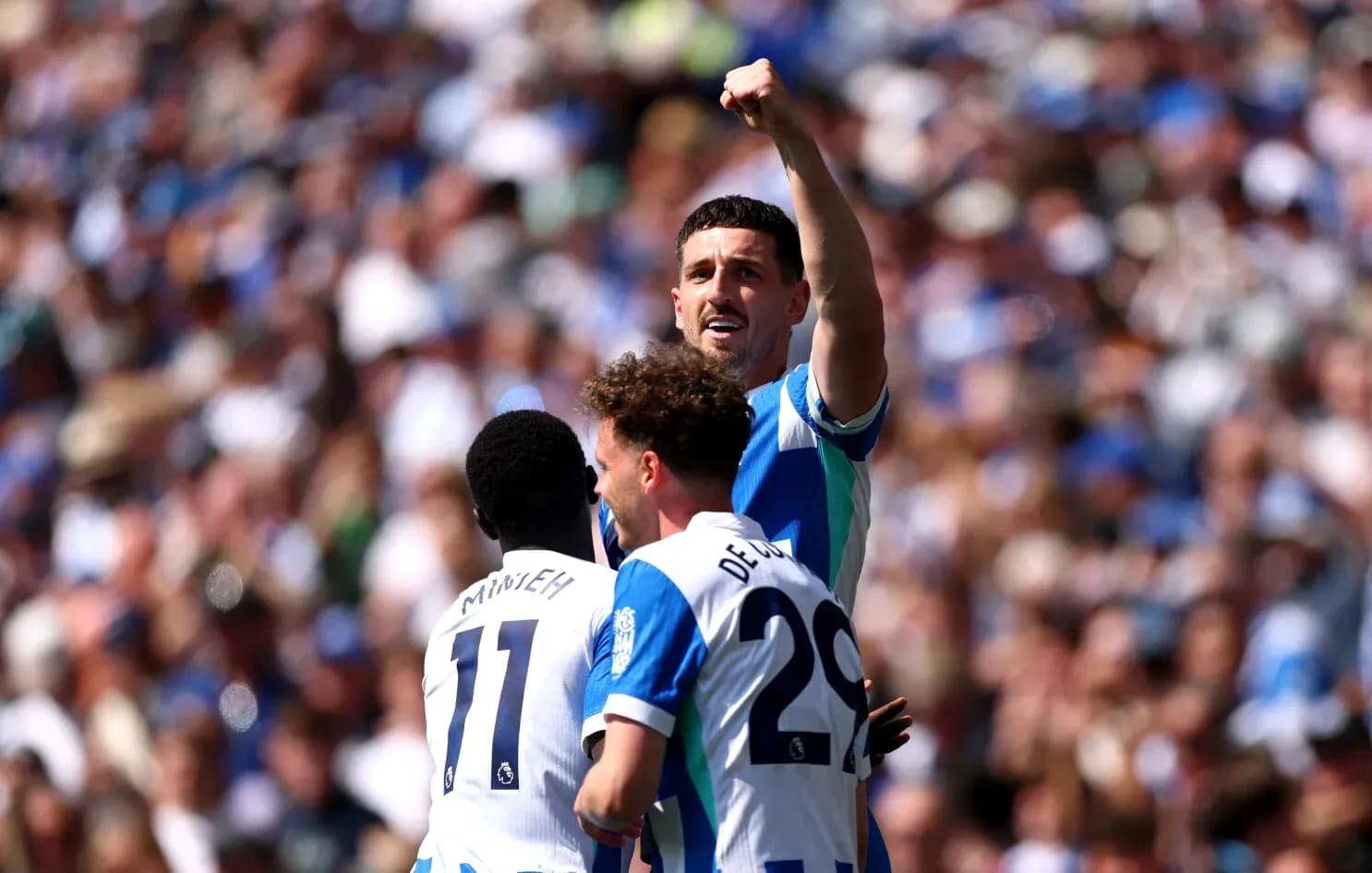
Brighton Dominates Wolves 3–0 in Tactical Masterclass
Brighton’s 3–0 win over Wolves at the Amex Stadium was a clinic in territorial control and structured pressing rather than sheer chance creation. In a Premier League Round 36 fixture, Fabian Hurzeler’s side combined a ferocious start with sustained possession to suffocate Rob Edwards’ Wolves. Early goals from Jack Hinshelwood and Lewis Dunk inside five minutes set the tone, before Yankuba Minteh’s late strike sealed a performance that always felt tactically secure. With Brighton holding 72% of the ball and limiting Wolves to a single shot on target, the match was defined by Brighton’s dominance of structure and space rather than end‑to‑end chaos.
The scoring sequence began almost immediately. At 1', Maxim De Cuyper stepped into advanced territory from left-back and delivered for Jack Hinshelwood, who converted to make it 1–0 to Brighton. Just four minutes later, at 5', De Cuyper again provided the assist, this time for centre-back Lewis Dunk, underlining Brighton’s early emphasis on set patterns and wide overloads. The halftime scoreline of 2–0 reflected both their fast start and their control of tempo.
Discipline was relatively clean but tactically relevant. There were three yellow cards in total: Brighton: 1, Wolves: 2, Total: 3.
Card log (in chronological order)
- 24' Kaoru Mitoma (Brighton) — Foul
- 49' Hwang Hee-chan (Wolves) — Foul
- 68' André (Wolves) — Foul
Mitoma’s 24' caution came with Brighton already two goals up, a reminder of the aggressive counter-press Hurzeler demands from his wide players. After the interval, Wolves’ frustration in chasing the game surfaced in Hwang Hee-chan’s 49' booking and André’s 68' yellow, both tagged simply as “Foul” but clearly linked to attempts to disrupt Brighton’s rhythm.
Substitutions followed the game’s tactical arc. At 46', David Møller Wolfe (IN) came on for Hugo Bueno (OUT) for Wolves, a like-for-like change that slightly freshened their left flank without altering shape. Brighton’s first adjustment came on 58', when Joël Veltman (IN) replaced Kaoru Mitoma (OUT), tilting the right side from an attacking winger to a more conservative full-back profile, effectively locking in the lead.
Wolves tried to inject directness on 67' with a double change: Rodrigo Gomes (IN) for Pedro Lima (OUT) and Jean-Ricner Bellegarde (IN) for Mateus Mané (OUT), aiming for more ball-carrying and vertical runs from deeper positions. Brighton responded on 76' with two midfield and attacking rotations: Yasin Ayari (IN) for Carlos Baleba (OUT) and Georginio Rutter (IN) for Danny Welbeck (OUT), keeping their pressing intensity high while protecting key legs.
The third goal at 86' — Yankuba Minteh finishing without an assist recorded — underlined Brighton’s ability to transition from control to incision even late in the game. Finally, at 88', Charalampos Kostoulas (IN) replaced Jack Hinshelwood (OUT) and Solly March (IN) came on for Maxim De Cuyper (OUT), giving minutes to fresh attackers and resting two of the game’s key structural pieces. Wolves’ last throw came on 89' with Angel Gomes (IN) for Hwang Hee-chan (OUT) and Tolu Arokodare (IN) for João Gomes (OUT), but the tactical die was already cast.
Structurally, Brighton’s dominance was built on a possession-heavy, high-rest-defense model. With 578 total passes and 86% accuracy, they used the back line — Bart Verbruggen, Jan Paul van Hecke, Lewis Dunk and the advancing full-backs Ferdi Kadıoğlu and Maxim De Cuyper — as a platform to pin Wolves back. De Cuyper’s two early assists show how he functioned almost as an auxiliary playmaker from deep left zones, repeatedly receiving under minimal pressure due to Brighton’s central overloads.
Carlos Baleba and Pascal Groß formed the positional core in midfield, with Baleba anchoring transitions and Groß orchestrating in the half-spaces. Their ability to recycle possession meant Brighton could maintain 72% of the ball and compress Wolves into their own third. Jack Hinshelwood, nominally a midfielder, continually arrived from the second line to attack the box — his 1' goal was emblematic of Brighton’s third-man runs and timing against a still-organizing Wolves block.
Out wide, Kaoru Mitoma and Yankuba Minteh provided contrasting threats: Mitoma’s ball-carrying and 1v1 play on the left, Minteh’s direct running and depth on the right. Even after Mitoma’s withdrawal, the introduction of Joël Veltman shifted that flank toward control rather than constant dribbling, helping Brighton manage the game state at 2–0. Danny Welbeck’s role up front was less about volume of shots and more about linking play and occupying centre-backs, allowing runners like Hinshelwood and Minteh to attack gaps.
Defensively, Brighton’s shape without the ball was compact and proactive. They committed only 9 fouls despite their aggressive press, reflecting good spacing and timing in duels. Wolves were restricted to 5 total shots, just 1 on target, illustrating how effectively Brighton controlled central access. Verbruggen had to make only 1 save; his main job was sweeping and recycling possession.
Wolves, by contrast, struggled to connect their lines. With just 225 passes and 68% accuracy, their attempts to play through João Gomes and André were repeatedly disrupted. The front trio of Adam Armstrong, Mateus Mané and Hwang Hee-chan received limited service between the lines and were often forced to chase long clearances rather than attack structured moves. The 11 fouls and two yellow cards also reflected a reactive, chasing posture.
Statistically, the 3–0 scoreline slightly exceeded Brighton’s underlying numbers but aligned with the pattern of control. Brighton’s xG of 1.62 versus Wolves’ 0.49 shows that while Brighton were not relentlessly creating high-quality chances, they consistently generated better opportunities and completely limited Wolves’ threat. Both goalkeepers posted the same goals-prevented figure (0.25), but the context differed: Daniel Bentley faced 6 shots on goal and made 3 saves, while Verbruggen saw just 1 effort on target.
The shot profile further underlines tactical dominance: Brighton produced 14 total shots (10 inside the box), compared to Wolves’ 5 (4 inside the box) but with far less sustained territory. Brighton’s 7 corner kicks to Wolves’ 1 reflect repeated occupation of the final third, while the offside count (Brighton 1, Wolves 3) suggests Wolves were often forced into speculative runs against a well-organized high line.
Overall, Brighton married an intense opening salvo with mature game management. The early use of De Cuyper as a creative outlet, the central control of Baleba and Groß, and the managed shift from Mitoma’s attacking thrust to Veltman’s stability illustrated a clear, coherent tactical plan that Wolves never truly disrupted.