Boavista's Fall: The End of Celtic's Old Adversary
Boavista are gone. Not relegated, not restructured, not waiting on an appeal. Extinct.
One of Portugal’s most awkward, stubborn clubs – the striped irritant who once stood between Celtic and a European final – has been ordered to switch off the lights for good after years of financial chaos finally caught up with them.
On 16 July 2026, a court ruled that Boavista must cease all activities by 31 July and hand over their premises, the final act in an insolvency saga built on unpaid debts and failed attempts at restructuring. A club founded in 1903, a champion of Portugal in 2001, now reduced to a legal instruction: stop existing.
For Celtic supporters, the name Boavista carries a very particular echo.
The First Meetings: Numbers on the Hoops, Goals in Glasgow
Long before that fraught UEFA Cup run in 2003, Celtic first crossed paths with Boavista in the European Cup Winners’ Cup in 1975. The tie began quietly enough in Porto, a 0-0 draw that left the job to be done back in Glasgow.
Celtic Park delivered.
Under the lights, Celtic beat the Portuguese side 3-1 in the second leg to win the tie by the same aggregate scoreline. Kenny Dalglish struck. Shuggie Edvaldsson found the net. Dixie Deans added his name to the story.
It was a night of goals, noise, and something new: it marked the first time Celtic wore squad numbers on the back of those famous hooped jerseys. A small detail in the moment, a landmark in retrospect. Boavista, even then, were tied into a piece of Celtic history.
Larsson, Porto, and a Semi-Final That Still Stings
Ask most Celtic fans about Boavista, though, and their minds jump straight to 2003.
The UEFA Cup semi-final. The year of Seville. The year when Martin O’Neill’s side carved a path through Europe with belief, power and a certain inevitability – until the final itself.
Boavista stood in the way in the last four. Compact, cynical, awkward. They came to Celtic Park in the first leg and left with a 1-1 draw, having snatched a precious away goal. Henrik Larsson, as he so often did, dragged Celtic back into it with the equaliser.
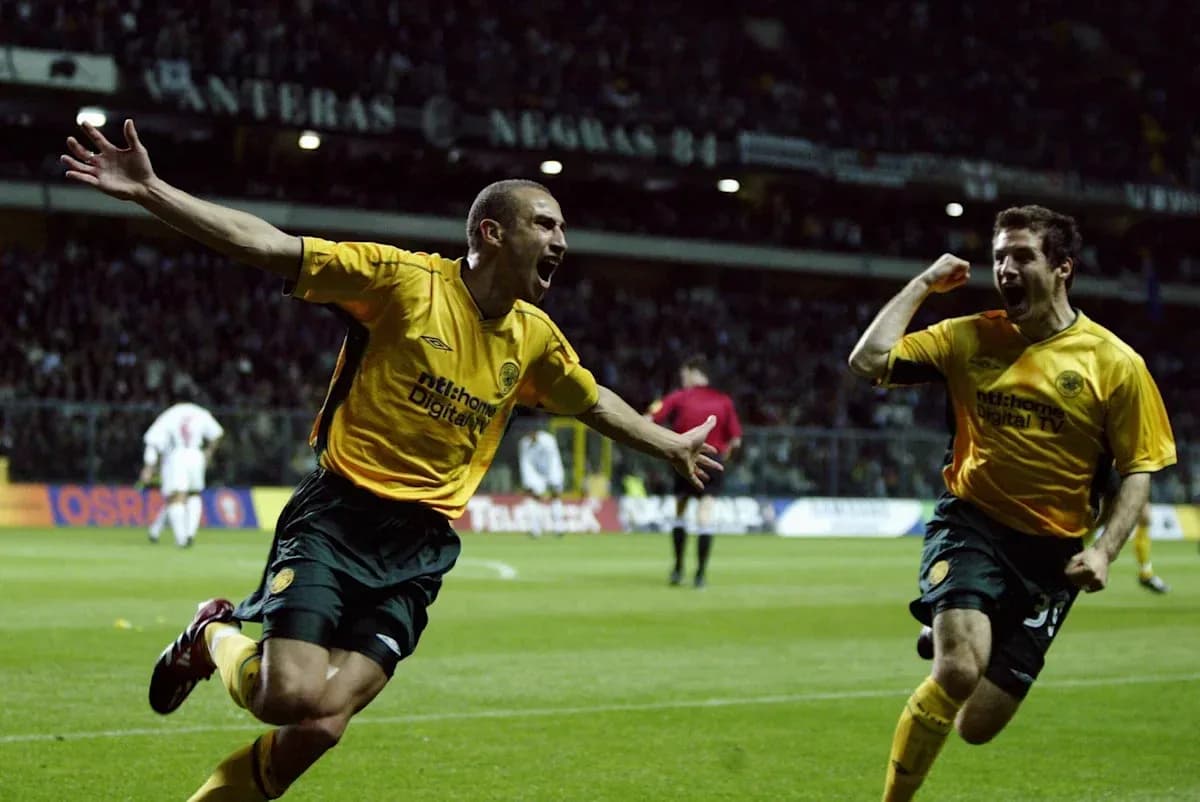
The second leg at the Bessa Stadium in Porto felt like a test of nerve as much as quality. Celtic needed something special, something decisive. Again, it was Larsson. His goal sealed a 1-0 win on the night, 2-1 on aggregate, and propelled Celtic into a historic European final against Porto, Boavista’s city rivals.
The images remain vivid: Larsson celebrating in green and white, Martin O’Neill embracing his talisman on the pitch in Porto, Celtic’s travelling support roaring into the Portuguese night. Boavista were the obstacle overcome on the way to Seville, a key chapter in one of the club’s great modern adventures.
The less said about that final against Porto, the better. But the semi-final, and Boavista’s part in it, is carved deep into Celtic folklore.
The Rise of the Outsider
Boavista were never just a European footnote. At home, they were the great disruptors.
Based in Porto and founded in 1903, they collected nine major honours, including a landmark Primeira Liga title in 2001. That triumph broke the cartel. They became the first – and still the only – club outside the big three of Benfica, Porto and Sporting Lisbon to be crowned champions of Portugal.
For a time, they were the fourth pillar of Portuguese football. Not as glamorous, not as wealthy, but fiercely competitive and defiantly awkward. The black-and-white chequered shirts became a symbol of resistance to the established order.
Then the ground began to give way.
A Slow Unravelling
Boavista’s financial troubles did not appear overnight. The decline took years, a slow erosion that eventually turned into collapse.
Transfer bans hit hard. The club were prohibited from signing players in five separate windows, a punishment that stripped them of flexibility and left squads thin and unbalanced. When the restrictions finally lifted, Boavista lurched in the opposite direction, signing nine players in a single day in February 2025. It looked less like a plan and more like a scramble.
On the pitch, the spiral continued. In the 2024/25 season, Boavista finished bottom of the top flight. A 4–1 defeat away to Arouca on the final day sealed their relegation and triggered a pitch invasion from some of the 2,000 travelling fans. Anger, despair, disbelief – the emotions of a support watching a club fall through their fingers.
The Portuguese league authorities then barred Boavista from competing in Liga Portugal 2. Relegated side Oliveirense were handed a reprieve; Boavista were handed another blow.
There was no soft landing. No steady rebuild in the second tier. Instead, they found doors slamming shut.
Locked Out of the Pyramid
Boavista’s problems deepened when they were refused registration for both the third-tier and fourth-tier Campeonato de Portugal in 2025. That decision forced a change of company structure and pushed the club into the Liga Pro, a new elite competition under the Porto Football Association rather than the national league system.
It was a fall from the main stage into the margins.
The institution tried to keep a foothold in the game. The club itself entered a team in the fourth division of the district leagues, a move that ran alongside the involvement of a supporters’ group of the same name. It looked like an attempt to preserve identity while the corporate shell shifted and rebranded.
Reality bit hard. The club-run side started defaulting on fixtures, failing to turn up and suffering losses by default. By the end of October, that team had withdrawn from competition entirely.
Boavista were no longer just sliding down the ladder. They were slipping off it.
The Final Whistle
The court order in July 2026 did not come out of nowhere. It arrived as the inevitable conclusion of years of unpaid obligations and failed restructuring efforts. Creditors had waited, deals had been attempted, but the sums never added up.
The instruction was stark: cease all activities by 31 July and hand over the premises.
For Celtic supporters, Boavista will always be tied to specific nights and specific goals – Dalglish and Deans in 1975, Larsson in 2003, the first squad numbers on the hoops, the march to Seville. For Portuguese football, they were the one club who dared to gatecrash the big three and actually pulled it off.
Now they are a cautionary tale.
Boavista failed to pay their debts. The club that once stood between Celtic and a European dream now exists only in memory and record. Perhaps, one day, a “new” Boavista FC will emerge from the wreckage, as so many fallen giants have tried to do.
If that happens, the name will return. But the original Boavista – champions of Portugal, tormentors in Europe, Celtic’s old adversary – has already played its last game.