Barcelona Dominates Real Madrid 2-0 in La Liga Clash
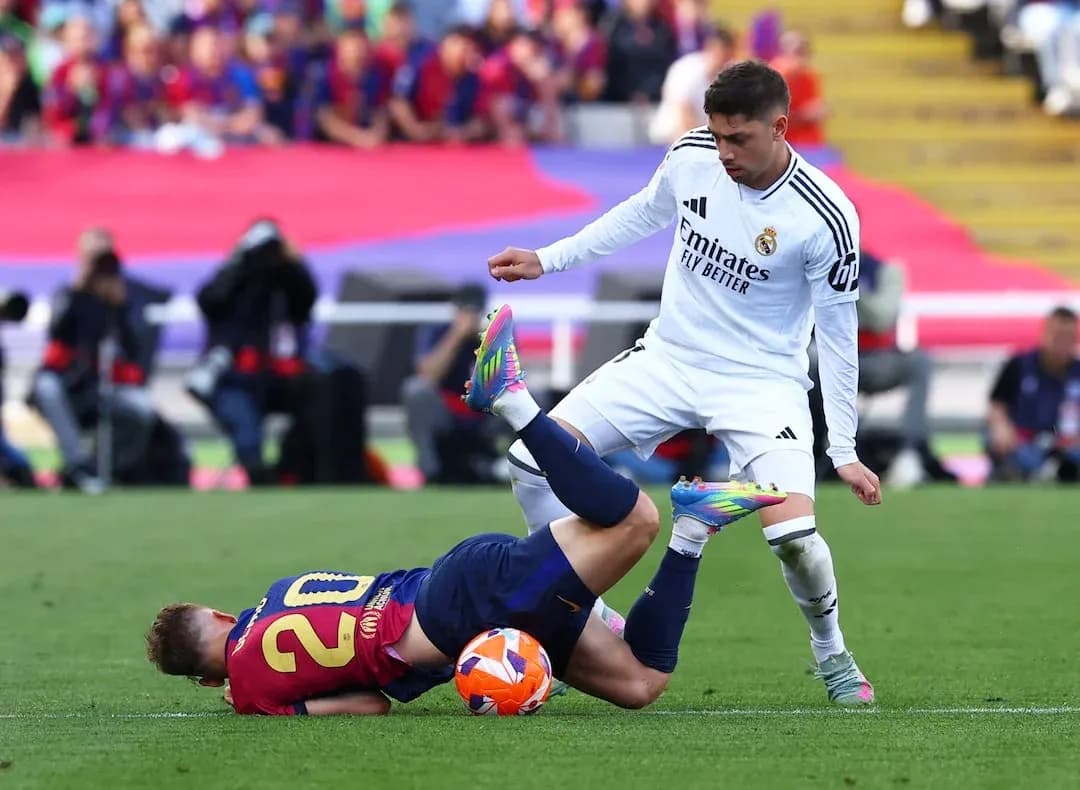
Barcelona’s 2-0 home win over Real Madrid at Camp Nou in La Liga’s Regular Season - 35 was built on an aggressive, front-loaded game plan and a disciplined second-half management of space. With the match effectively decided by the 18th minute, Hansi Flick’s side then controlled rhythm and territory, using their 57% possession and superior passing structure to keep Alvaro Arbeloa’s Real Madrid at arm’s length.
Executive Summary
Barcelona struck twice early through Marcus Rashford and Ferran Torres, then shifted from high-tempo incision to controlled circulation. Their 4-2-3-1, with Dani Olmo and Rashford operating as hybrid attacking midfielders, repeatedly isolated Real Madrid’s full-backs and centre-backs in the first quarter-hour. Real Madrid’s own 4-2-3-1 never fully connected midfield to the front line; despite 8 total shots and 0.79 xG, they generated only one shot on target and were largely forced wide. Barcelona’s 0.99 xG reflected fewer but higher-quality looks, while their compact defensive block after the interval neutralised Jude Bellingham’s influence between the lines.
Scoring Sequence & Disciplinary Log
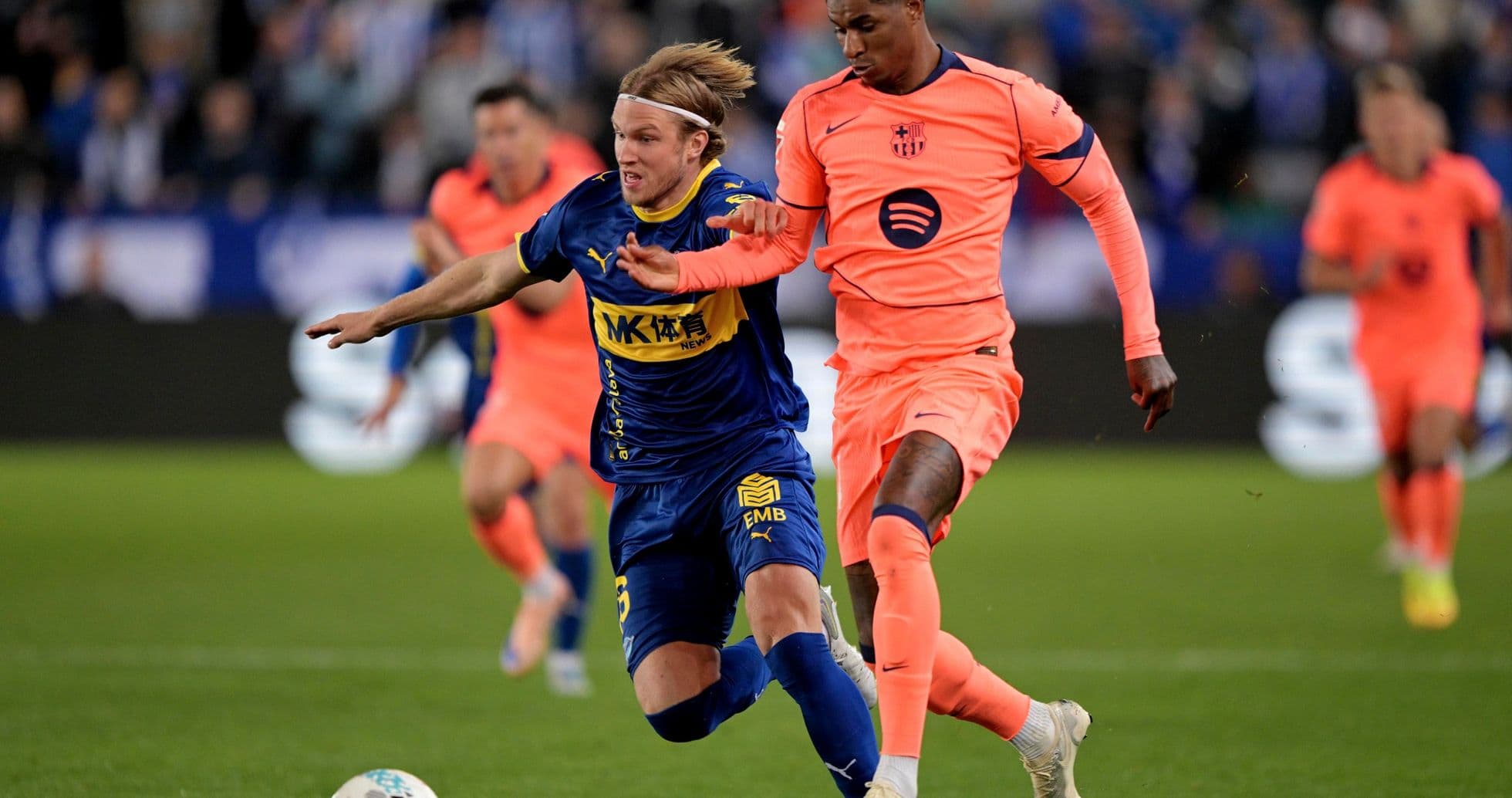
The match opened with Barcelona immediately targeting the half-spaces behind Real Madrid’s double pivot. On 9', Marcus Rashford (Barcelona) attacked the inside-right channel, finishing a “Normal Goal” to make it 1-0. The move underlined Barcelona’s intention to break Madrid’s first line quickly rather than slowly constructing from deep.
By 18', Barcelona doubled the lead: Ferran Torres (Barcelona) scored a “Normal Goal” after Dani Olmo’s assist, making it 2-0. Olmo’s positioning between Real Madrid’s midfield and defence created the passing lane; his delayed release allowed Torres to time his run across the centre-backs.
From there, Real Madrid’s response was more physical than structural. The disciplinary sequence, strictly in chronological order, was:
- 40' Eduardo Camavinga (Real Madrid) — Foul
- 52' Dani Olmo (Barcelona) — Argument
- 52' Raúl Asencio (Real Madrid) — Foul
- 55' Jude Bellingham (Real Madrid) — Unallowed field entering
- 81' Raphinha (Barcelona) — Argument
- 81' Trent Alexander-Arnold (Real Madrid) — Argument
This yields locked card totals: Barcelona: 2, Real Madrid: 4, Total: 6
No VAR interventions were recorded, and the halftime score was 2-0 to Barcelona, matching the early scoring burst.
Substitutions followed the game’s tactical arc. At 64', Frenkie de Jong (IN) came on for Dani Olmo (OUT), and Raphinha (IN) came on for Marcus Rashford (OUT), signalling a shift toward more control and vertical counter-threat. At 70', Thiago Pitarch (IN) replaced Eduardo Camavinga (OUT) for Real Madrid, an attempt to refresh the double pivot. Barcelona then introduced Robert Lewandowski (IN) for Ferran Torres (OUT) and Marc Bernal (IN) for Gavi (OUT) on 77', adding a reference point up front and fresh legs in midfield. Real Madrid answered at 79' with Franco Mastantuono (IN) for Brahim Díaz (OUT) and César Palacios (IN) for Gonzalo García (OUT), seeking more creativity and mobility. Finally, at 88', Alejandro Balde (IN) came on for Fermín López (OUT), giving Barcelona extra defensive stability on the flank.
Tactical Breakdown & Personnel
Flick’s 4-2-3-1 was asymmetrical in practice. Joan García in goal had only 1 save to make, reflecting Barcelona’s strong control of central zones rather than outstanding shot-stopping. The back four of João Cancelo, Gerard Martín, Pau Cubarsí, and Eric García held a relatively high line, trusting their timing and cover to compress Real Madrid’s attacking midfielders. Cancelo’s advanced positioning on the right created a natural overload with Rashford, forcing Fran García and Raúl Asencio into repeated lateral shifts.
In midfield, Gavi and Pedri formed the double pivot, but with distinct roles. Pedri often dropped to support first-phase buildup, giving Barcelona a 3+1 structure with Cancelo tucking inside at times. Gavi operated slightly higher and more aggressively, stepping into duels to prevent Bellingham from turning. Ahead of them, Fermín López, Dani Olmo, and Marcus Rashford formed a fluid line of three behind Ferran Torres. Rashford’s starting label as “Midfielder” belied his forward-like movements: he attacked the channel between Antonio Rüdiger and Fran García, while Olmo occupied the left half-space, drawing Aurélien Tchouaméni and Camavinga out of their screening roles.
The second goal encapsulated this: Olmo found space between the lines, received on the half-turn, and threaded the pass for Torres’s run across the front of the defence. With 7 shots on goal from 10 total shots and 9 efforts inside the box, Barcelona’s shot profile was compact and high-quality, showing how well their positional play created clean looks.
Arbeloa’s Real Madrid mirrored the 4-2-3-1 but struggled to connect lines. Trent Alexander-Arnold and Fran García were pinned deep by Barcelona’s wide threats, limiting their forward thrust. Camavinga and Tchouaméni, as the double pivot, were overloaded by Barcelona’s interior rotations; Bellingham, nominally the central 10, was often forced to drop too deep to receive, which blunted his presence around the box.
Vinicius Júnior remained a constant outlet on the left, but with only 1 shot on target from 8 total attempts, Real Madrid’s attacks rarely culminated in clear central chances. Gonzalo García, as the lone forward, was isolated, often receiving with his back to goal against a compact centre-back pairing. The later introductions of Franco Mastantuono and César Palacios added energy but did not fundamentally alter the structure; Barcelona’s mid-block, reinforced by Frenkie de Jong and Marc Bernal, closed passing lanes into the central 10 space.
Raphinha’s entrance for Rashford shifted Barcelona toward a more transitional posture: deeper starting positions, then rapid counters into the space behind Madrid’s advancing full-backs. Lewandowski’s late cameo provided a target to secure long clearances and relieve pressure.
The Statistical Verdict
The numbers underline Barcelona’s territorial and structural superiority. They completed 527 passes, 484 accurate (92%), compared to Real Madrid’s 394 passes, 342 accurate (87%). The higher volume and accuracy reflect Barcelona’s ability to recycle possession and dictate tempo once 2-0 ahead. Their 57% ball possession translated into control rather than sterile dominance, as evidenced by 7 shots on goal and 0.99 xG.
Real Madrid, with 43% possession and 8 total shots (only 1 on target), generated 0.79 xG, suggesting that while they reached shooting positions, the quality and centrality of those chances were inferior. Both goalkeepers shared the same negative “goals prevented” figure (-0.53), but with Courtois making 5 saves to García’s 1, the defensive load was clearly skewed toward Real Madrid’s end.
Discipline also told a story: Barcelona committed 18 fouls and received 2 yellow cards (both for “Argument”), while Real Madrid committed 9 fouls but collected 4 yellows (two for “Foul”, one for “Unallowed field entering”, one for “Argument”). The imbalance in cards (4 and 2) matched the pattern of a side chasing the game and repeatedly breaking rhythm. In sum, Barcelona’s superior overall form and more coherent structure, combined with a solid defensive index anchored by a controlled high line and compact midfield, justified a comfortable 2-0 scoreline written home-team first.