Anthony Gordon's Potential Move to Barcelona: A Game-Changer
Anthony Gordon is on the brink of a move that changes everything.
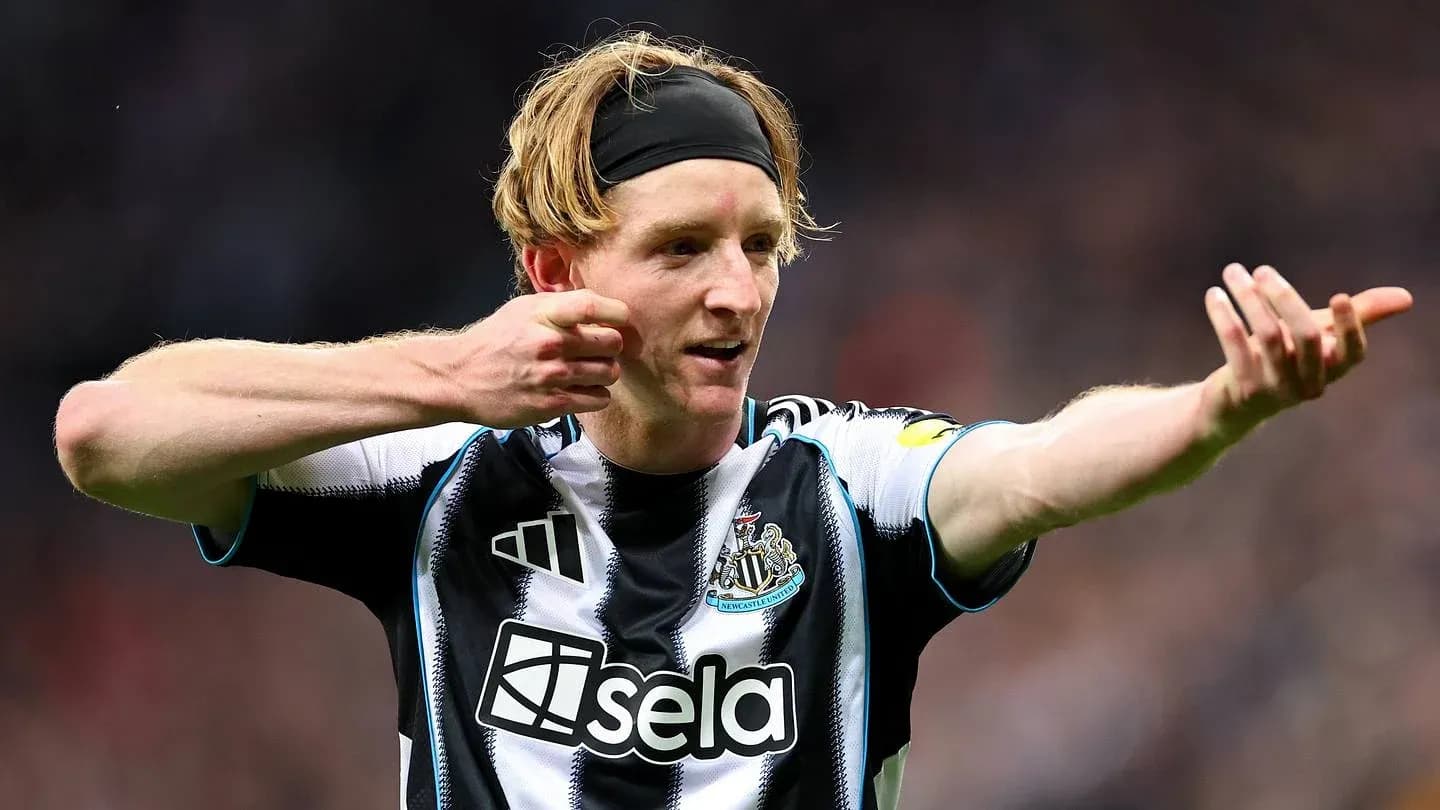
Barcelona are closing in on an €80 million (£69.3m, $93.2m) deal for the Newcastle United winger, a fee that would make him one of the headline transfers of the summer and place him among the most expensive English exports in history. For a player whose career has accelerated at breakneck speed over the past three seasons, this is the leap into the game’s rarest air.
The Catalan giants have moved quickly. Interest from Bayern Munich, Arsenal and Liverpool had grown louder as the season wound down, but Barça pushed to the front of the queue, sensing an opportunity to secure a wide forward entering his prime. The lure of Camp Nou – and the chance to become a central figure in Barcelona’s next cycle – did the rest.
For Gordon, the timing is perfect. His future is expected to be settled before he joins up with England ahead of the 2026 World Cup, allowing him to arrive on the biggest international stage as a Barcelona player and one of the faces of a new-look La Roja rival.
A rare English chapter in Barça’s history
Gordon will be stepping into unusual territory for an Englishman. He is set to become only the third player from England to represent Barcelona, a club whose modern icons have largely come from Spain, South America and, occasionally, the Netherlands or France. That rarity only heightens the sense of occasion around his arrival.
It also throws up a question that always matters in Barcelona: what number goes on the back?
From 70 to 10: the evolution of a number
Gordon’s shirt journey tells the story of a player climbing the ladder the hard way.
He first appeared for Everton in 2017–18 wearing the unglamorous No. 70, the kind of number that screams “academy hopeful” rather than future marquee signing. Two years later, as his involvement with the first team grew, he stepped into No. 42, a small but clear promotion in status.
In 2020–21, he flipped that number on its head, taking No. 24 for the first half of the season at Goodison Park. A loan spell at Preston North End followed, and with it a return to No. 42 – back to graft, back to proving himself outside the Premier League spotlight.
The real statement came later. As his influence at Everton increased, Gordon took on the No. 10 shirt, traditionally reserved for the creative heartbeat or the star attacker. It was a sign of how the club viewed him and how he viewed himself: no longer just a promising winger, but a player ready to shoulder responsibility.
His move to Newcastle United did not immediately bring that status with it. In his first season at St James’ Park, he wore No. 8, biding his time while Allan Saint-Maximin still owned the No. 10. When that shirt finally became available, Gordon claimed it again, underlining his growing role as a central attacking figure in Eddie Howe’s side.
For England, the picture has been less settled. International football rarely offers long-term ownership of a number, and Gordon has bounced between 18, 17, 11 and 7. It has been a reminder that on the global stage, hierarchy is fluid and competition is fierce.
The Barcelona wardrobe: legendary numbers, limited choices
Barcelona’s dressing room comes with its own mythology. Numbers at this club are never just numbers.
Right now, some of the most storied shirts in football are either vacant or about to be. The No. 9, worn in recent years by Robert Lewandowski and historically by Luis Suárez, Zlatan Ibrahimović, Samuel Eto’o and Ronaldo, will be free when the Poland striker leaves as a free agent this summer. It is the shirt of the ruthless finisher, the penalty-box killer.
Barça, though, are hunting a new centre-forward and are expected to keep that No. 9 open for their next spearhead. Gordon, a winger who thrives cutting in from the left and driving at defenders, is unlikely to be the man they anoint as their classic No. 9.
That does not mean his options lack weight.
The No. 14 is available, a number with deep resonance at Barcelona thanks to Johan Cruyff and, in more recent years, Thierry Henry. It was most recently worn by Marcus Rashford during his loan spell in Catalonia, a modern attacking reference point that would not be lost on Gordon. The No. 12 is also free, a less romantic choice but one that has often belonged to important squad players in elite sides.
The picture could change again before the window closes. If Ferran Torres moves on, No. 7 opens up – a shirt long associated with wide forwards and second strikers. Should Andreas Christensen depart, No. 15 would be there to claim. João Cancelo’s exit at the end of his loan will also free up No. 2, an unconventional pick for a winger but increasingly common in an era where traditional positional numbering has loosened.
La Liga rules add a layer of constraint. First-team players must wear numbers between 1 and 25, so there will be no return to the high double digits of his Everton debut. Whatever Gordon chooses, it will sit firmly in the heart of the squad list, not on the fringes.
A number, and a statement
For a player like Anthony Gordon, the choice of shirt at Barcelona will not just be about comfort or superstition. It will be a declaration of intent inside a club that lives on symbolism.
Does he lean into history with 14? Does he wait for 7 and embrace the role of wide talisman? Or does he carve out something less obvious and build his own story around it?
The fee, the stage, the colours – all of that is now in place. The final detail, that small number printed beneath his name, will say plenty about how Gordon sees himself in the next chapter of his career, and how Barcelona plan to use the most expensive English winger of his generation.