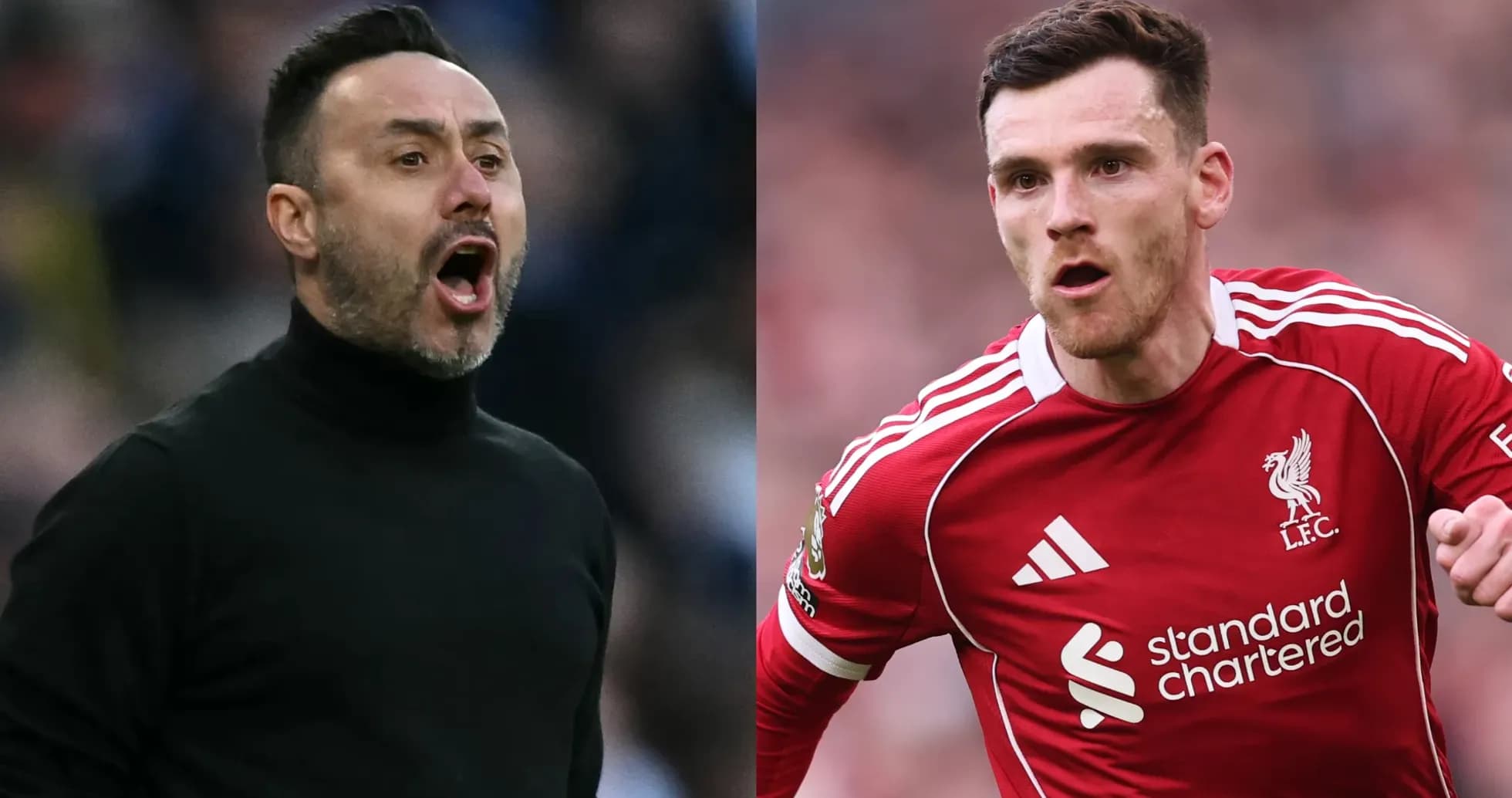
Andy Robertson: Liverpool’s Premier League Legend Joins Tottenham
The image is hard to shake. Red shirt, head down, legs pumping, Andy Robertson tearing up the left flank as if the pitch is on fast‑forward and everyone else is stuck in slow motion.
For seven years at Liverpool, that was the soundtrack: the thud of his running, the roar that followed. He became a fixture, a symbol, and, for many, the finest left-back of the Premier League era in a red shirt. Only Alan Kennedy, scorer of two European Cup-winning goals, can reasonably stand alongside him in the club’s history at that position.
He leaves Anfield having completed the set. Two Premier League titles. A UEFA Champions League. An FA Cup. Two League Cups. A FIFA Club World Cup. The honours list reads like a club museum tour.
But now, that relentless engine is heading south. To Tottenham Hotspur. To a team that has spent two seasons flirting dangerously with the wrong end of the table. To a dressing room short on scars and medals, but not on need.
Built for Klopp, Built for Chaos
Jurgen Klopp’s Liverpool demanded fury and control in equal measure. Robertson delivered both.
He charged up and down that left side, with and without the ball, as if wired directly into the manager’s touchline energy. The system asked him to be a winger, a full-back, a presser, a playmaker. He did all of it, all of the time.
Jose Mourinho, never one for empty praise, captured it best after Manchester United’s 3-1 defeat at Anfield in December 2018. “They play 200 miles per hour with and without the ball,” he said. “I am still tired from looking at Robertson. He makes 100-metre sprints every minute, absolutely incredible.”
That wasn’t hyperbole. It was data.
In 2020/21, Robertson covered 389.3km in the Premier League, the second‑highest total of any full-back, just behind Luke Ayling. From 2019 to 2022 he led all full-backs in sprints in three straight seasons: 567 in 2019/20, 843 in 2020/21, 656 in 2021/22. Those aren’t just big numbers; they are a running pattern that defined a team.
The press was his calling card. The 13-second sequence against Manchester City in January 2018 has become folklore. Bernardo Silva, Kyle Walker, John Stones, Ederson, Nicolas Otamendi — all hunted down in one wild, continuous burst. It was defending as theatre, a left-back turning a press into an anthem. Anfield loved him for it.
Tottenham fans will too.
A Full-Back Who Plays Like a Creator
Robertson’s reputation is not built on running alone. The numbers with the ball are just as brutal.
Since joining Liverpool from Hull City in 2017 for a reported £8million, he has outperformed every other Premier League left-back in almost every meaningful attacking category. From 2017/18 onwards, he ranks:
- 1st for touches in the opposition box (612) among left-backs, and 1st among all defenders.
- 1st for chances created, including assists (430), again 2nd among all defenders.
- 1st for big chances created (88) among left-backs, 2nd among defenders.
- 1st for assists by a Premier League left-back with 56.
- 1st for open-play crosses (973) among left-backs, 2nd among defenders.
- 2nd for successful open-play crosses (191).
- 1st for successful passes ending in the final third (4,000) among left-backs and defenders alike.
Only Trent Alexander-Arnold can match him for sustained output from full-back. Between them, they rewrote what a back four could look like.
Robertson is also one of only two full-backs in Premier League history to record 10 or more assists in three different seasons. The other is Alexander-Arnold. In 2018/19, Robertson registered 11 assists to Trent’s 12. In 2019/20, it was 12 to 13. In 2021/22, 10 to 12. Those are playmaker numbers, not defender numbers.
Is he the greatest left-back the Premier League has seen? Ashley Cole, with his longevity at Arsenal and Chelsea and his elite defensive reputation, probably still edges that argument. But Robertson sits right on his shoulder.
Why Spurs Moved, and Why Now
When a player of that profile becomes available on a free transfer, the queue forms quickly. Spurs were in it early.
They tried to bring him in during January, only for the move to stall when Liverpool could not recall Kostas Tsimikas from his loan at Roma. The door closed then. It didn’t stay shut for long.
With Robertson’s contract at Liverpool running down, Tottenham returned. New head coach Roberto de Zerbi pushed hard, fighting off reported interest from Juventus to land the 32-year-old.
On paper, Spurs were not desperate for another left-back. Destiny Udogie and Djed Spence already occupy that side of the pitch. But this signing is about more than depth charts and rotation.
Tottenham’s squad is thin on serial winners and heavyweight personalities. Back‑to‑back 17th‑place finishes have left scars. Standards have slipped. Habits have frayed. De Zerbi knows it.
“He brings experience, mentality and qualities,” the Italian said once the deal was done. “He’s a big player for us.”
That is the point. Robertson has lived in a culture where trophies are expected, not dreamed about. He knows what it looks like when training levels dip, when details get sloppy, when a dressing room loses its edge. He also knows how to drag it back.
Still More Than Just a Name
At 32, the obvious question hangs in the air: how much is left?
The evidence from last season suggests plenty.
In 2025/26, Robertson started 11 Premier League matches for Liverpool and came off the bench 13 times. Across all competitions, he played in 35 games. He no longer spends entire matches camped on the edge of the opposition box, but he still attacks with intent. His heat map from the campaign just gone shows a player who remains aggressive, always looking to push high, always offering width.
More importantly for Spurs, his output per 90 minutes still outstrips anything their current defenders produced.
In the league last season, Robertson averaged:
- 5.07 passes into the box per 90 minutes, compared to 2.67 for Spence and 1.75 for Udogie.
- A tackle success rate of 75.00%, ahead of Spence (61.36%) and Udogie (61.29%).
- 0.92 successful open-play crosses per 90, more than double Spence (0.44) and almost three times Udogie (0.34).
- 1.54 chances created per 90, with Spence at 0.81 and Udogie at 0.44.
Those aren’t the numbers of a fading force. They are the profile of a player who, if managed correctly, can still start regularly and still dictate games from the flank.
He will also captain Scotland at the FIFA World Cup 2026. That alone tells you the level at which he is still operating.
De Zerbi’s Ideal Left-Back
De Zerbi wants full-backs who can do more than defend their channel. His football demands intelligence, bravery on the ball, and the courage to play forward even when the pitch looks crowded and the risk is high.
Robertson fits that brief. He has spent years receiving under pressure, threading passes into crowded final thirds, and delivering crosses on the run. His 4,000 successful passes into the final third since 2017/18 are not just a statistic; they are a roadmap of how he likes to hurt teams.
He will give Spurs natural width and balance down the left. He will overlap, underlap, and still have the appetite to sprint back when moves break down. He will set a tempo. He will bark, cajole, demand.
Most of all, he will raise the bar.
This is not a nostalgic signing, a big name brought in on reputation alone. It is a calculated move for a player whose numbers still bite, whose mentality still burns, and whose presence in a young, fragile dressing room could change the tone of a season.
Liverpool have already built their past with him. Tottenham are betting he can help build their future.