World Cup 2023: Portugal's Grief and England's History
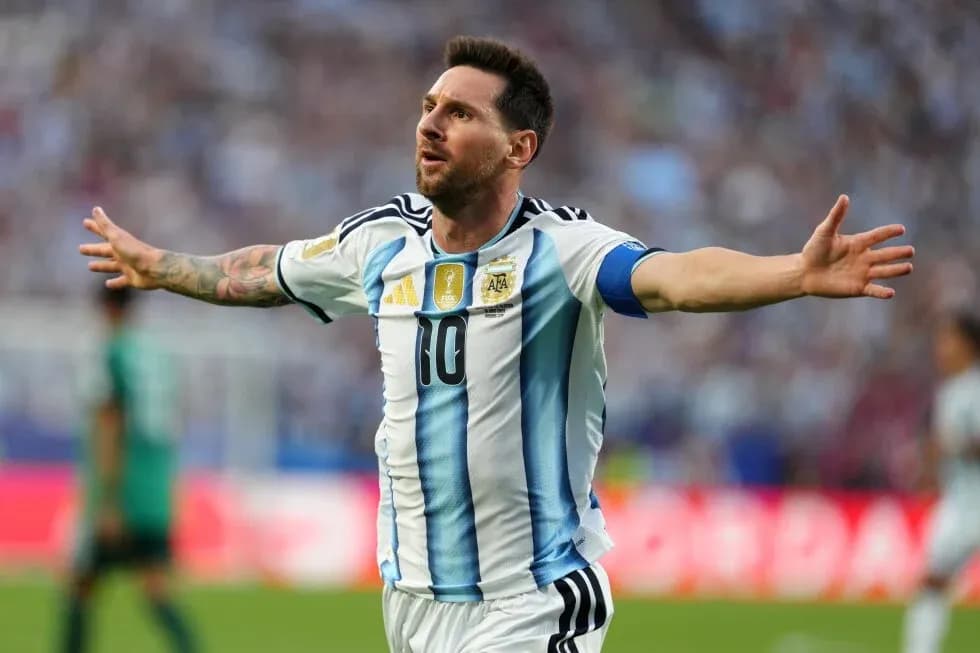
Lionel Messi lit the fuse. A hat-trick, a record equaled, and a reminder that even at this stage of his career, he can bend a World Cup day entirely to his will. Kylian Mbappé and Erling Haaland chipped in with braces of their own, the new generation keeping pace with the old master as North America’s tournament finally crackled into life.
Now the spotlight swings to another giant of the age. Cristiano Ronaldo steps into his sixth World Cup with the weight of a nation on his shoulders – and the memory of a fallen teammate sitting heavily on every Portuguese heart.
Portugal’s World Cup Begins With a Tribute
For Portugal, this is not just an opening group game against DR Congo in Houston. It is a public act of mourning.
Diogo Jota should have been here. In form, in his prime, a lock for the squad. Instead, the Liverpool and Portugal forward died in a car crash last year alongside his brother André Silva, just days after marrying his long-term partner, Rute Cardoso. They leave behind three children and a circle of teammates still struggling to process the loss.
At Liverpool, players have admitted that this season has often felt like a blur, football secondary to grief. For Portugal, that grief travels with them into this World Cup. The squad does not just chase a trophy; it carries a promise.
Roberto Martínez named Jota as an honorary member of the team when he selected his squad. Portugal’s Prime Minister, Luís Montenegro, went further, gifting each player a bracelet inscribed with their own name alongside Jota’s. The players will wear them in their opener at Houston’s NRG Stadium.
“They made sure that it was a wristband that we could wear on the pitch,” midfielder Vitinha told reporters. “He let us choose if we wanted to use it or not, during the day or during the match. We received it with a lot of affection and we chose to use it.”
The symbolism is obvious. The emotional load is heavier.
Vitinha put it bluntly when he spoke to CNN Sports earlier this year: “We feel this and we want to win it, not just because it’s a World Cup and it’s everybody’s dream, but for him as well.”
So Portugal walk out in Houston at 1 p.m. ET with two missions: three points, and a performance worthy of a teammate who always dreamed of this stage.
Ronaldo, One More Time
On the pitch, all roads still lead to Ronaldo.
At 39, he is no longer the unstoppable force who terrorized defenses for club and country. His World Cup in Qatar in 2022 was flat, his influence fading so sharply that he was eventually dropped. Yet Martínez has built a squad around a midfield most coaches in the tournament would envy: Bruno Fernandes, Vitinha, Bernardo Silva, João Neves. On paper, it may be the best central unit in North America.
The question hangs over it all: does Ronaldo elevate that core or slow it down?
Leaving him out for a World Cup opener would require a level of ruthlessness few managers possess. His presence still shapes opponents’ plans, still draws defenders and cameras alike. As Messi reminded everyone with his hat-trick against Algeria, class does not disappear. It simply waits for the right night.
DR Congo will not arrive in Houston as tourists. Yoane Wissa leads a compact, organized side that understands its role as underdog but refuses to play like one. The plan is clear: stay tight, frustrate Portugal’s creators, let Wissa punish any lapse.
For Portugal, the danger is obvious. Let the emotion of the occasion suffocate the football, and a tribute night can turn into a nightmare.
England and Croatia: Old Wounds, New Manager
If Portugal’s opener is soaked in grief, England’s is soaked in history.
At 4 p.m. ET in Arlington, Texas, the Three Lions face a familiar ghost: Croatia, the nation that has repeatedly cut them down at major tournaments, most famously in the 2018 World Cup semifinals.
England arrive, as ever, with a suitcase full of expectations and a trophy cabinet that still hasn’t been updated since 1966. Sixty years of near misses, penalty shootout collapses, and “what if” moments hang over every squad that pulls on the shirt.
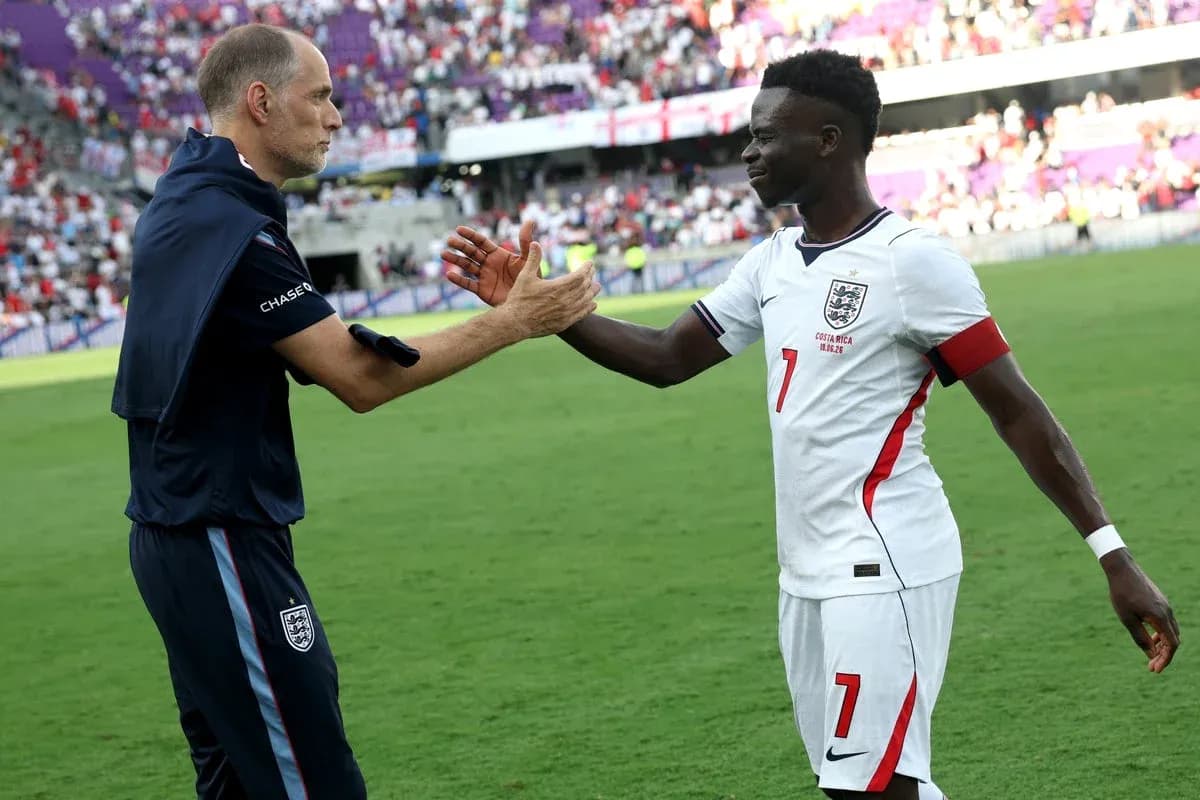
This time, the man tasked with rewriting the story is Thomas Tuchel.
His first major call has already set the tone. Tuchel has chosen cohesion over star power, leaving out big names such as Cole Palmer and Phil Foden. It is a ruthless statement: reputations stay at home, chemistry gets on the plane.
The spine remains formidable. Declan Rice, Jude Bellingham and Harry Kane will carry the burden of a soccer-obsessed nation across the Atlantic. Bellingham, in particular, arrives as the kind of generational midfielder England fans have spent decades dreaming about. Kane, as ever, is both finisher and fulcrum.
Waiting for them is a Croatia side that refuses to age out of contention. Luka Modrić, now 40, still dictates games with a calm that borders on arrogance. Croatia have been England’s nemesis for a reason: they do not panic, they do not care about the noise, and they know how to exploit English nerves when the stakes rise.
The matchup in Dallas was rightly picked as one of the group stage’s must-watch games. For England fans, it will feel like a stress test of the soul.
Messi’s Numbers, Same Old Story
While others wrestle with history and heartbreak, Messi just keeps stacking records.
His hat-trick against Algeria drew him level with Miroslav Klose as the joint-top scorer in World Cup history. It was another line on an already crowded résumé, another night where he made the extraordinary feel routine.
Messi has now scored five World Cup goals from outside the box, equaling the mark set by Brazilian great Rivellino. Long-range brilliance, again and again, across tournaments and eras. At this point, it is hard to imagine he even knows which record he has broken on any given night. The rest of the world keeps track for him.
In Buenos Aires, fans poured into the streets to celebrate his first World Cup hat-trick. For them, this is not just a tournament. It is the closing chapters of a story they have followed since he was a kid with a number 19 on his back.
England’s Eternal Roller Coaster
The relationship between England and its national team is a long-running drama, part romance, part tragedy.
From Diego Maradona’s “Hand of God” in Mexico 1986 to the penalty shootout agony against West Germany in 1990, from David Beckham’s red card against Argentina at France ’98 to Ronaldinho’s looping free-kick in 2002, the script has rarely been kind.
Frank Lampard’s ghost goal against Germany in 2010 still feels like a sliding-door moment. Brazil 2014 brought the humiliation of a group-stage exit. Only under Gareth Southgate did the mood shift: a World Cup semifinal in 2018, a Euro 2020 final, a quarterfinal in Qatar.
Yet the national psyche remains shaped by the refrain from “Three Lions” – hurt, hope, and the near-certainty that something will go wrong. Even legendary striker Gary Lineker, speaking to CNN Sports ahead of this tournament, framed his dream in stark terms: he is “desperately keen” to see England win a World Cup before he dies.
That is what this team carries into every major tournament: not just expectation, but decades of emotional baggage. Tuchel’s job is not only tactical. It is psychological. Can he turn all that scar tissue into fuel?
Iran’s Visa Headache Finally Eases
While the giants wrestle with legacy, Iran have been fighting a very different battle just to get on the pitch.
No team has endured more logistical disruption this summer. Because of ongoing political tensions, Iran have been forced to base themselves in Mexico and fly into the United States for matches. Then came a fresh blow: winger Mehdi Torabi discovered his visa had expired after the first game.
The situation risked derailing his tournament on a technicality. The US State Department stepped in.
“This issue has been resolved,” an official told CNN’s Jennifer Hansler. “As soon as we became aware of the issue, we worked to ensure that the player can participate in every game.”
Torabi now holds a new multi-entry visa, clearing him to play in as many matches as Iran can manage. For a squad already juggling travel, politics and pressure, one obstacle at least has been cleared from their path.
Ghana, Panama and a Battle for Belief
In Toronto at 7 p.m. ET, Ghana and Panama meet in a game that carries quiet but significant stakes.
For Panama, this is a chance at redemption. Their first World Cup, in 2018, ended with three defeats from three, including a bruising 6-1 loss to England. The ambition this time is more modest but no less meaningful: secure a first-ever World Cup point. The opener against Ghana feels like their best shot.
Ghana know what it is to flirt with history. Back in 2010, the Black Stars stood on the brink of becoming Africa’s first World Cup semifinalist, only to be denied in a storm of controversy and heartbreak. Since then, the trajectory has stalled. They have not escaped the group stage at a World Cup since.
This version of Ghana does not boast the attacking firepower of past generations. What it does have is Antoine Semenyo, fresh from an outstanding season with Manchester City. If he carries that club form into the tournament, Ghana have every chance of starting with three points.
They will have to do it without Thomas Partey in Toronto. The 33-year-old midfielder, who is awaiting trial on rape charges in the United Kingdom, had his Canadian visa application rejected, a decision upheld by a federal judge earlier this week, according to the Associated Press. He remains eligible for Ghana’s two group games in the United States, but his absence in Canada is a major blow.
Uzbekistan’s Debut and Colombia’s Old Magic
The day closes in Mexico City, under the looming stands of the Estadio Azteca, where World Cup history is etched into the concrete.
At 10 p.m. ET, Uzbekistan become the last of this tournament’s debutants to finally walk into the light. Coached by 2006 World Cup-winning captain Fabio Cannavaro, the White Wolves arrive without fanfare but with a clear intent: to be the only one of the four newcomers to win their opening match.
Abdukodir Khusanov is the name to know. At 22, the defender has already forced his way into the starting lineup at Manchester City, impressing in both the Premier League and Champions League. His rise has given Uzbekistan a genuine star to build around.
Colombia stand between them and a dream start. This is not a side of unknowns. James Rodríguez, who lit up the 2014 World Cup, remains the creative heartbeat, threading passes and drifting into dangerous pockets. Out wide, Luis Díaz arrives as one of the most in-form players on the planet, capable of shredding defenses with pace and precision.
For neutral fans, it is a perfect late-night watch: a hungry debutant against a seasoned tournament side that knows exactly how to put on a show.
DR Congo’s Other Fight: Ebola Fears in the Background
While DR Congo prepare to face Portugal on the pitch, their country confronts a far more serious opponent at home.
Health officials are warning that the Ebola outbreak in the Democratic Republic of Congo could become the “worst ever” in the region if it is not contained. More than 800 cases have already been confirmed. The outbreak sits in a remote, densely populated area scarred by insecurity and humanitarian crises, making containment brutally difficult.
This strain, the Bundibugyo variant, has no specific treatments or vaccines. That raises the stakes for public health agencies as the world’s attention focuses on a tournament featuring DR Congo’s national team.
US authorities have moved to limit risk. The Centers for Disease Control and Prevention and the Department of Homeland Security have introduced entry restrictions and passenger screening for travelers from the DRC, Uganda and South Sudan. So far, no Ebola cases have been identified in the United States. The World Health Organization rates the risk as very high within the DRC but low globally.
During the World Cup, US health officials are tracking multiple potential threats, yet Ebola is not at the top of their list. Early in infection, the virus does not spread easily. By the time a person is highly infectious, they are typically far too ill to attend a match or move freely.
Still, the contrast is stark. In Houston, DR Congo’s players will line up against Portugal, trying to spoil Ronaldo’s latest World Cup act. Back home, their country fights a battle that will not end with a final whistle.
And that is the strange, uneasy balance of this World Cup: grief and glory, records and regrets, all crammed into a few weeks on foreign soil, with the world watching to see who can carry their burdens the furthest.