United States Faces Tough Loss Against Turkey at World Cup
The United States walked away from this one with more questions than answers, a 90-minute reminder of how thin the margins are at World Cup level and how unforgiving Turkey can be when gifted space and time.
Mauricio Pochettino’s side produced flashes of quality – a thumping header, a gorgeous strike from the edge of the box – but those moments were wrapped inside a performance that never quite settled, never fully convinced.
Turner’s surprise start, and a brutal return
Matt Turner’s name on the team sheet was the first surprise of the day. The second came in the form of Turkey’s ruthless finishing.
Turner faced three shots on target. All three beat him.
He did have a couple of sharp sweeper moments, racing off his line to clean up danger and showing why coaches still trust his instincts outside the box. And he now joins the small, proud group of U.S. goalkeepers to start multiple World Cups – a milestone that should not be brushed aside.
But in the cold light of the result, this outing will not strengthen his case over Matt Freese. Not when every goalkeeping decision is under a microscope.
Scally and the full-back balance
On the right, Joe Scally brought a different profile from the more adventurous Sergiño Dest or Alex Freeman. He stayed home more, gave the impression of caution rather than thrust.
The problem came when the game sped up around him. Turkey’s second goal exposed him twice, pulling him out of position and punishing the space he left behind. When he did push on, his delivery let him down; crosses drifted into harmless areas rather than asking questions of the back line.
On the opposite flank, Auston Trusty once again looked like a centre-back asked to color outside the lines. As a wing-back or full-back he can appear slightly out of type, but when the ball swung into the box from a corner, he was exactly where he wanted to be.
Trusty rose, timed his leap, and buried the opening goal with a commanding header. It was a classic defender’s finish, all timing and aggression. Beyond the goal, he offered himself as a passing outlet, helped the U.S. escape pressure, and tracked diligently to cut down Turkey’s joy down their right.
Then came the sting. A late left ankle issue forced him off, a worrying sight on a day when he had been one of the few clear positives. He left with a deserved 7, and a cloud hanging over his next appearance.
Central defense: nerves and loose ends
Between the full-backs, the center-backs never quite found a dominant rhythm.
Mark McKenzie was too easily bypassed on Turkey’s first goal, caught out as the move sliced through the American shape. His long passing radar misfired as well, with too many attempts failing to find their targets. He did think he had made amends with a poacher’s finish from a corner, only to see the flag go up for offside.
What McKenzie did manage was to keep funneling play into midfield, trying to force Turkey into traffic rather than direct routes. But with the full-backs asked to shoulder more of the progression, his influence on the ball never truly took hold.
Alongside him, Miles Robinson started as if the occasion had arrived a half-step too soon. Any time the ball drifted into his zone in the opening stages, there was a hint of unease. Once the early nerves settled, he grew into the match, but the numbers told their own story: he led the team in phases lost, both with loose passing and hesitation in possession. A 5 that felt like a warning: concentration and tempo must sharpen.
Berhalter’s breakout and McKennie’s steady hand
If there was a heartbeat in the U.S. midfield, it belonged to Sebastian Berhalter.
His defensive work was far from spotless; there were moments when he lost his man or arrived a beat late. Those clips won’t dominate the highlight reels, but they will matter in the film room.
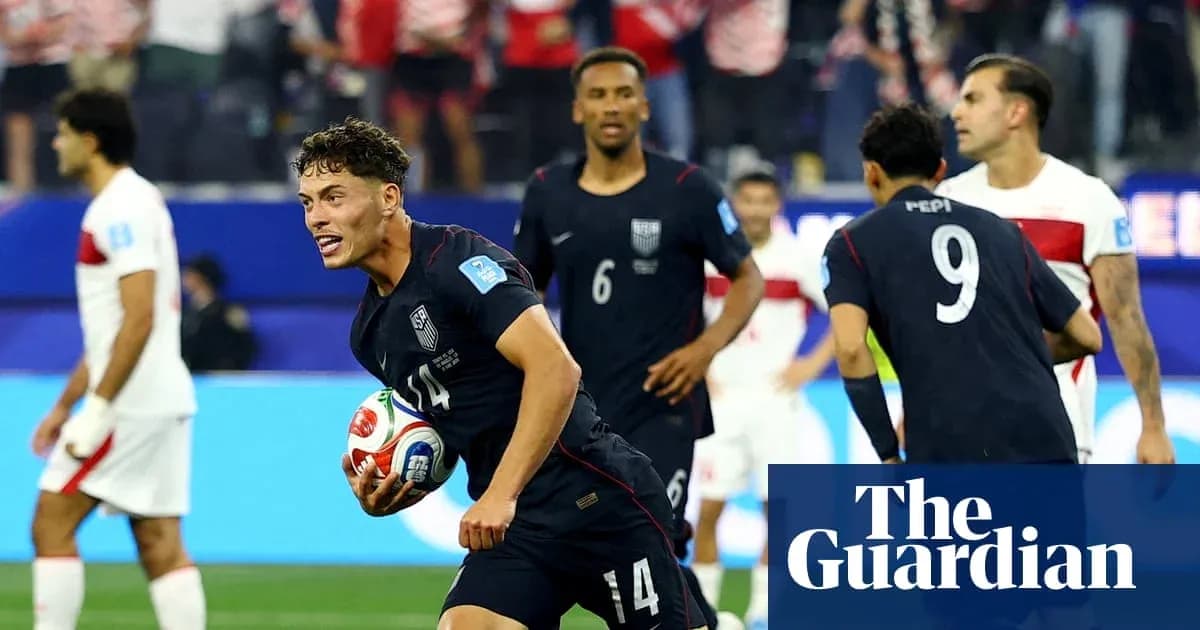
What will stand out is why he made this squad in the first place. His dead-ball quality delivered, quite literally, with the assist on Trusty’s opener. Then came his own moment of pure technique: another crisp addition to his growing catalogue of goals from the edge of the area, struck with the calm of a player who knows exactly what he wants the ball to do.
On the ball, he was the team’s most progressive passer by some distance, constantly looking to move play forward rather than sideways. An 8 felt fully earned.
Weston McKennie, wearing the armband in Cristian Roldan’s absence, brought his usual blend of presence and personality, if not his highest-energy performance. He kept the group wired when the game turned thorny, barking instructions, demanding more.
With the ball, he found pockets, took a few shots, but only one forced the goalkeeper into action. It was solid, not spectacular – a captain’s shift that held the middle together without ever seizing total control. A 7 that reflected his leadership as much as his touches.
Reyna’s recirculation and a blunt attack
Gio Reyna’s afternoon told its own story about his current reality. He simply does not play long stretches of football often enough.
Early on, he moved intelligently, constantly checking into space, offering himself as a passing option. Yet when he received the ball, the instinct was to recycle, to go safe, to keep the ball rather than split lines. He still produced the second-most box-entry passes on the team, trailing only Berhalter, but the sense lingered that he left risk on the table. A 5 that felt as much about rhythm as talent.
Ahead of him, the attack never truly clicked.
Tim Weah, shunted once more to his weaker side under Pochettino’s long-held theory about his “dominant eye,” endured a frustrating day. The logic might make sense on a whiteboard; on the pitch, it was harder to defend. Passes went astray, first touches escaped him, and his dribbles rarely carried menace. For a player of his experience, it was an off-key performance, reflected in a flat 5.
Brenden Aaronson, making his first World Cup start, delivered a familiar performance: relentless running, constant pressing, ceaseless effort. He stretched the field to the right, tried to drag defenders out of shape, and did much of the dirty work without complaint.
Then came the moment he will replay in his mind. An unobstructed chance at an open net went begging, the kind of miss that lingers far longer than any sprint or tackle. That chance alone shaded his day, keeping him at a 5.
Up front, Ricardo Pepi labored without reward. His movement was sharp, repeatedly dragging Turkey’s center-backs into deeper areas and trying to create space for runners. But the service into him was sporadic, and when the ball finally did arrive in a shooting position, his lone effort flew off target.
For a forward touted as Fulham’s potential $35 million signing-in-waiting, this was a muted audition. Another 5, another attacking piece still searching for the sharp edge.
A team still in between
There were goals to admire and individual performances to note, but the broader picture remains unresolved. The U.S. showed they can hurt teams from set pieces, that Berhalter can dictate tempo, that Trusty can be a weapon in both boxes.
They also showed how quickly structure can unravel under pressure, how fragile the hierarchy in goal remains, and how an attack full of promise can drift into half-chances and near-misses.
World Cups are unforgiving. The question now is whether this was a stumble on the way to something sharper, or a sign that this group is still caught between ideas, searching for the version of itself that can truly stand up to the world’s best.