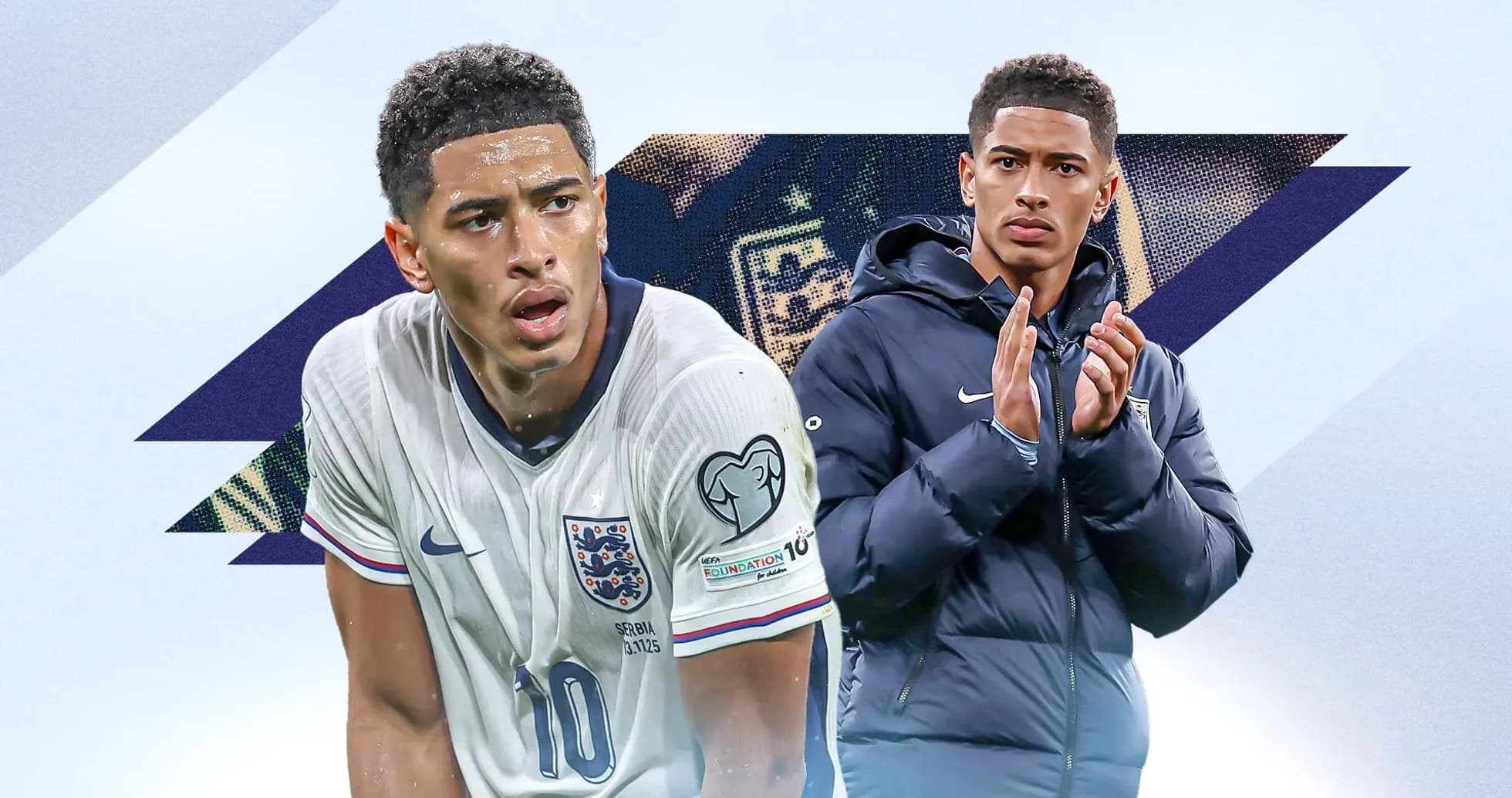
Thomas Tuchel's England Job: The No.10 Dilemma Between Bellingham and Rogers
Thomas Tuchel has not tiptoed into the England job. He has kicked the door in and told his players, in no uncertain terms: nobody is guaranteed a shirt.
That message has landed loudest in one position. The No.10 role behind Harry Kane, once assumed to belong to Jude Bellingham by default, is now a straight fight. And Morgan Rogers, of all people, has barged his way into the conversation.
Rogers crashes the party
While Bellingham has slipped in and out of squads through injury and recovery, Rogers has simply played. And played well.
The Aston Villa attacking midfielder has taken the swagger of his club form and transplanted it into the international setup. He has been a constant creative outlet as Tuchel tinkered and tested during qualifying, offering angles, passes and movement that kept England ticking even when the goals didn’t flow.
He is not Bellingham. He is, in some ways, more old-school than the Real Madrid star. Rogers operates as a purer No.10, living between the lines, less of the all-action, box-to-box force and more of a classic playmaker. Tuchel likes that clarity.
"Rather than finding the best players a position to just have them on the field, it's maybe better to put everyone in their best position and have a competition. At the moment, the competition is between the two of them," the German said back in November, laying out the battle behind Kane with unusual bluntness.
On form alone, Rogers has a strong claim. His year in a Villa shirt and in an England one has been a steady climb. If the job is to reward performance, he has done enough to earn his shot.
For Bellingham, that means something unfamiliar: he has to chase, not just be chosen.
The edge that cuts both ways
Bellingham’s talent is not in dispute. His temperament, though, keeps getting dragged into the dock.
He has always played with a strut, with a visible edge. It fuels him. Sometimes it spills over. The 3-1 defeat to Senegal last June provided the most glaring example, his furious reaction to a VAR decision that went against England lighting up the cameras and the debate shows.
Tuchel was pushed on that flashpoint in a TalkSport interview after the game at the City Ground. His answer tried to walk a line between praise and warning.
"I think he brings an edge, which we welcome and which is needed if we want to achieve big things," he said. "It needs to be channelled. The edge needs to be channelled toward the opponent, towards our goal and not to intimidate team-mates, or to be over aggressive to team-mates or referees."
Then came the remark that has stalked Tuchel’s tenure ever since, the one that dragged his own family into the Bellingham debate.
"I see that it can create mixed emotions. I see this with my parents, with my mum that she sometimes cannot see the nice and well-educated and well-behaved guy that I see… If he smiles, he wins everyone, but sometimes you see the rage, the hunger and the fire, and it comes out in a way that can be a bit repulsive. For example, for my mother, when she sits in front of the TV, I see that, but in general we are very happy to have him, he's a special boy."
It was clumsy, and it stuck. What was meant as a nuanced portrait of a complex competitor instead poured petrol on an already heated conversation about Bellingham’s demeanour.
A relationship under the microscope
Injury and surgery kept Bellingham out of the England fold until November. When he finally returned, every interaction with Tuchel was scrutinised.
Tuchel left him on the bench for the first game of that international break against Serbia. Three days later, Bellingham started against Albania, a nod to his status and quality. But with six minutes left in England’s final qualifier, his number went up. As he trudged off, he appeared to gesture angrily, another flash of frustration caught and replayed.
"That's the decision, and he has to accept the decision," Tuchel said afterwards. "His friend is waiting on the sideline, so you need to accept it, respect it, and keep on going."
Nothing outrageous there from the coach. Yet every word fed into a narrative: Tuchel the disciplinarian, Bellingham the combustible star, their dynamic a potential fault line.
Into that space stepped Ian Wright, who framed the criticism of Bellingham in far starker terms.
“I don't think they're ready for a black superstar who can move like Jude is moving. They can't touch him," the former England striker said of sections of the English media and fanbase. "He goes out there, he performs, he does what he does. It's too uppity for these people.
"They all love N'Golo Kante. He's a humble Black man, gets on with what he's doing. Someone like Jude frightens these people because of his capability and the inspiration he can give. Because if you are outspoken, Black, and playing to that level and not caring, that frightens certain people. It's a tiring exercise to speak about."
Wright’s words underlined that this is not just a football argument about positions and pressing triggers. It is also a cultural and racial flashpoint, with Bellingham at the centre.
Tuchel’s Dallas dilemma
Strip away the noise and one truth remains: when Bellingham hits his highest level, England look a different side. Sharper. More dangerous. More complete.
Those performances, though, have not come as regularly of late. Form, fitness and the constant swirl around his personality have chipped away at his aura of inevitability. Tuchel, meanwhile, has watched Rogers quietly deliver.
So the question waiting in Dallas is brutally simple. Does Tuchel back one of the most gifted midfielders on the planet, fully aware that his emotional current can surge in any direction? Or does he trust the man in rhythm, the in-form Rogers, even though the Aston Villa playmaker has never felt the weight of a major tournament from the first whistle?
Tuchel has tried to spark Bellingham into life, to challenge him publicly and privately. Instead, the surrounding chatter – and those ill-judged comments about his mother’s reaction – has often drowned out any calm assessment of how well Bellingham is actually playing.
The No.10 shirt will be his this summer. The No.10 role might not be.
Croatia await. So does a decision that could shape England’s entire campaign.
One way or another, Bellingham will dominate the headlines at this World Cup. Either as the match-winner who bends games to his will, or as the lightning rod whose flashes of petulance become the story.
Which version turns up may end up deciding far more than just who starts behind Harry Kane.