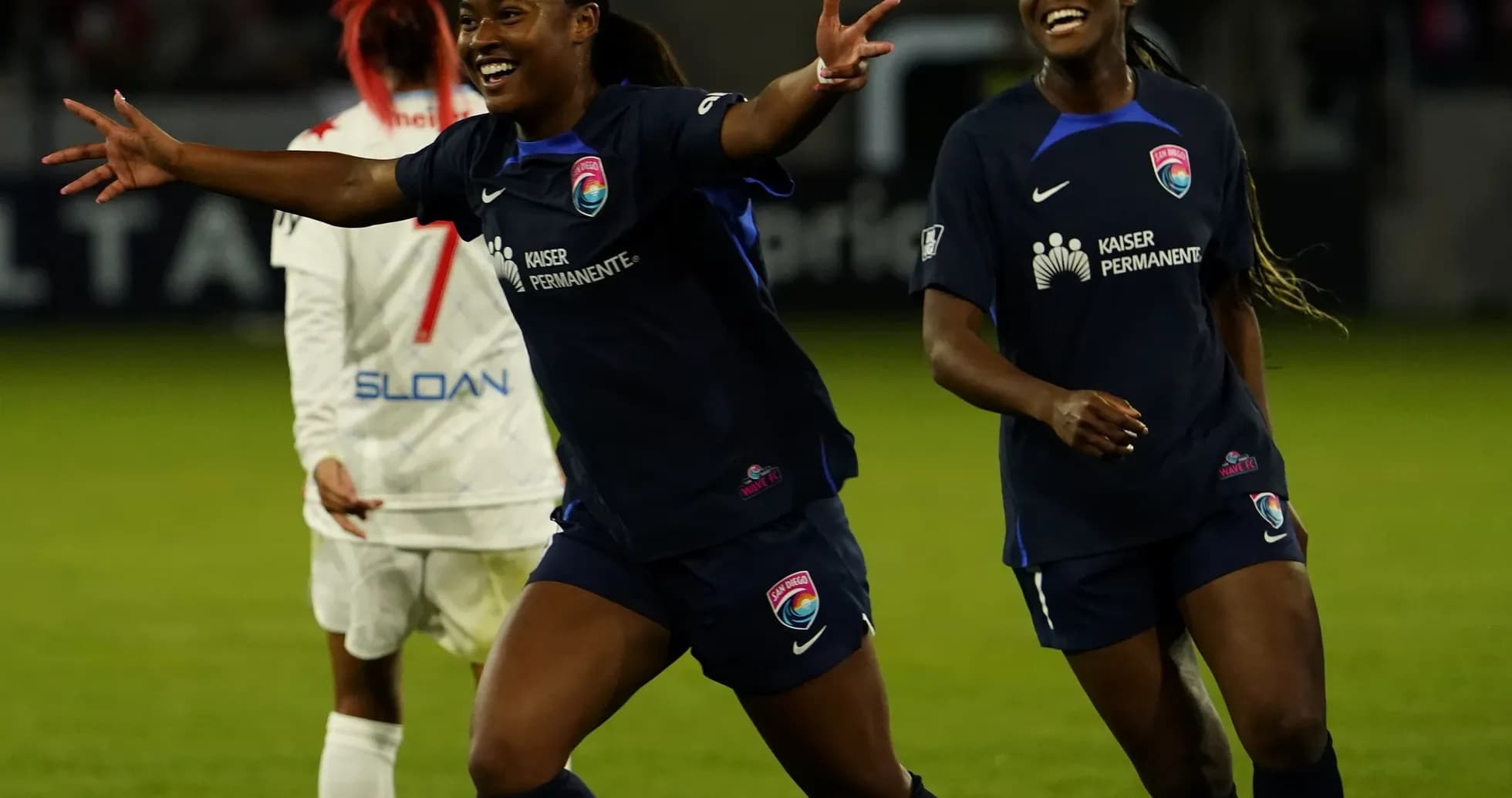
San Diego Wave W Triumph Over Angel City W in NWSL Clash
Under the lights of BMO Stadium, this Group Stage clash in the 2026 NWSL Women season ended with a sharp reminder of the league’s hierarchy. Angel City W, 11th in the table heading into this game with 9 points and a goal difference of 3 from 7 matches, were edged 2-1 at home by a San Diego Wave W side that arrived in Los Angeles sitting 3rd with 18 points and a goal difference of 4 from 9 games. Over 90 minutes, the contrast between an ambitious but still-fragile project and a ruthless, playoff‑bound machine came into focus.
I. The Big Picture – Structures and Seasonal DNA
Angel City lined up in a 4-2-3-1, a shape that has been their primary identity this season, used 4 times in the league. It reflects their statistical profile: at home they average 1.6 goals scored and 1.2 conceded, overall 1.7 for and 1.3 against. They are not passive; they try to impose themselves, with the double pivot as a platform for a fluid three behind the striker.
Here, A. Anderson started in goal behind a back four of G. Thompson, E. Sams, S. Gorden and E. Shores. In midfield, Ary Borges and N. Martin formed the base, with K. Fuller, J. Endo and T. Suarez supporting lone forward S. Jonsdottir. It is a front four built to run at you, not just hold shape.
San Diego arrived with a 4-3-3 that mirrors their season-long commitment to front-foot football. They have used 4-3-3 in 5 matches, balancing aggression with structure. On their travels they have been particularly efficient: 4 away wins from 5, scoring 8 and conceding 6, an away average of 1.6 goals for and 1.2 against. That away steel underpinned their approach in Los Angeles.
D. Haracic anchored the Wave in goal, protected by a back line of A. D. Van Zanten, K. Wesley, K. McNabb and P. Morroni. The midfield trio of K. Ascanio, K. Dali and G. Corley sat behind a dynamic front three: Gabi Portilho wide, Ludmila centrally, and Dudinha off the flank. It is a structure designed to turn turnovers into direct threat within seconds.
II. Tactical Voids and Disciplinary Undercurrents
Neither side had confirmed absentees in the data, but the season-long disciplinary patterns shaped the emotional tone of the contest.
Angel City entered with a reputation for high-intensity, occasionally reckless defending. Their yellow-card distribution is spread across the match, but there is a noticeable late-game spike: 28.57% of their yellows arrive between 91-105 minutes. More crucially, their only red card this season came in the 46-60 minute window. That suggests a team that can lose control just after half-time when pressing lines are reset and legs are heavy from the first-half effort.
Maiara Niehues, not in this matchday squad but central to that narrative, has already been sent off once this season. Her absence from the lineup underlined Angel City’s reliance on others, like Ary Borges and N. Martin, to manage the emotional temperature of the midfield.
San Diego’s disciplinary profile is more concentrated. They have no reds, and 40.00% of their yellows fall between 46-60 minutes, with a further 20.00% in each of 61-75, 76-90 and 91-105. They foul when they need to – particularly in the third quarter of the game – but rarely lose full control. Individually, P. Morroni is a flashpoint: 3 yellows already this season, coupled with 14 fouls committed and 15 drawn. She defends on the edge, and that edge is part of what makes the Wave so hard to break.
III. Key Matchups – Hunter vs Shield, Engine Room vs Enforcer
The headline duel was always going to be S. Jonsdottir against the San Diego defensive block. Heading into this game, Jonsdottir had 3 goals and 2 assists from 7 appearances, with 80 duels contested and 40 won. She is not just a finisher; she is a territorial weapon who drags back lines deeper than they want to be.
San Diego’s “shield” is not one player but a system: a back four that, in league play, has allowed just 9 goals in total, with an overall average of 1.0 goals conceded per match. On their travels that rises slightly to 1.2, but the structure remains disciplined. K. McNabb’s positioning and K. Wesley’s aggression allowed them to step into Jonsdottir’s path early, preventing her from turning and running at space.
Out wide, the duel between K. Fuller and the Wave’s left side – anchored by Morroni – was a fascinating subplot. Fuller arrived with 2 assists, 7 key passes and 51 duels contested (26 won). Morroni, meanwhile, had 23 tackles, 2 blocked shots and 7 interceptions. In essence: a creative teenager probing for half-spaces against one of the league’s most combative full-backs. Morroni’s willingness to step high and engage early limited Fuller’s time on the ball, but it also risked exposing the channel behind her when Angel City managed to break pressure.
The “engine room” battle pitted Ary Borges and N. Martin against K. Dali and G. Corley. Angel City’s double pivot was tasked with both screening transitions and finding early passes into Jonsdottir and Endo. San Diego’s trio, by contrast, sought to overload central zones and release Dudinha and Ludmila quickly.
Dudinha’s presence tilted the balance. She came into this fixture as one of the league’s standout attackers: 3 goals, 4 assists, 15 shots (8 on target), 13 key passes and 31 dribble attempts with 17 successes. Her ability to receive between the lines and then drive at the back four meant Angel City’s pivots were constantly caught between stepping out to her or holding their zone. Every time they hesitated, San Diego’s 4-3-3 snapped into a 4-2-4 in transition, with Dudinha as the hinge.
IV. Statistical Prognosis and Tactical Verdict
Following this result, the numbers still frame a clear story about both teams’ trajectories.
Angel City’s overall scoring rate of 1.7 goals per match and concession rate of 1.3 underline a side that can hurt anyone but struggles to control game states, especially at home where they have 2 wins and 3 losses from 5. They have kept just 1 clean sheet in total, and have failed to score only once. This is a high-variance team: when the press and attacking rotations click, they can produce scorelines like their biggest home win, 4-0. When they are even slightly off, they get punished, as reflected in home defeats such as 1-2.
San Diego, by contrast, look every inch a playoff contender. Overall they average 1.4 goals for and 1.0 against, with 6 wins from 9 and only 3 defeats. On their travels, 4 wins from 5 tell their own story: they can come into hostile environments, absorb pressure and still find ways to score. Their defensive record – 9 goals conceded overall – is not watertight, but their structure and game management compensate.
From an Expected Goals perspective, the underlying shapes are clear even without explicit xG values. Angel City’s high shot volume and forward-leaning 4-2-3-1 likely generated a respectable xG in this match, but their season-long defensive leakiness – just 1 clean sheet – suggests their non-penalty xG against remains stubbornly high. San Diego’s balance of 13 goals scored and 9 conceded, combined with clean sheets both home and away, points to a more efficient xG profile: they convert a higher share of their big chances and concede fewer high-quality looks.
The decisive factor, tactically and statistically, is San Diego’s ruthlessness in transition and their composure in the middle third. With Dudinha as the creative spearhead and L. E. Godfrey – 4 goals, 1 assist, 12 key passes – available off the bench, they possess multiple layers of threat. Angel City’s reliance on Jonsdottir’s individual dueling and Fuller’s emerging creativity is promising but not yet as diversified.
In narrative terms, this 2-1 away win feels less like an upset and more like confirmation. Angel City remain a dangerous, emotionally charged side capable of explosive nights at BMO Stadium, but until their defensive structure and discipline match their attacking ambition, fixtures like this will tilt towards the more balanced, playoff‑calibre outfit. San Diego Wave W left Los Angeles with three points and, more importantly, with the look of a team whose numbers and eye test are perfectly aligned.