RB Leipzig's Rebuild Under Marco Werner: Success or Scepticism?
The numbers say one thing. The mood in Leipzig says something very different.
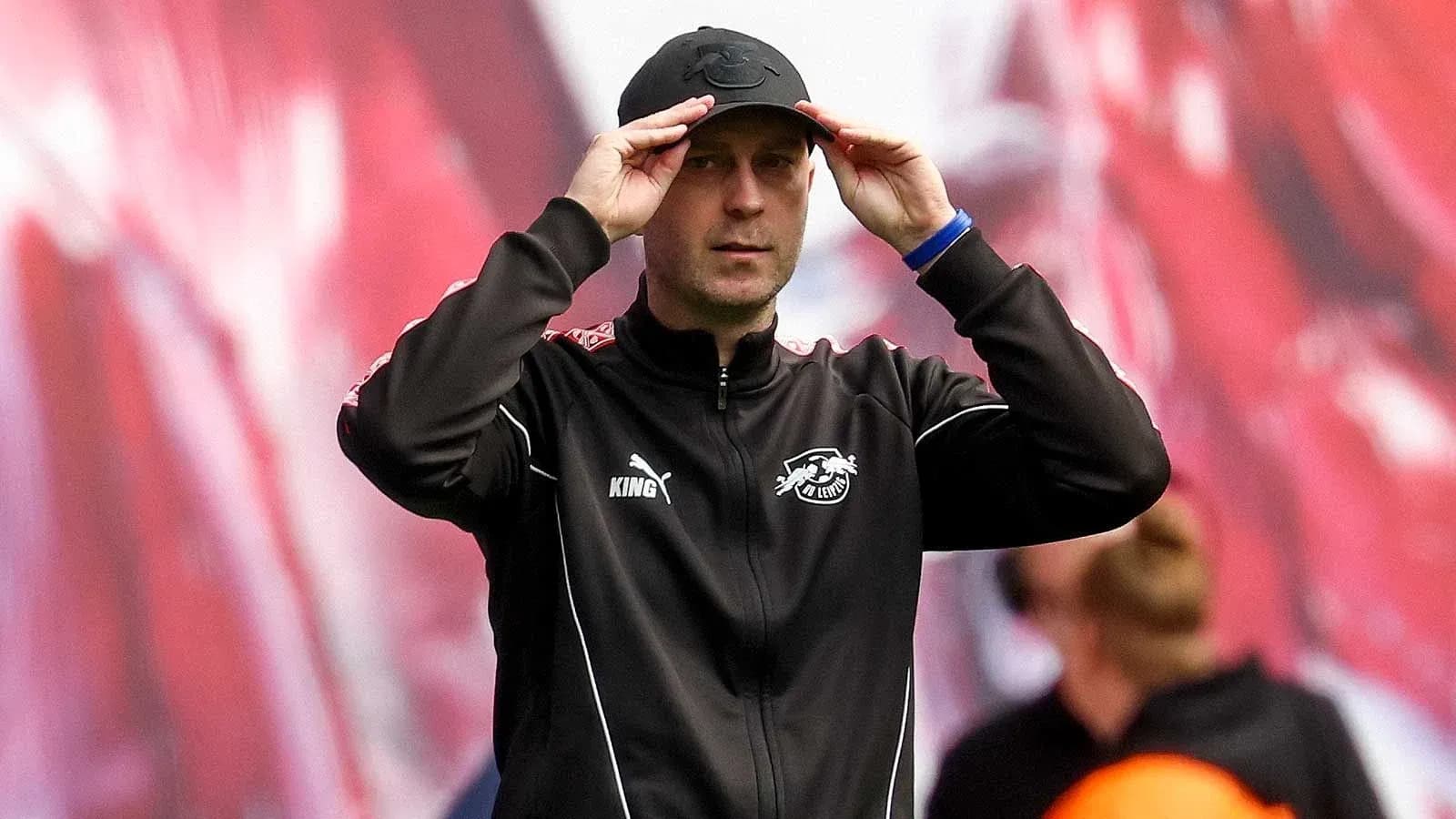
After the chaos of 2024/25 – the club’s worst Bundesliga season and a year without European football – RB Leipzig handed the reins to Marco Werner and asked him to steady a rocking ship. He did more than that. Under Werner, Leipzig surged back to finish just two points short of their record haul from the 2016/17 campaign.
On paper, it looks like a success story. A coach in control, a club back on track.
Look closer, though, and the ground beneath Werner’s feet is anything but firm.
A rebuild that worked – at least in the table
Werner’s record is the kind executives usually cling to. Over 38 matches, he has averaged 1.95 points per game, a return that puts him among the most successful coaches in Leipzig’s short but ambitious history.
He managed that while the squad was being torn up and reassembled. Leipzig lost their three top scorers from the previous season: Benjamin Sesko, Xavi Simons and Lois Openda. Two long-serving pillars, Yussuf Poulsen and Kevin Kampl, also moved on. Goals, experience, leadership – stripped out in one summer.
Werner didn’t fold. He reshaped the side, leaned into what he had, and brought others to the fore. Christoph Baumgartner found another gear. Nicolas Seiwald grew into a bigger role. And marquee signing Yan Diomande quickly became the face of the new era, a player around whom Werner could build both a system and a story.
Inside the dressing room, the coach is said to have the squad behind him. Performances from several players point in the same direction: this is a group that hasn’t downed tools.
And yet, the doubts refuse to go away.
Scepticism at the “Global Team”
Within the wider Red Bull structure – the self-styled “Global Team” that stretches far beyond the city limits of Leipzig – Werner’s work is being judged on a harsher scale.
A Sky report captured the tone of that scepticism: a bit of luck here, a bit of chance there, too much dependence on Diomande, no fully convincing game plan. The implication is clear. The numbers are good, but the football, in the eyes of some powerful figures, is not persuasive enough.
That discontent didn’t suddenly appear at the end of the season. It had already started to bubble by February.
The trigger came in the DFB-Pokal, in a 0–2 quarter-final defeat to a Bayern Munich side that has dominated this year. Leipzig’s display was described as “decent,” “respectable” – not a collapse, not an embarrassment. For many clubs, that would have been enough to move on quietly.
Oliver Mintzlaff had no intention of moving on quietly.
Mintzlaff turns up the heat
The Red Bull CEO used the Bayern defeat as a springboard to attack something else entirely: Leipzig’s Bundesliga form. At that point, the club had taken only four points from matches against Mainz, St. Pauli and Cologne – a return that, for a project built on Champions League ambitions, simply did not wash.
“In the league, that wasn’t anywhere near what we want. I hold the team accountable for that,” Mintzlaff said, making it clear that “respectable” cup exits are no shield when the bread-and-butter results fall short.
The club line all season had been cautious. Massive overhaul. New-look squad. Any European qualification would be enough. Survival at the top table, not a title charge, was the official benchmark.
Mintzlaff cut straight through that modesty. “I want to be in the Champions League!” he declared, calling that goal “achievable” and laying the responsibility firmly on the players and staff. In his view, Leipzig do not lack experience. They lack the ability to deliver their level for 90 minutes, every single Bundesliga weekend.
That public challenge changed the temperature around Werner. Shortly afterwards, Bild reported that pressure on the coach was growing and the atmosphere around him was turning “increasingly frosty.”
The message from above was unmistakable: the rebuild narrative only stretches so far. At Leipzig, progress must come with prestige.
Progress without protection
Werner did, in the end, deliver what the club had originally set as its minimum target. With a rebuilt squad and after a season of turbulence, Leipzig are back in Europe. On the surface, the job is done.
Yet the coach himself is anything but relaxed. Despite the points tally, despite the visible step up from the previous campaign’s struggles, he is said to fear for his position.
That fear is not paranoia. It’s politics.
Sporting chief Rouven Schröder and the management team around him now face a familiar task in modern football: selling the coach upwards. They must convince the powerful Red Bull board, with Mintzlaff at its head, that Werner is not just a competent stabiliser, but the right man to lead Leipzig into the next phase – one where Champions League qualification is not a pleasant surprise but a non-negotiable.
If they fail to win that argument, the numbers on Werner’s side may not save him.
At a club that measures itself against Bayern and the Champions League anthem, the question is no longer whether Werner has rebuilt Leipzig. It’s whether, in the eyes that matter most, he has rebuilt it boldly enough.