Premier League Trophy: A Symbol of Achievement
The Premier League trophy finally belongs to them again. Twenty-two years of waiting, near-misses and false dawns ended when they finished top of the table and claimed the title, and the moment it became real came under the lights at Selhurst Park.
Martin Odegaard stepped up first. Under a haze of flashbulbs and phone screens, the captain gripped the handles, braced, and drove the trophy into the night sky. Behind him, team-mates roared, staff spilled onto the pitch, and a corner of south London briefly felt like home.
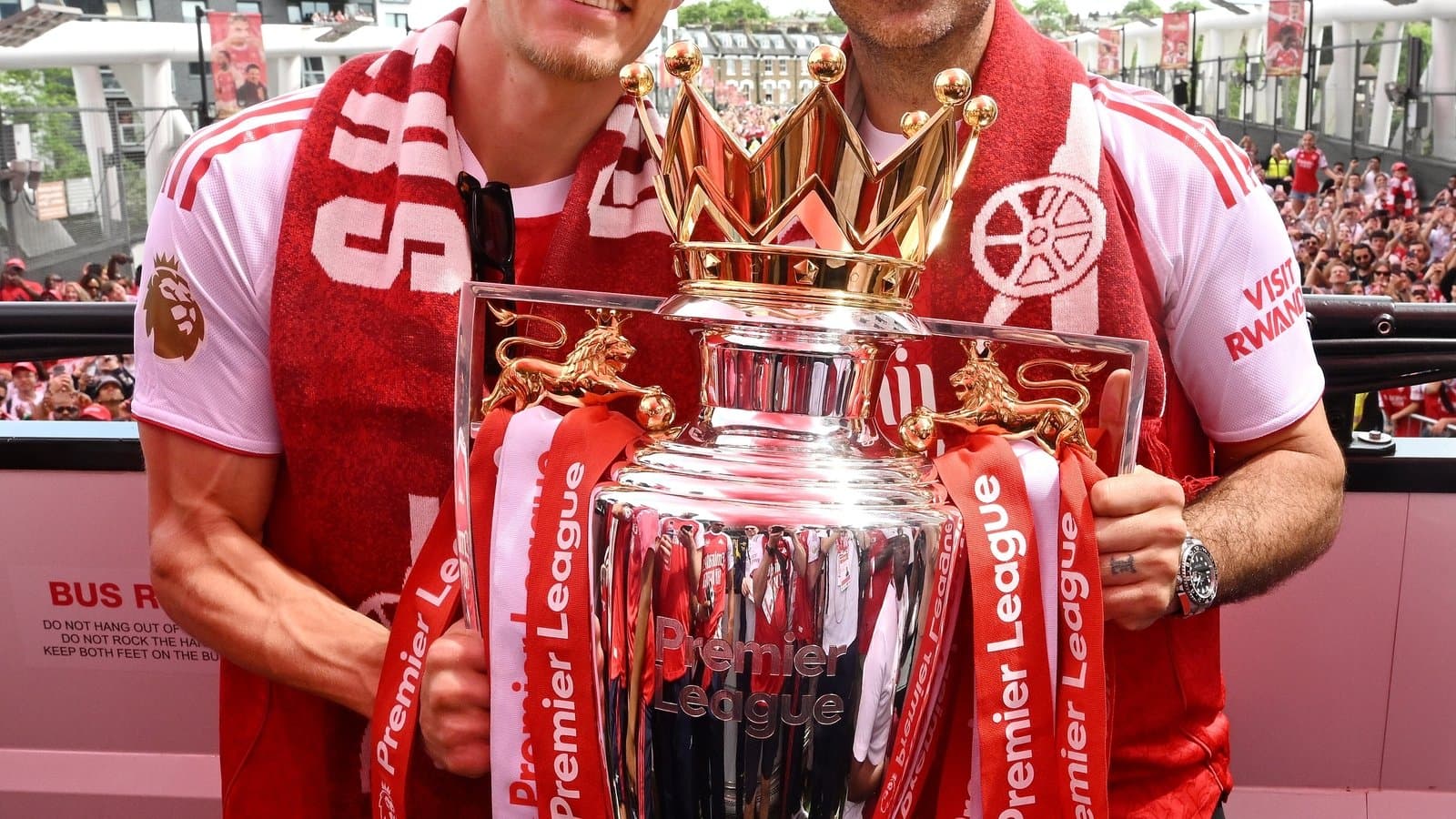
Weeks later, the silverware took centre stage once more, this time on open-top buses crawling through streets packed with red. A champions’ parade, the kind that lives in photos for decades. The trophy glinted above the crowd, passed from player to player, each of them feeling the same thing: weight. History. Responsibility.
And, as it turns out, quite a bit of actual weight too.
The weight of a title
Every player who posed with the Premier League trophy that day was lifting 9.5kg – around 1.4 stone – of solid achievement. Add the engraved base, with its roll call of champions, and the total mass jumps to 25.4kg, or 4 stone.
It looks elegant on a plinth. In the hands, it’s a test. You don’t fake that kind of heft. You earn it.
A crown that towers
Up close, the trophy is taller than it seems on television. From the bottom of the engraved base to the tip of the crown, it stands 104cm – roughly 3ft 5in. Across, it stretches 61cm, about 2ft wide, giving it a broad, imposing presence when a captain strides towards the podium.
There isn’t just one, either. There are two identical Premier League trophies in existence. Both carry the names of the champions around the base, both ready to be thrust into the air when the season’s story reaches its final line.
Built like a piece of history
Look down to the base and the past stares back. Every winner from 1993 is etched there, season by season, all the way through to the new inscription for 2025/26. Each name tells a story of dominance, drama, or narrow escapes. Now, their name sits among them.
The base itself is carved from Malacite, a semi-precious stone sourced from Africa. Its deep green ring mirrors the pitch, a permanent nod to the field where titles are won and lost. Above it rises the main body, cast by Asprey London, the Crown Jewellers, in solid sterling silver. The crowns that top the design are made from 24-carat silver gilt, catching the light and throwing it back at the stands.
The concept behind it is pure English football mythology: “The Three Lions of English Football.” Two golden lions stand guard on either side of the trophy. The third appears only in the decisive moment – the captain, arms locked, lifting the title. For a few seconds, man and metal complete the emblem.
How long does glory stay?
For now, one of those trophies sits in their possession, a constant presence around the training ground and stadium during the season. The other remains with the Premier League, used for official duties, media, and logistics.
There is, however, a clock on how long they can keep it. The club must return their trophy to the Premier League at least three weeks before the final league match of the season. It’s a sharp reminder: this prize is never truly permanent.
You don’t own the Premier League trophy. You borrow it – and then you have to prove all over again that it belongs with you.