Portland Timbers II vs Ventura County: A Thrilling 3-3 Draw
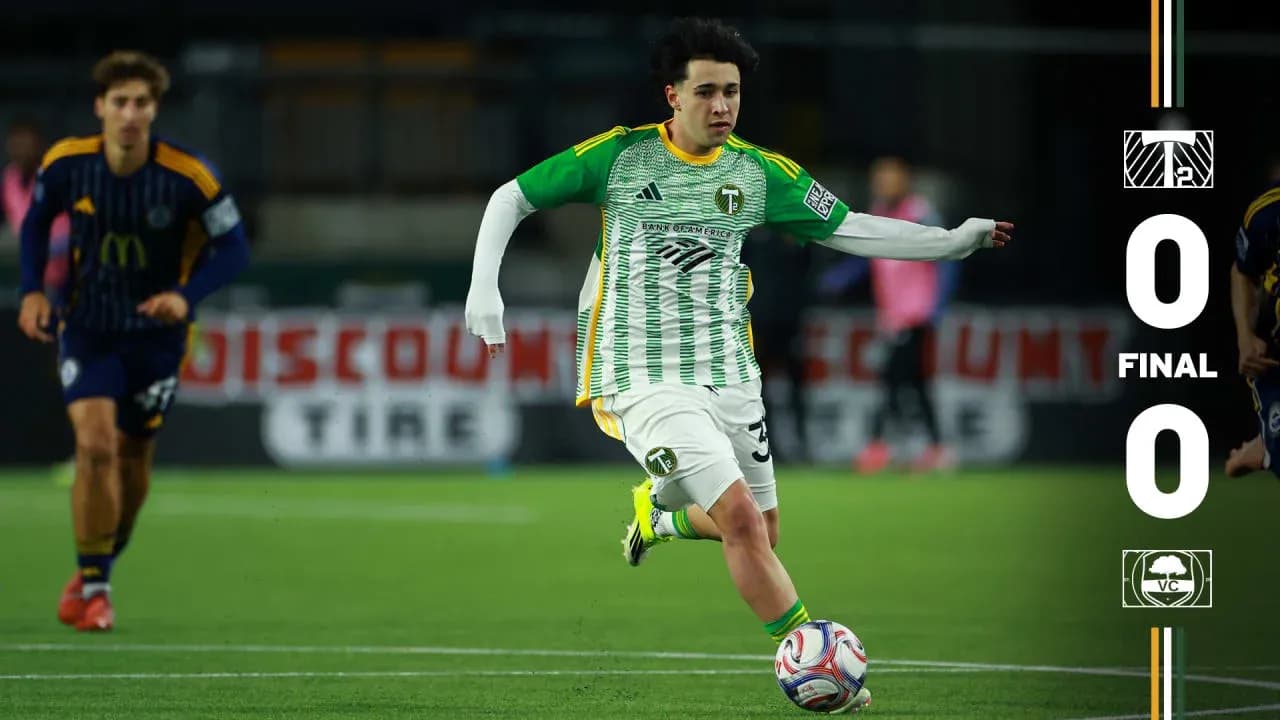
Providence Park under the lights, 120 minutes in the legs and the tension of a full shootout – Portland Timbers II and Ventura County turned a group-stage MLS Next Pro fixture into something that felt far closer to knockout football. The night ended 3-3 after normal time, Ventura County edging the penalties 7-6, but the real story sat in how two very different seasonal identities collided and stretched each other to the limit.
Heading into this game, Portland’s season had been defined by volatility. In total this campaign they had played 8 league matches, winning 4 and losing 3, with just 1 draw, and a perfectly balanced goal profile: 12 scored and 13 conceded overall. At home, they had been as fragile as they were ambitious – 5 fixtures, 8 goals for and 8 against, an average of 1.6 both scored and conceded. Their Pacific Division standing reflected that duality: 4th place with 14 points and a goal difference of 0, form line swinging between extremes.
Ventura County arrived as the ruthless travellers at the top of the Pacific Division. Overall, they had 19 points from 11 matches, with a goal difference of 3 built from 22 goals for and 17 against. On their travels they had been particularly sharp: 6 away games, 5 wins and just 1 defeat, scoring 12 and conceding 7, an away average of 2.0 goals for and 1.2 against. This was a side that embraced risk, with no draws at all in total this campaign – 7 wins, 4 losses – and a clear intent to impose themselves rather than manage the game.
That contrast framed the evening: Portland, still learning how to control chaos, against a Ventura team comfortable living inside it.
I. The Big Picture: structure without formations
Neither coach’s shape was formally recorded, but the personnel choices told their own tactical stories. For Portland, Jack Cassidy built around a young core. H. Sulte anchored them in goal, with a defensive and midfield platform that included C. Ferguson, A. Bamford, N. Lund and C. Ondo. The creative and transitional lanes ran through E. Izoita, L. Fernandez-Kim and V. Enriquez, while the attacking line was led by D. Cervantes and N. Santos, with Colin Griffith – intriguingly, the club’s statistical leader across multiple league categories despite having no goals or assists yet – starting as one of the key forward reference points.
Ventura County’s XI leaned into their away-day aggression. B. Scott in goal backed a back line and midfield spine built around M. Vanney, E. Martinez, Pepe and S. Hernandez, with the central structure reinforced by A. Vilamitjana. Ahead of them, the offensive trident of V. Garcia, D. Vanney, E. Preston and J. Placias offered the kind of vertical threat that explains why Ventura average 2.0 goals per game both at home and away in total this campaign.
The 3-3 full-time scoreline mirrored their seasonal DNA: Portland’s home games tend to open up, Ventura’s away fixtures rarely settle into low-event patterns.
II. Tactical voids and discipline
There were no listed absences, so both squads approached this as close to full strength as the data allows us to see. The more revealing gap was structural: Portland’s struggle to close games and Ventura’s tendency to accumulate cards in the heart of matches.
Heading into this game, Portland’s yellow cards were most concentrated between 61-75 minutes at 26.32%, with another 21.05% in both the 46-60 and 76-90 windows. That paints a picture of a side that becomes increasingly stretched and reactive as the match wears on, especially in the second half. Ventura, by contrast, clustered their disciplinary risk almost exclusively between 46-90 minutes – 31.25% of their yellows in each of the 46-60, 61-75 and 76-90 ranges. For both teams, the second half is where control slips and the duels become more desperate.
From the spot, Portland’s season-long numbers also hint at underlying tension. In total this campaign they had taken 9 penalties, scoring 8 but missing 1, an 88.89% conversion rate that is strong but not flawless. Ventura, with just 1 penalty taken and 1 scored in total, carried a perfect record but from a tiny sample. In a match that would ultimately be decided on penalties, that single Portland miss in open-play penalties this season loomed in the background as a reminder that their margins are rarely clean.
III. Key matchups: Hunter vs Shield, Engine Room vs Enforcer
The “Hunter vs Shield” narrative in this fixture was less about a single star and more about collective tendencies. Portland’s attack at home, averaging 1.6 goals per game, was up against a Ventura away defence conceding 1.2 on their travels. Ventura’s front line, by contrast, arrived with that relentless 2.0 away goals per match against a Portland back line that had allowed 1.6 per home game. The six-goal draw in regulation time suggested Ventura’s offensive rhythm ultimately dictated the tempo, dragging Portland into a higher-scoring contest than their overall average of 1.5 goals for and 1.6 against.
In the “Engine Room”, Portland’s central operators like E. Izoita and L. Fernandez-Kim were tasked with threading play through Ventura’s mid-block, where players such as A. Vilamitjana and Pepe looked to break rhythm, foul when necessary and spring transitions. Ventura’s season-long record of never failing to score – 0 matches without a goal in total this campaign – underlined the importance of Portland’s midfield screen. Any loose ball in that zone risked becoming the launchpad for another Ventura surge.
Griffith’s presence was a subtle subplot. Listed as Portland’s statistical leader across scoring, assists and disciplinary charts despite a blank output so far, his deployment alongside D. Cervantes and N. Santos suggested Cassidy sees him as a connective piece: a forward who can drop, link and allow late runners from midfield. In a game that stretched to 120 minutes, that kind of hybrid role would have been crucial in helping Portland transition from defence to attack without burning out their central midfielders.
IV. Statistical prognosis and what the shootout confirmed
Following this result, the numbers reinforce Ventura County’s status as a high-variance, high-ceiling side. Their away form – 5 wins from 6 on their travels, 12 scored and 7 conceded – already painted them as a team comfortable in hostile environments. Surviving 120 minutes at Providence Park and then winning 7-6 on penalties fits that profile: they do not manage risk by shutting games down; they embrace it and back their attacking patterns and mentality.
For Portland, the performance was both validation and warning. Pushing the Pacific Division leaders to a 3-3 draw after normal time showed that their attacking structure can live with the league’s best. But conceding three at home again echoed their season-long fragility: 8 goals conceded in 5 home matches, an average of 1.6 that keeps every game open. Their penalty record – 8 scored and 1 missed in total – foreshadowed the knife-edge nature of the shootout they would ultimately lose.
In xG terms, this had all the hallmarks of a high-event contest: Ventura’s season pattern of 2.0 goals for and 1.5 against overall suggests their matches regularly produce chances in both boxes, while Portland’s balanced but leaky 1.5 for and 1.6 against overall indicates they rarely control shot quality at either end. The 3-3 scoreline before penalties was the logical outcome of those trajectories intersecting.
Tactically, the lesson for Portland is clear. Their attacking core – with Griffith, Cervantes, Santos and the supporting lines of Enriquez and Izoita – is capable of trading blows with the best. But until Cassidy’s side can compress space and manage the 46-90 minute window where their yellow cards spike and games become stretched, they will remain a team defined by chaos rather than control.
Ventura County, meanwhile, leave Providence Park with their away aura reinforced. They remain the division’s benchmark travellers: aggressive, direct, and unafraid of the emotional weight of extra time and penalties. On nights like this, their statistical profile is not just numbers; it is a tactical identity – one that thrives when the stakes, and the scorelines, are at their wildest.