Orlando City II Defeats Atlanta United II 2-0 in Tactical Clash
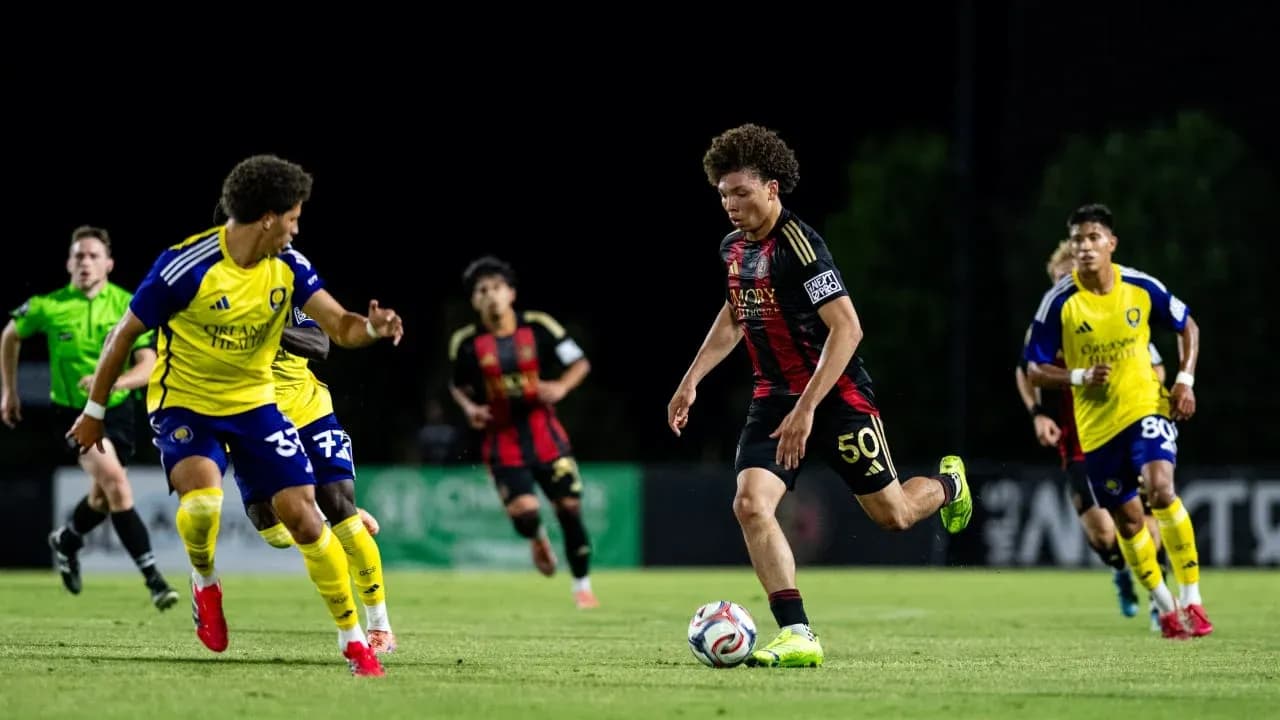
Under the lights at Fifth Third Stadium, Atlanta United II and Orlando City II met as near-mirror images in the MLS Next Pro Eastern Conference table, but the night ended with a clear divide. Orlando’s 2–0 away win did more than settle a single fixture; it underlined contrasting identities between a high-variance, free-scoring visitor and a home side still learning how to manage risk in a developmental league that punishes every mistake.
Heading into this game, both teams were locked on 16 points in the Eastern Conference. Atlanta United II sat 4th in the conference standings with a goal difference of 3, built from 14 goals scored and 11 conceded overall. At home they had been relatively efficient: 2 wins and 1 defeat in 3 matches, with 6 goals for and 4 against, an average of 2.0 goals scored and 1.3 conceded at home. Orlando City II, 5th in the conference but with the same points, carried a very different statistical profile. Their overall goal difference was 0, but that came from a wild 19 goals scored and 19 conceded across 9 matches before kickoff. On their travels they had been dangerous: 3 wins and 1 defeat in 4 away games, with 8 goals for and 7 against, averaging 2.3 goals scored and 1.8 conceded away.
That contrast framed the tactical story. Atlanta’s season to date suggested a side comfortable in structured games, with a modest overall scoring rate of 1.6 but a relatively stable 1.3 goals against per match. Clean sheets had been rare at home (0 in 3), and they had failed to score in 1 of those 3 home outings, a warning sign that surfaced again here. Orlando, by comparison, lived on the edge: 2.4 goals for and 2.2 against overall, with no draws and no matches without scoring. This was a team that accepted chaos and backed its attacking talent to outgun opponents.
With no formal formations listed, the squads themselves tell us how each club is trying to build that identity. Atlanta’s XI leaned into youth and technical profiles. J. Hibbert and D. Chica at the back formed the base of a team that likes to play, supported by M. Senanou and M. Cisset, who would be tasked with breaking Orlando’s press and progressing possession. In wide and advanced zones, A. Gill, A. Torres, E. Dovlo and I. Suarez offered fluidity, with C. Dunbar and A. Kovac giving Atlanta the option to interchange between a front two or a lone forward supported by runners.
On the bench, players like P. Weah and M. Tablante gave Atlanta the ability to change the tempo and add directness, while J. Donaldson and L. Butts offered fresh legs in deeper roles. But the structure of the squad hinted at a side that wants to control phases rather than turn the game into a track meet.
Orlando City II’s selection, by contrast, looked purpose-built for verticality and transition. At the back, P. Amoo-Mensah, C. Guske and T. Reid-Brown gave solidity in the first line, with B. Rhein likely acting as a deep pivot or distributor to launch quick attacks. Ahead of them, D. Judelson, I. Gomez and G. Caraballo formed a dynamic central cluster, capable of both pressing and bursting forward, while I. Haruna and H. Sarajian added width and penetration. At the tip, Pedro Leao embodied Orlando’s high-risk, high-reward ethos, thriving in open spaces.
The Orlando bench reinforced that identity. M. Murillo and M. Belgodere provided energy and pace, C. Archange and S. Titus Jr added physical presence and defensive cover, while J. Ramirez and J. Yearwood were options to sustain the press or protect a lead. L. Tsopanoglou rounded out a bench capable of shifting from an aggressive 4–3–3 type shape into something more conservative without sacrificing transition threat.
Disciplinary patterns offered a subtle but important subplot. Atlanta’s yellow cards this season had a clear late-game tilt: 23.81% of their bookings arrived between 76–90 minutes, with another 19.05% between 46–60. Their red cards were evenly spread across 46–60, 61–75 and 76–90, each period accounting for 33.33% of their dismissals. This is a team that tends to fray as the intensity spikes after halftime, particularly in the closing stretch.
Orlando’s bookings, meanwhile, were front-loaded. A combined 52.64% of their yellow cards came between 16–45 minutes (26.32% in 16–30 and 26.32% in 31–45), with another 21.05% between 46–60. They set a combative tone early, then manage the game more cautiously in the final quarter-hour, where only 10.53% of their yellows appear.
That intersection of tendencies was critical. Orlando’s willingness to press and foul early helped disrupt Atlanta’s build-up before it could settle, while Atlanta’s propensity to collect cards late made it harder to mount a composed comeback once they fell behind. The 0–1 deficit at halftime, and the eventual 0–2 full-time scoreline, fit that pattern: Orlando struck first, then managed the tempo and emotional temperature of the match as Atlanta chased.
From a statistical prognosis standpoint, the result aligns with the underlying numbers. Orlando’s away scoring average of 2.3 goals per match heading into this fixture made a 2-goal haul on their travels entirely in character, especially against an Atlanta side that had yet to keep a clean sheet at home and conceded 1.3 goals per game in their own stadium. Atlanta’s overall attacking output of 1.6 goals per match suggested they would create, but the combination of Orlando’s aggressive early press and Atlanta’s late-game disciplinary vulnerability tilted the balance.
In narrative terms, this match felt like a playoff dress rehearsal. Both teams sit in promotion territory for the MLS Next Pro Play Offs 1/8-finals, and the tactical lessons here will echo into knockout football. Atlanta United II must find a way to protect their structure when chasing the game, and to convert home possession into more consistent end product. Orlando City II, on the other hand, showed that their high-variance profile can be harnessed and disciplined on the road, turning volatility into a weapon rather than a liability.
Following this result, the table will still show two ambitious, attack-minded developmental sides. But on this night, Orlando’s embrace of risk, coupled with a sharper game-management edge, carved out a clear advantage in both scoreboard and story.