New England II vs New York City II: Tactical Analysis and Match Insights
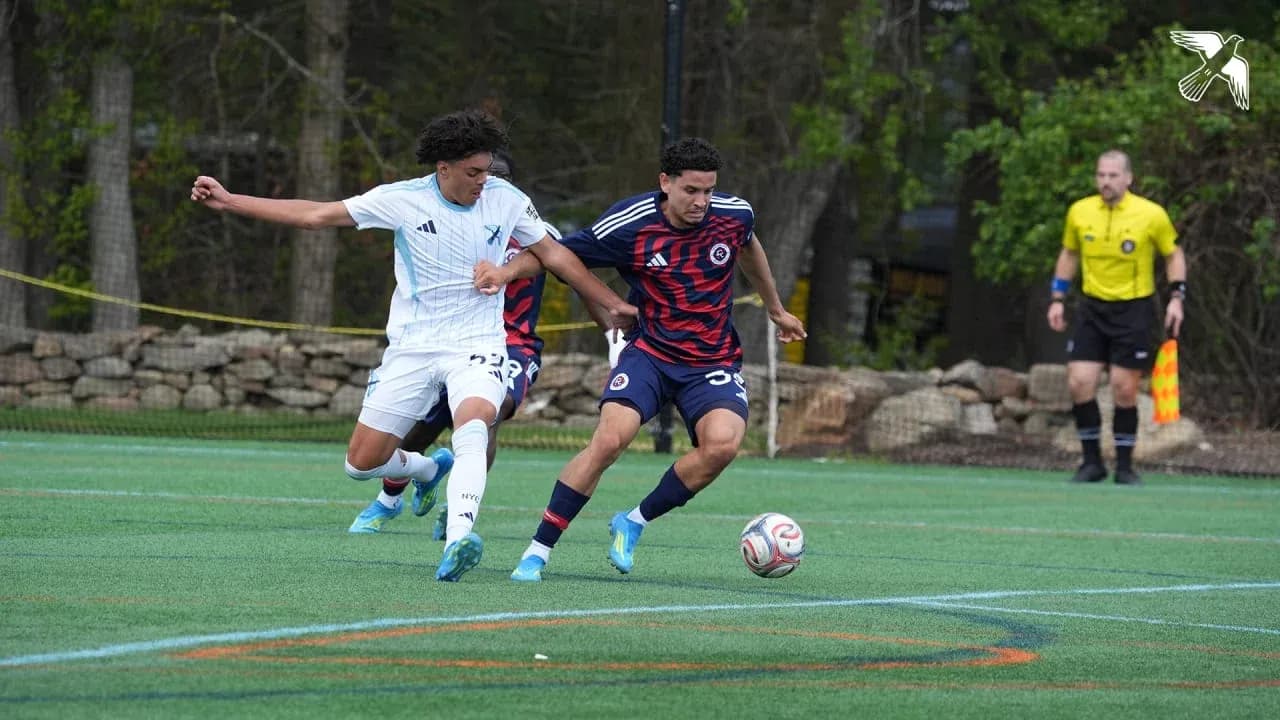
Under the lights at Gillette Stadium, New England II and New York City II served up a five-goal swing that felt like a compressed version of their entire MLS Next Pro seasons. The fixture, a Group Stage clash in the 2026 campaign, finished 3–2 to New England II after New York City II had led 1–0 at half-time. Following this result, the narrative of both teams’ seasons sharpened: New England II confirmed their status as one of the Northeast Division’s most ruthless home operators, while New York City II’s away frailty again undermined their attacking promise.
Heading into this game, New England II sat 4th in the Northeast Division and 8th in the Eastern Conference, with 14 points from 8 matches and a goal difference of 2, built on 10 goals for and 8 against overall. Their identity was clear: dominant at home, fragile on their travels. At home they had played 6, winning 5 and losing just 1, scoring 9 and conceding 6. That home scoring rate of 1.8 goals per game, against only 1.0 conceded, hinted at a side that grows in confidence at Gillette Stadium.
New York City II arrived as something of a paradox. In the Northeast Division they were 7th, and 13th in the Eastern Conference, with 9 points from 8 matches and a goal difference of -6 (8 goals for, 14 against overall). At home they were competitive – 3 wins from 4 – but on their travels they had lost all 4, scoring 3 and conceding 6. An away average of 0.8 goals scored and 1.8 conceded painted a picture of a team that opens up too easily when forced to defend space.
Tactical Voids and Discipline
There were no listed absences, so both coaches had near-full squads to select from. For New York City II, Matt Pilkington trusted a young, mobile XI: M. Learned in goal; a defensive unit anchored by D. Randazzo, J. Loiola, J. Suchecki and K. Smith; and a midfield-attack blend of P. Molinari, C. Flax, C. Danquah, D. Duque, D. Kerr and S. Musu. The bench – B. Klein, D. McDermott, E. Martin, A. Campos, H. Hvatum and G. de Souza – offered energy rather than proven control, mirroring a season in which New York City II had yet to keep a single clean sheet in total, either home or away.
New England II’s selection leaned into their home swagger. D. Parisian was the last line, protected by a defensive triangle featuring D. McIntosh, G. Dahlin, C. Mbai Assem and S. Mimy. In front of them, J. Mussenden and E. Klein provided the platform for the creative and transitional threats of A. Oyirwoth, C. Oliveira and M. Morgan, with S. Sasaki as a key attacking reference. The bench was deep: M. Tibbetts, M. Weinstein, J. Shannon, J. Da, J. Siqueira, S. George, C. Zambrano and J. Smith gave New England II options to change tempo, add defensive security, or chase the game.
From a disciplinary perspective, the underlying season data had already drawn clear warning lines. New England II’s yellow cards were heavily concentrated between 46–60', 61–75' and 76–90', each window accounting for 23.81% of their cautions. This suggested a side that becomes increasingly combative as matches stretch. New York City II, meanwhile, showed a different profile: 31.25% of their yellows came between 16–30', and a further 37.50% in the 76–90' window, plus a red card profile entirely in the 76–90' range (100.00% of their reds). They are a team that can lose emotional control late, particularly when chasing.
Key Matchups
Hunter vs Shield
This game was always going to hinge on New England II’s home attack against New York City II’s away defence. At home, New England II averaged 1.8 goals for and only 1.0 against. On their travels, New York City II conceded 1.8 goals per match while scoring just 0.8. The clash between New England II’s front line – spearheaded by the movement of S. Sasaki and the support of M. Morgan, C. Oliveira and A. Oyirwoth – and the visiting back line of Randazzo, Loiola, Suchecki and Smith was the central “hunter vs shield” battle.
The numbers hinted that the “shield” would crack. New York City II had conceded 15 goals in total this campaign, with no clean sheets and a worst away loss of 3–2. New England II, by contrast, had already produced a home win by 2–0 and had scored as many as 3 at Gillette Stadium in a single match. The 3–2 final score simply confirmed that the home attack, once it found rhythm after the interval, overwhelmed an away defence that has struggled all season to control the box.
Engine Room
Without official positional labels, the engine-room duel was defined by roles inferred from usage. For New England II, the axis of J. Mussenden and E. Klein looked like the balance point between protection and progression, feeding the attacking trio behind Sasaki. For New York City II, P. Molinari and C. Flax appeared to be the primary connectors, tasked with getting the ball quickly into the feet of C. Danquah, D. Duque, D. Kerr and S. Musu.
Season-long patterns suggested that when New England II’s midfield can control tempo at home, they suffocate visiting sides. They had failed to score at home exactly 0 times this season, while New York City II had failed to score away in 2 of their 4 road games. The midfield battle was thus not just about creation but about denying New York City II the transition moments they need to mask their defensive issues.
Statistical Prognosis and Tactical Verdict
Following this result, the statistical logic of the campaign remained intact. New England II’s overall scoring rate of 1.5 goals per game, combined with only 1.1 conceded, underpins a positive goal difference and a promotion-chasing position in the Eastern Conference. Their home record – 5 wins from 6, 11 goals for and 6 against in total – continues to be their foundation. Their penalty record in total, with 2 taken and 2 scored (100.00% conversion, 0 missed), underlines a clinical edge in decisive moments.
New York City II’s broader numbers still tell a harsher story. Overall they score 1.1 goals per match and concede 1.9, with a total goal difference of -6 built from 9 goals for and 15 against. On their travels, 0 wins from 4, 3 goals for and 7 against reflect a side that cannot yet translate home competitiveness into away resilience. The fact that they have failed to score in 2 of 4 away games and have no clean sheets in total points to a structural imbalance: too much burden on the attack, not enough protection for M. Learned and his back line.
From an xG-style tactical lens, a 3–2 home win fits the pre-match trends: New England II, with superior home chance creation and a strong record of converting key opportunities, were always likely to generate the higher-quality looks. New York City II’s capacity to punch back with moments from Duque, Kerr or Musu was never in doubt, but their defensive volatility – particularly late in games when 37.50% of their yellows and all of their reds in total appear – made a clean, controlled away performance improbable.
In narrative terms, this match crystallized both squads’ identities. New England II remain a formidable home force, deep in options and comfortable in chaos, able to overturn deficits and lean on Gillette Stadium’s dimensions and rhythm. New York City II, for all their flashes of attacking quality, continue to be defined by their inability to close out games on their travels. Until Pilkington’s side can harden that away back line and cool their late-game discipline, nights like this – where a promising first half dissolves into a narrow defeat – will keep repeating across the MLS Next Pro map.