Napoli's Title Hopes Dented by Bologna's Tactical Masterclass
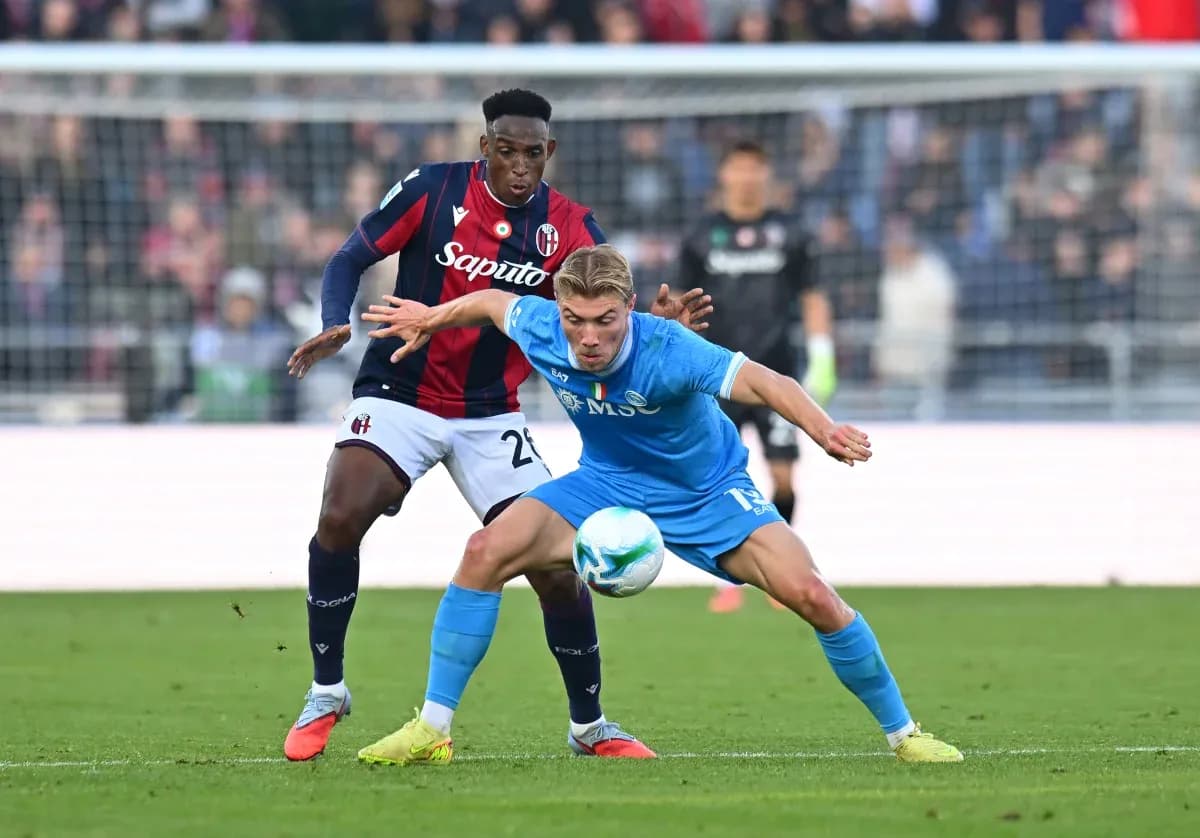
Under the Naples floodlights, this was supposed to be a statement night for a title‑chasing Napoli. Instead, the Stadio Diego Armando Maradona staged a tactical ambush: Bologna arrived with a clear plan, absorbed the blows of Antonio Conte’s 3-4-2-1, and walked away with a 3-2 win that reshapes the narrative of both seasons.
I. The Big Picture – A contender exposed, a challenger confirmed
Following this result, Napoli remain second in Serie A on 70 points after 36 matches, but the sheen of their campaign is dented. Overall they have scored 54 and conceded 36, a goal difference of 18 that still reflects a strong season, yet this defeat underlines a vulnerability that raw numbers can conceal. At home, Napoli’s profile has been formidable: 12 wins from 18, only 2 losses, with 32 goals for and 18 against. Losing here, in regular time, will sting.
Bologna, by contrast, consolidate an impressive push from the chasing pack. Eighth in the table with 52 points, their overall goal difference of 2 (45 scored, 43 conceded) speaks to a side that lives on fine margins. On their travels, though, they have been anything but timid: 9 away wins from 18, with 29 goals scored and 23 conceded. This 3-2 away victory fits neatly into that identity – aggressive, front-foot, and prepared to trade chances.
Conte doubled down on his season’s tactical backbone, rolling out the 3-4-2-1 that has been his most-used shape (21 league lineups in that system). V. Milinkovic-Savic anchored a back three of G. Di Lorenzo, A. Rrahmani and A. Buongiorno, with a wide four of M. Politano, S. Lobotka, S. McTominay and M. Gutierrez feeding the narrow pair of Giovane and Alisson Santos behind central striker R. Hojlund.
Vincenzo Italiano responded with a purist 4-3-3, a shape Bologna have used less frequently than their habitual 4-2-3-1 but one that matched up well against Napoli’s wing-backs. M. Pessina started in goal behind a back four of Joao Mario, E. Fauske Helland, J. Lucumi and J. Miranda. The midfield trio of T. Pobega, R. Freuler and L. Ferguson set the pressing triggers, while a front three of R. Orsolini, S. Castro and F. Bernardeschi gave Bologna width and directness on the break.
The scoreline told the story of a game played on Bologna’s terms: 2-3, with the visitors leading 2-1 at half-time and managing the chaos expertly in the second period.
II. Tactical Voids – Missing stars and the discipline tightrope
Napoli’s squad sheet carried conspicuous absences. David Neres (ankle injury), K. De Bruyne (eye injury) and R. Lukaku (hip injury) were all ruled out. Each absence removed a different weapon from Conte’s arsenal: Neres’ one‑v‑one threat, De Bruyne’s vertical passing and set-piece delivery, and Lukaku’s penalty-box gravity. Without them, Napoli leaned heavily on Hojlund’s movement and McTominay’s late surges, but the bench lacked a like-for-like game-changer in the final third.
Bologna were also shorn of depth. K. Bonifazi (inactive), N. Cambiaghi (muscle injury), N. Casale (calf injury) and M. Vitik (ankle injury) all missed out, stripping Italiano of rotation options in defence and on the wings. Notably, Cambiaghi – who has been one of the league’s more combative wide midfielders and carries a red-card history this season – was unavailable, slightly softening Bologna’s usual edge in duels.
Disciplinary trends framed the risk profiles. Heading into this game, Napoli’s yellow-card distribution showed a pronounced spike between 61-75 minutes (31.91%) and a late flurry in added time (10.64% between 91-105). Their only red cards in the league had come very late, with 100.00% of reds shown between 76-90 minutes. Bologna, meanwhile, were far more combustible: 27.27% of their yellows arrived between 61-75 minutes and 25.76% between 76-90, with red cards scattered across multiple bands (notably 33.33% in the 61-75 window). This match always threatened to tilt on a disciplinary knife-edge, especially in the final half hour.
III. Key Matchups – Hunter vs Shield, Engine Room vs Enforcer
The marquee duel was the “Hunter vs Shield”: R. Hojlund against a Bologna defence that has been quietly effective away from home. Overall, Hojlund entered this fixture as Napoli’s leading scorer with 10 league goals and 4 assists, from 42 total shots and 22 on target. His profile is that of a high-usage, physical attacker – 299 duels contested, 107 won – who thrives on early runs into channels and crosses from wide areas.
Bologna’s away defensive record – 23 conceded in 18 matches, an average of 1.3 – is not elite, but it is resilient enough to survive pressure phases. Italiano’s decision to field E. Fauske Helland and J. Lucumi centrally, with Joao Mario and J. Miranda wide, was about crowding Hojlund’s zones and forcing Napoli’s No. 19 into aerial and back-to-goal duels rather than face-to-goal sprints. Containing him to partial influence rather than domination was a key victory.
Around him, Napoli’s main creative conduit was M. Politano, who arrived as one of Serie A’s top assist providers with 5 assists and 2 goals, plus 903 passes and 36 key passes at an 82% accuracy. His duel with Bologna’s left side – J. Miranda and the drifting F. Bernardeschi – was nuanced: Politano looked to invert into half-spaces, while Bernardeschi’s threat on the counter forced Napoli’s wing-back to constantly weigh risk against defensive responsibility.
In the “Engine Room” battle, S. McTominay’s box-to-box profile squared up against R. Freuler’s controlling presence and L. Ferguson’s vertical running. McTominay’s season numbers – 9 goals, 3 assists, 1202 passes at 88% accuracy, plus 28 tackles and 13 blocked shots – illustrate a midfielder who influences both penalty areas. Bologna’s trio responded by compressing central spaces and daring Napoli to funnel attacks wide, trusting their back four to deal with crosses.
On the other side, R. Orsolini was Bologna’s sharpest blade. With 9 goals and 1 assist, plus 64 shots (30 on target) and 67 dribbles attempted (32 successful), he attacked the channels between Buongiorno and Gutierrez, especially in transition. Napoli’s back three, more comfortable when the game is set and structured, were repeatedly asked to defend big spaces – a scenario that played directly into Orsolini’s strengths.
IV. Statistical Prognosis – xG tilt, defensive solidity, and what this result says
The raw league data heading into this game painted a picture of Napoli as the more stable machine. Overall they averaged 1.5 goals for and 1.0 against per match, with 13 clean sheets and only 8 failures to score. Bologna, by comparison, averaged 1.3 goals for and 1.2 against, with 11 clean sheets but 11 matches where they failed to score. The expected-goals landscape, inferred from those scoring and conceding trends, would have tilted slightly towards Napoli, especially at home where they averaged 1.8 goals for and 1.0 against.
Yet this match showed how tactical execution can bend those probabilities. Bologna’s away attacking average of 1.6 goals per game foreshadowed their capacity to hurt even a strong home defence, and they did exactly that: three goals on their travels, leveraging transition moments and the structural gaps behind Napoli’s wing-backs.
From a defensive solidity standpoint, Napoli’s back line – so often protected by structure and territory at home – was repeatedly dragged into uncomfortable, open-field situations. Bologna, whose away goals against figure of 23 in 18 games suggests a defence that can absorb sustained pressure, were content to sit in compact lines and accept shots from less dangerous zones.
Following this result, the statistical prognosis for both sides subtly shifts. Napoli remain a Champions League-bound heavyweight, but the aura of invincibility at home is cracked; their high home scoring average is no longer matched by an unshakeable defensive record. Bologna, meanwhile, reinforce their identity as one of Serie A’s most dangerous travellers, a side whose away attacking output can overturn even a top-two contender.
In narrative terms, this 3-2 in Naples was more than a single upset. It was a tactical lesson: structure and averages may predict, but adaptability – and ruthlessness on the break – still decides nights like these.