Michael O’Neill Commits to Northern Ireland Role Ahead of Euro 2028
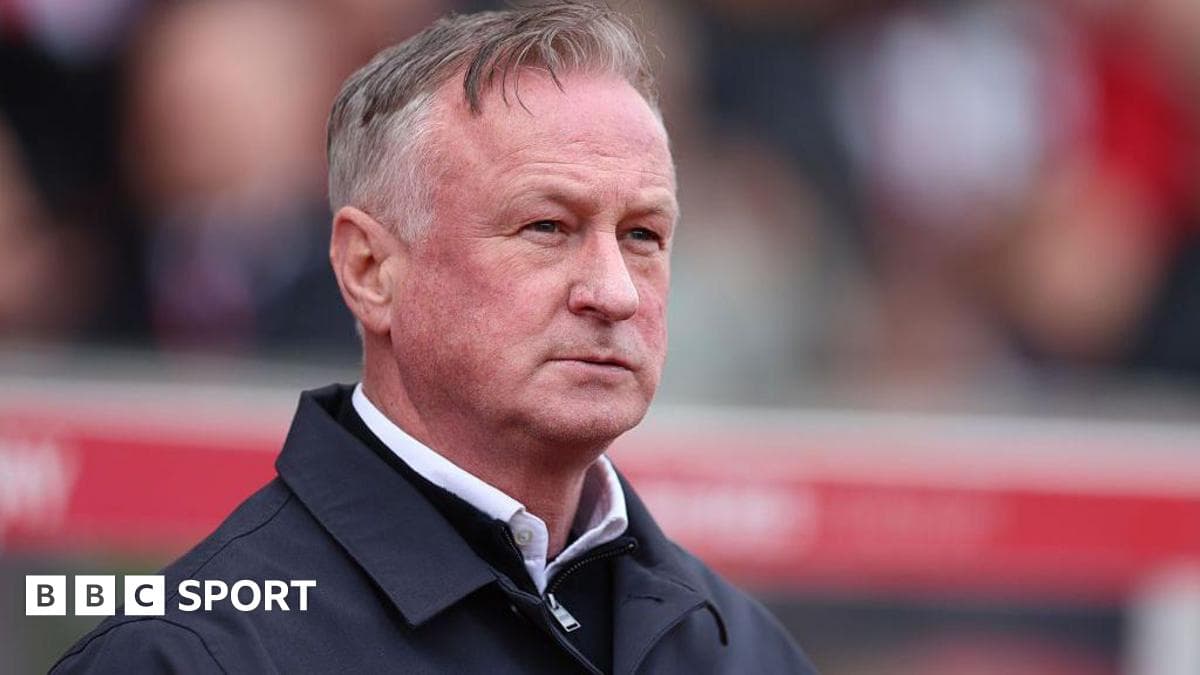
Michael O’Neill has turned his back on club management – for now – and nailed his colours firmly to the Northern Ireland mast.
After months of juggling two jobs and an even longer spell of speculation, the 56-year-old has told Blackburn Rovers he will not be their permanent head coach, choosing instead to stay on as Northern Ireland manager and lead another tilt at the European Championship.
One foot in each camp – until now
O’Neill walked into Ewood Park in February as an interim appointment, asked to steady a listing ship while still steering his country. It was an awkward compromise from the start, a job share that came with an expiry date written between the lines.
He made it work. Just about.
Across 15 Championship games, Blackburn under O’Neill were the very definition of middling: five wins, five draws, five defeats. Crucially, that was enough. Rovers clung on to their second-tier status, finishing 20th and avoiding the kind of relegation that scars a club for years.
The pressure around his future built as the season crept towards its end. Each week brought the same question: could he really do both roles long term? Each week, O’Neill gave the same answer – no. One job would have to give.
Now it has.
Commitment to country
“Following discussions with the club, Michael has decided to continue his long-term commitment to his role as Northern Ireland head coach,” Blackburn said in a statement, confirming what many in Belfast had hoped to hear. The target is clear: qualification for Euro 2028.
O’Neill’s own words underlined the pull of the international game.
He spoke warmly of Blackburn – of a “historic football club with a proud tradition and passionate supporters” and of how much he had enjoyed working with the players and staff. But the key line was blunt: his long-term focus “must remain with Northern Ireland and the journey towards the European Championship campaign ahead”.
Blackburn will now start the search for a new permanent head coach, a process the club says will unfold “in due course”. At least they have time. The 2026-27 campaign is still on the horizon, and survival under O’Neill has made the job a more stable proposition than it looked in midwinter.
A second act with familiar ambition
For Northern Ireland, this is more than just continuity. It is a statement of intent.
Across his two spells in charge, O’Neill has managed 104 games for his country, winning 38, drawing 23 and losing 43. The numbers only tell part of the story. He is the man who dragged Northern Ireland back onto the major tournament stage at Euro 2016, and the Irish FA clearly believe he can do it again.
“We are delighted Michael has decided to stay on as Northern Ireland manager,” read an Irish FA statement, pointing to an “exciting squad of players” and talking up the momentum heading into the Uefa Nations League this autumn and the Euro 2028 qualifiers beyond.
The relief is obvious. In March, O’Neill had spoken about “returning to the status quo” for the June fixtures, hinting that his Blackburn stint might be a brief detour. By April, that certainty had evaporated; he admitted a decision was still to be made, a wobble that set nerves jangling from Belfast to the back row of Windsor Park.
Those nerves can settle now. He will lead the team into June’s friendlies against Guinea in Cadiz and France in Lyon, then into a Nations League campaign that pitches Northern Ireland against Hungary, Georgia and Ukraine in Group B2.
Building something new from something broken
Just as in his first spell, O’Neill inherited a struggling national side. Ian Baraclough’s tenure had left Northern Ireland short on results and shorter still on belief. Qualification for Euro 2024 slipped away. So did a place at this year’s World Cup. The rebuild has not been instant.
Yet the shape of the project is clear.
The average age of O’Neill’s starting XI in the World Cup play-off defeat to Italy in March was just 22.5 – the country’s second youngest on record since World War Two. Strip out three absentees in Conor Bradley, Dan Ballard and Ali McCann, all key figures, and the age profile barely shifts. This is a squad built for the long haul, not a last throw of the dice.
They are more competitive. They are easier on the eye. They are raw, and they make mistakes, but they carry a ceiling that feels far higher than many Northern Ireland teams of the past two decades.
That is why his decision matters so much. The Irish FA know that, with a bright, youthful core in place, the job would have been more attractive to outside candidates than it was when they turned back to O’Neill in 2022. They also know what upheaval can do to a team on the cusp of something.
They have avoided that upheaval.
Eyes on 2028
O’Neill’s record, his familiarity with the landscape and his willingness to back young players give Northern Ireland something they have not had in years: a coherent plan stretching beyond the next window.
Friendlies against Guinea and France will offer early clues about how quickly this group is maturing. The Nations League will be a more serious test, a chance to harden a young squad against seasoned opposition and build ranking points and belief. Then comes the real prize – a run at Euro 2028 and the chance to recreate the magic of 2016 with a very different cast.
Blackburn Rovers move on, grateful for survival and searching for a new voice. Northern Ireland move forward with an old one, trusted and tested, back where he always seemed most at home – on the touchline with a country’s hopes on his shoulders and another European summer in his sights.