Marcus Rashford's Exit Clause Expires: What’s Next for Manchester United?
Manchester United have lost one of the few certainties around Marcus Rashford. The £40 million release clause written into his contract has expired, and with it goes the clean, simple escape route from Old Trafford.
That provision lapsed on 15 July. No one triggered it, no one forced United’s hand. Now, if Rashford is to leave, it will be the old-fashioned way: negotiations, brinkmanship, and a fee set by the market rather than a line in a contract.
United hold the cards – at least on paper. Rashford is tied to the club until 2028, a long deal that means there is no immediate financial pressure to cash in. Any interest will have to satisfy three parties: the club, the player, and his sense of where his career should go next. Early signs suggest he is in no rush. Sources indicate he has already rejected offers, including some that would have paid him more than his current terms.
There was a twist buried in that now-defunct clause. It was never available to Manchester City or Liverpool. United had ring-fenced one of their own, ensuring their fiercest domestic rivals could not simply write a cheque and walk away with an academy product who has defined so many of their recent seasons. If Rashford is ever to pull on sky blue or red of a different shade, it will not be via a legal loophole.
Barcelona had their chance. They walked away.
After a season-long loan at Camp Nou, where Rashford quietly rebuilt both rhythm and reputation, the Catalan club chose not to make the move permanent. They held an option to buy for €30 million, a figure that now looks modest in a market where wide forwards routinely command far more. Instead, Barça went big elsewhere, committing €80 million to Anthony Gordon from Newcastle to fill that role in their squad.
Rashford did what was asked of him in Spain. Across 49 appearances in all competitions, he scored 14 goals and supplied 14 assists, a productive return that reminded Europe why his name once sat near the top of every scouting report. It was not a story of spectacular reinvention, more a steady restoration of confidence away from the glare of the Premier League.
Back in Manchester, his body of work remains significant. A boy from the academy who broke through in February 2016, he has passed 400 appearances for United and sits on 138 goals. Those numbers speak of longevity and responsibility, of a player who has carried expectation through multiple rebuilds and false dawns.
Yet he has not played for United since December 2024. That absence hangs over everything. Is he still central to the next iteration of this side, or has the club quietly begun to imagine a future without him? The expiring clause does not answer that. It only ensures the discussion will be slower, more complicated, and potentially more expensive.
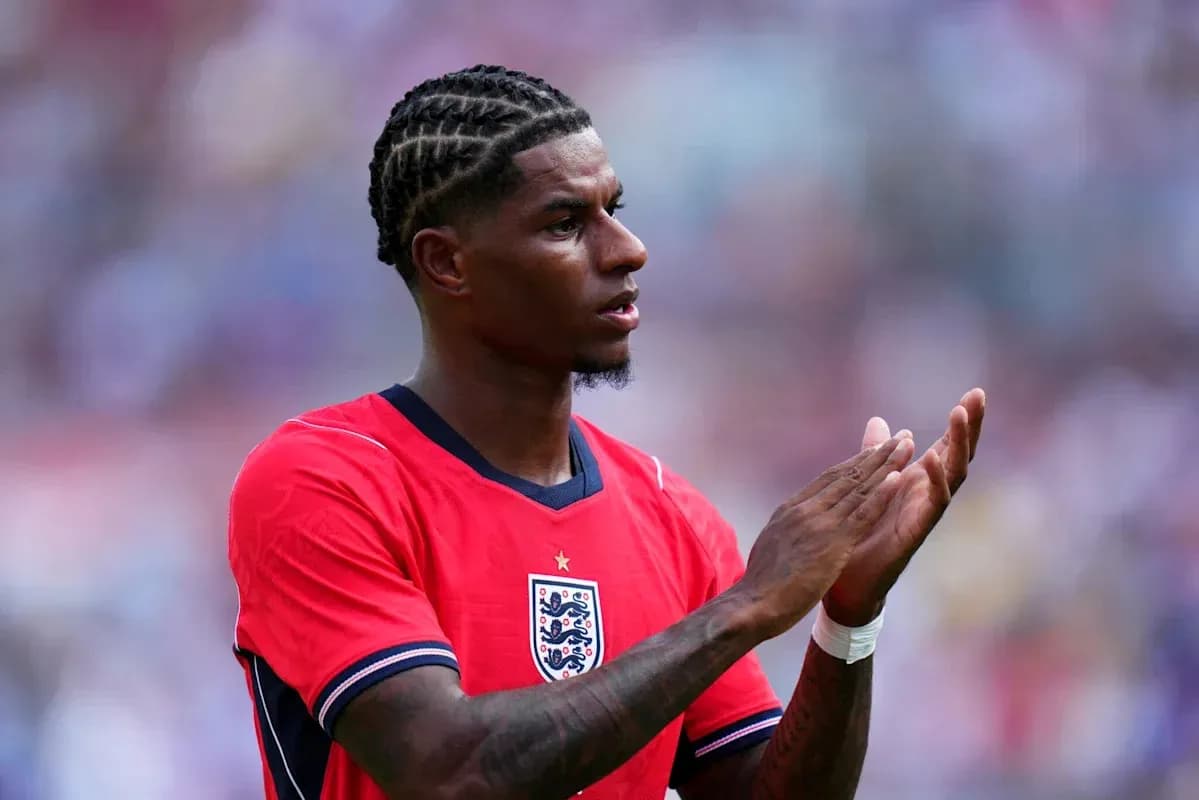
Rashford is due back in training after his involvement with England at the World Cup in the United States, Canada and Mexico. When he walks back into Carrington, he will find a squad reshaped by international exertions, transfer noise and the usual churn of a summer window. His own situation will be the most delicate of all.
United, for their part, seem prepared for a long summer. With the safety valve of a fixed-price exit gone and the player already turning down proposals, any resolution feels distant. This is no longer a story that can be settled with a single phone call and a £40 million payment.
It will take conversations, conviction and, above all, a decision from Rashford himself: does the next chapter of his career still belong at Old Trafford, or is this the moment he finally tests his value on an open market?