Manchester United Youth Pathway Reshaped After EFL Trophy Exit
Manchester United are stepping away from the EFL Trophy and the National League Cup for the 2026-27 season, in a deliberate reset of their youth-games calendar rather than a retreat from competitive edge.
The decision comes as the club’s academy prepares to return to the Uefa Youth League, earned through the senior side’s qualification for the Champions League, and trims what insiders describe as a slightly smaller than usual professional development phase group – the band of players straddling the under-18 and under-21 levels.
In simple terms: fewer players, different priorities, same ambition.
From “best games” to closed door
United were late arrivals to the revamped EFL Trophy, only entering in 2019 after the competition opened up in 2016 to 16 Category One academies amid fierce debate across the pyramid. For a time, it felt like an important proving ground.
As recently as November 2024, then-under-21s coach Travis Binnion, now part of Michael Carrick’s senior staff, described the tournament as providing some of the “best games” for his young side. The intensity, the physicality, the hostile away grounds – all of it fed into United’s long-held belief that academy players must be exposed to real football, not just age-group comfort.
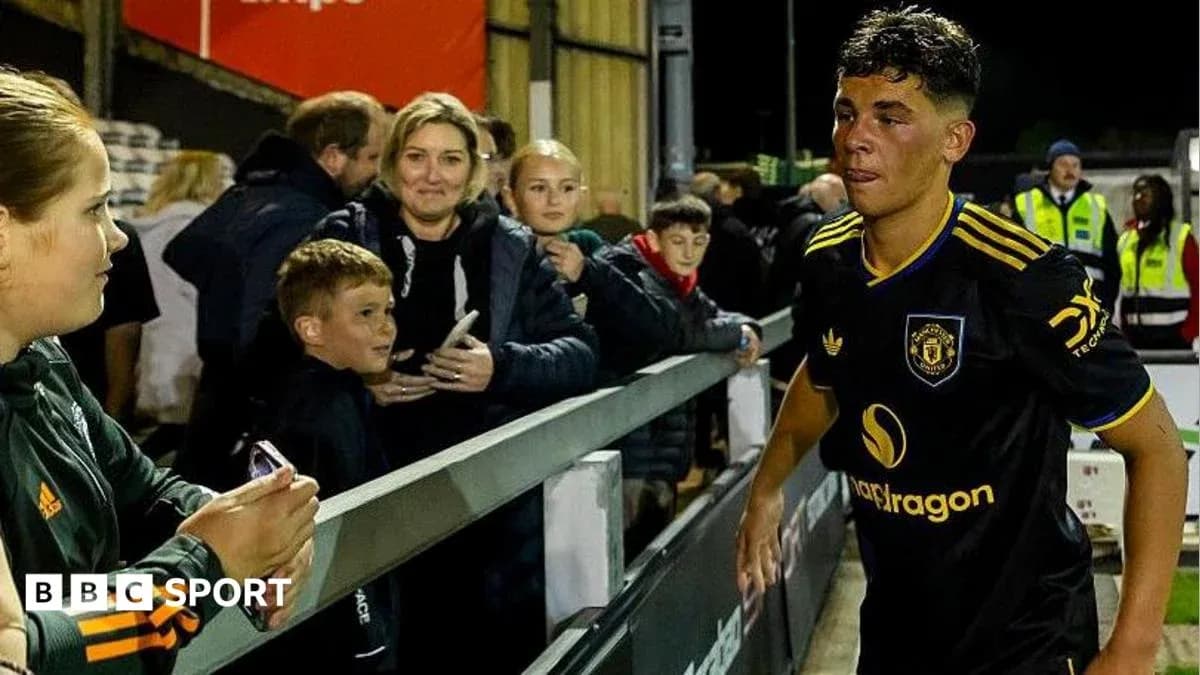
Yet the results last season told a different story. United’s under-21s failed to escape the group stage of the EFL Trophy and also exited in the league section of the National League Cup. Ten matches, all played before Christmas, yielded no deep run and a heavy load on a relatively tight squad.
The club has now decided that energy will be better spent elsewhere.
Youth League returns to centre stage
The Uefa Youth League, back on the schedule thanks to the first team’s Champions League qualification, immediately changes the landscape. United’s youngsters are guaranteed at least eight fixtures in Europe’s elite under-19 competition, with the promise of high-level opposition, travel, and the kind of tactical tests that mirror the senior game.
Those games, combined with the domestic calendar, create a different kind of congestion. With a slimmer development group, United have opted against stretching their resources across too many fronts.
The Premier League Under-21 International Cup remains part of the plan. United reached the quarter-finals last season, only to fall to Real Madrid at Old Trafford. That defeat stung, but it also underlined the value of facing top European academies in a setting that still feels like United: home pitch, home crowd, Old Trafford lights.
For now, that blend – Youth League, International Cup, and domestic age-group football – is seen as the right balance between challenge and manageability.
Eyes already on 2027-28
Club officials are stopping short of calling this a permanent shift. They will revisit the youth games programme for 2027-28 once they have a clearer view of squad size, player progression, and the demands placed on the development phase.
If the pool of under-18s and under-21s swells again, the EFL Trophy and National League Cup could yet return to the menu. For the moment, United prefer a more streamlined pathway rather than a scattergun approach to minutes.
Lawrence talks and Carrick’s stamp
Behind the scenes, there is continuity amid the change.
Talks are ongoing with Adam Lawrence to extend his stay as under-21 manager. Lawrence, who briefly left for Newcastle, returned to United when Binnion was pulled into the senior setup. That promotion has now been formalised under Michael Carrick, who signed a two-year contract and is beginning to shape the club in his own image, from first team down.
Lawrence’s role is central in that chain. He sits at the junction where academy promise either accelerates toward the senior squad or drifts away. Securing his future would give stability to a group now facing fewer competitions, but arguably bigger stages.
United have chosen quality of challenge over quantity of fixtures. The next question is whether that sharper focus will fast-track the next generation to Carrick’s dressing room – or leave them wishing for those “best games” they’ve just walked away from.