Lecce vs Juventus: Tactical Analysis and Match Insights
The lights have gone out on Via del Mare and the table tells the story. Following this result, a narrow 1–0 defeat to Juventus in Serie A’s Round 36, Lecce remain 17th with 32 points, their survival bid still hanging by a thread. Juventus, meanwhile, consolidate 3rd place on 68 points, their Champions League trajectory intact after another controlled away performance.
Both sides mirrored each other on the tactical board, lining up in a 4-2-3-1. Yet the same shape housed very different footballing identities. Lecce’s seasonal DNA is that of a team permanently on the brink: in total this campaign they have played 36 league matches, winning 8, drawing 8 and losing 20. They have scored just 24 goals overall and conceded 48, a goal difference of -24 that underlines how thin their margin for error is. At home, the numbers are equally stark: 12 goals for and 24 against from 18 matches, with an average of 0.7 goals scored and 1.3 conceded at Via del Mare.
Juventus arrived as the antithesis of that fragility. Overall they have 19 wins, 11 draws and only 6 defeats from 36 matches, with 59 goals scored and 30 conceded – a goal difference of +29 that speaks of balance and control. On their travels, they had already taken 9 wins from 18 away games, scoring 24 and conceding 16, averaging 1.3 goals for and 0.9 against away from home. This was a heavyweight visiting a side still fighting to stay upright.
I. The Big Picture: Structure and Intent
Eusebio Di Francesco doubled down on Lecce’s most-used structure of the season. The 4-2-3-1 has been his default, deployed 20 times in the league, and again he trusted it: Wladimiro Falcone in goal, a back four of Danilo Veiga, Jannik Siebert, Tiago Gabriel and Antonino Gallo, with Ylber Ramadani and Ousmane Ngom as the double pivot. Ahead of them, Santiago Pierotti and Lameck Banda flanked Lameck Coulibaly, with Walid Cheddira leading the line.
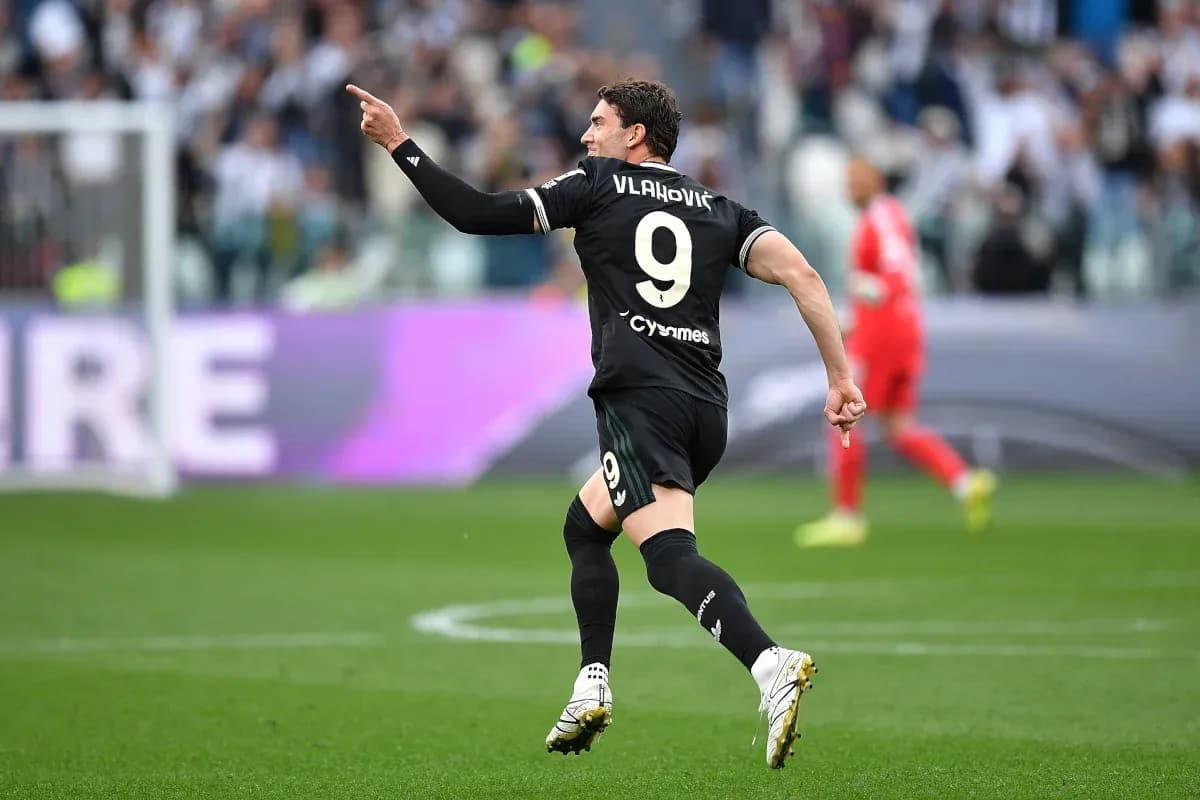
Luciano Spalletti mirrored the shape but not the mindset. Mattia Di Gregorio started in goal, shielded by a back four of Pierre Kalulu, Bremer, Lloyd Kelly and Andrea Cambiaso. In midfield, Manuel Locatelli and Teun Koopmeiners formed a controlling double pivot, while Francisco Conceição, Weston McKennie and Kenan Yıldız supported Dušan Vlahović.
For Lecce, the 4-2-3-1 was about survival: compressing space, keeping distances short, and hoping Banda’s direct running or Cheddira’s work rate could tilt a moment their way. For Juventus, the same formation was a canvas for territorial dominance, rotations between Yıldız and McKennie in the half-spaces, and a steady supply line into Vlahović.
II. Tactical Voids: Absences and Discipline
Lecce’s bench told its own story of strain. M. Berisha, S. Fofana, Kialonda Gaspar and R. Sottil were all ruled out, stripping Di Francesco of depth and experience, especially in central defence and wide areas. The absence of Gaspar, who in total this campaign has produced 21 successful blocks and shown aerial presence, forced Lecce to lean heavily on Siebert and Tiago Gabriel against a physically imposing Juventus front.
Juventus were not untouched either. J. Cabal and A. Milik missed out through muscle injuries, limiting Spalletti’s options for late-game rotation at centre-back and centre-forward. Yet the breadth of their bench – from Jonathan David and J. Boga to L. Openda and E. Zhegrova – still offered more than enough variety.
Disciplinary patterns framed the emotional landscape. Heading into this game, Lecce’s yellow cards peaked late: 28.57% of their bookings came between 76–90 minutes, a sign of fatigue and desperation in closing stages. Juventus, too, showed a tendency to boil over late, with 20.41% of their yellows in the same window. Red-card data painted specific flashpoints: Lameck Banda had already seen red once this season, while Cambiaso’s own dismissal record underlined the risk of high-intensity duels on the flanks.
III. Key Matchups: Hunter vs Shield, Engine Room Wars
Hunter vs Shield
Kenan Yıldız arrived as one of Serie A’s breakout attackers. In total this campaign he has scored 10 league goals and provided 6 assists, with 60 shots (38 on target) and 73 key passes. His role from the left half-space, drifting inside behind Vlahović, was always going to test Lecce’s defensive shell.
That shell, however, has been brittle. Overall, Lecce concede 1.3 goals per game both at home and away, and they have kept just 9 clean sheets in 36 matches. Their biggest home defeat, 0–3, is a reminder of what happens when the block breaks. Against Juventus’ away attack, which averages 1.3 goals on their travels, Yıldız’s movement between Veiga and Siebert was the pressure point. Every time he received between the lines, Lecce’s structure had to bend without breaking.
Engine Room: Playmaker vs Enforcer
In midfield, the duel was as much ideological as physical. Locatelli, with 2626 passes at 88% accuracy and 45 key passes in total this season, is Juventus’ metronome and shield. He has also made 95 tackles, blocked 23 shots and intercepted 37 passes; those 23 blocks are not just numbers – they are 23 moments where he has quite literally stood between danger and Di Gregorio’s goal.
Opposite him, Ramadani is Lecce’s heartbeat. Across 35 appearances and 3040 minutes, he has made 88 tackles, 10 successful blocks and 46 interceptions, while committing 40 fouls and collecting 8 yellow cards. His job here was double: disrupt Juventus’ rhythm and launch what few counters Lecce could muster.
The pivot battle decided territory. When Locatelli and Koopmeiners could turn and face forward, Juventus pinned Lecce back, with McKennie and Yıldız attacking the half-spaces and Cambiaso overlapping. When Ramadani managed to step in front, Lecce could spring Banda, whose 77 dribble attempts and 30 successes in total this season make him their most direct outlet.
On the flanks, Cambiaso versus Banda was combustible. Cambiaso, with 54 key passes and 59 tackles, is both creator and defender, but his 1 red card this season hints at the edge he plays on. Banda, with 47 fouls drawn and 43 committed, lives in that same chaos. Every collision on that side felt like a potential turning point.
IV. Statistical Prognosis: xG Logic and Defensive Solidity
Even without explicit xG figures, the season’s trends sketch the expected balance. Juventus’ overall scoring rate of 1.6 goals per game, combined with conceding only 0.8, suggests they regularly generate the better chances while limiting opponents. Their 16 clean sheets in 36 matches underline a structure designed to suffocate games once they go ahead.
Lecce, by contrast, have failed to score in 19 of their 36 matches overall. At home alone, they have drawn a blank 10 times from 18 outings. That chronic lack of cutting edge meant that, heading into this game, the most probable script saw Juventus creating the higher xG through sustained pressure and quality in the final third, while Lecce relied on low-probability transitions and set-pieces.
The penalty narrative also mattered. Juventus had a perfect record from the spot this season – 2 penalties taken, 2 scored – while Lecce’s lone penalty was converted, but their key figures in the league-wide stats had shown vulnerability: Locatelli has missed 1 penalty in total this campaign, and Yıldız has also missed 1 despite scoring another. Any spot-kick here would have carried layered psychological weight.
In the end, Juventus’ defensive solidity and structured possession game made the difference. They leaned on a back line that, on their travels, concedes just 0.9 goals per match, and on a midfield capable of turning a one-goal advantage into a stranglehold. Lecce, for all their effort and the energy of Via del Mare, were once again betrayed by their season-long averages in front of goal.
Following this result, the trajectories feel familiar. Juventus stride towards the Champions League with a well-drilled 4-2-3-1, anchored by Locatelli’s control and lit by Yıldız’s flair. Lecce, still 17th and still searching for goals, must find a way to bend their numbers – and their fate – in the final weeks of the season.