Kansas City W Dominates Chicago Red Stars W 3–0 in NWSL Showdown
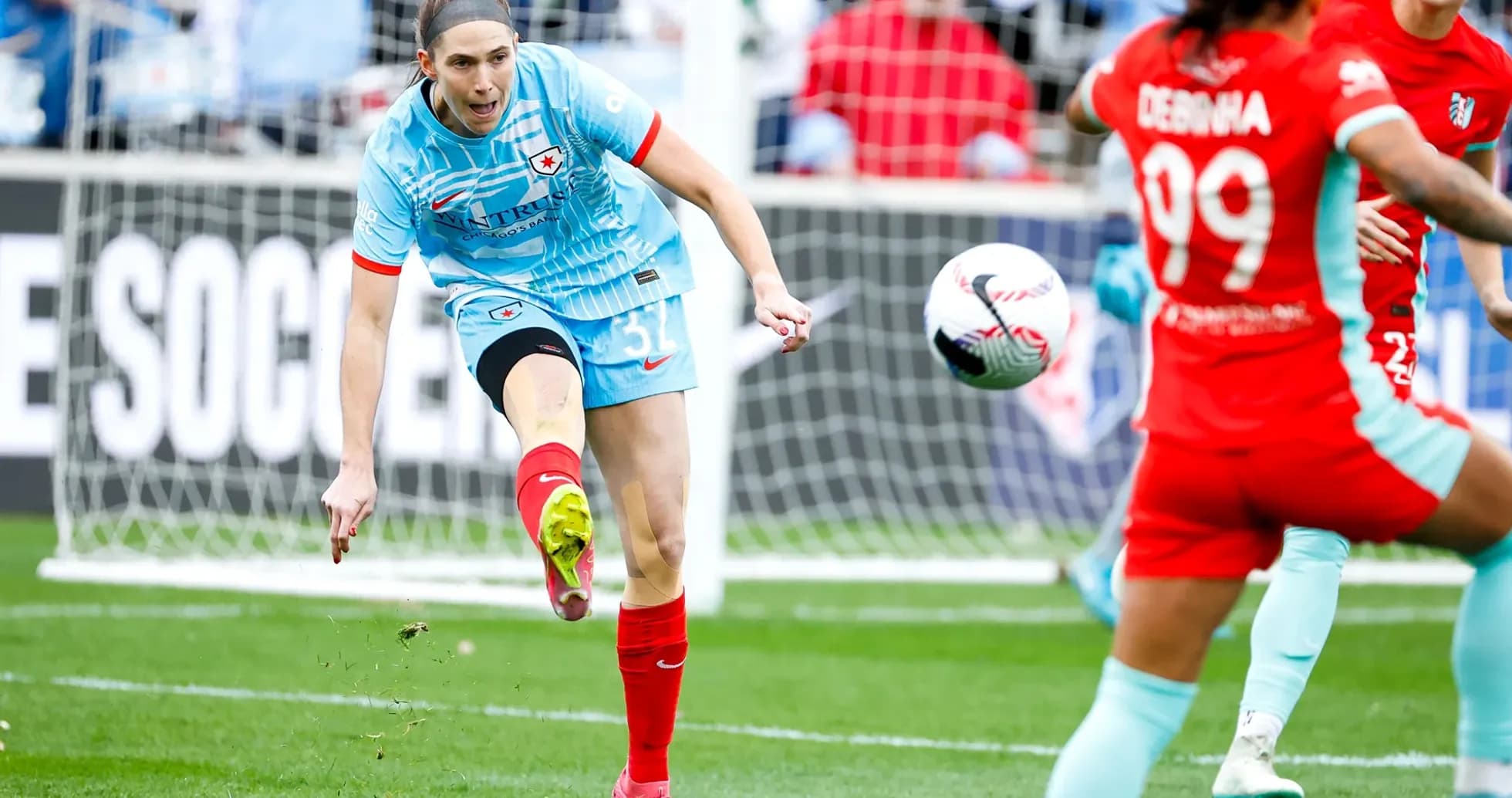
Under the late afternoon light at CPKC Stadium, Kansas City W turned a promising narrative into a statement win, dismantling Chicago Red Stars W 3–0 and reaffirming their home identity in the NWSL Women group stage. Following this result, the table tells a clear story: Kansas City, 6th with 12 points and a goal difference of -4 overall (10 scored, 14 conceded), are a dangerous, imperfect contender; Chicago, 15th with 6 points and a goal difference of -14 (4 scored, 18 conceded), are a side still searching for a foothold.
The contrast between their seasonal DNA was distilled into ninety minutes. Kansas City came in as a split-personality team: flawless at home, fragile on their travels. At home they had played 3, won 3, drawn 0, lost 0, scoring 7 and conceding just 2. On their travels, they had played 5, winning 1 and losing 4, with 3 goals for and 12 against. Chicago’s pattern was bleaker: in total this campaign they had played 9, winning only 2 and losing 7, with just 4 goals for and 18 against. Away, the Red Stars had played 4 and lost all 4, failing to score a single goal and conceding 10.
Into that backdrop, both coaches chose the mirror: 4-3-3 against 4-3-3. Chris Armas leaned into his attacking trident of M. Cooper, A. Sentnor and the league’s in-form finisher T. Chawinga, supported by a midfield triangle of L. LaBonta, C. Bethune and B. Feist. Behind them, a back four of L. Rouse, E. Ball, K. Sharples and I. Rodriguez screened Lorena in goal.
Martin Sjogren’s Chicago answered with their own front three of N. Gomes, J. Huitema and R. Gareis, underpinned by a midfield of M. Hayashi, A. Farmer and J. Grosso, and a back line of J. Bike, K. Hendrich, S. Staab and M. Alozie in front of A. Naeher. But while the shapes matched, the execution did not.
The tactical voids were more structural than personnel-based. There were no listed absentees, no obvious injury caveats; instead, Chicago carried a psychological burden. Heading into this game, they had failed to score in 7 of their 9 league matches in total, including all 4 on their travels. Their away average of 0.0 goals for and 2.5 goals against per match framed a side that not only struggled to create but routinely cracked under pressure.
Discipline added another layer. Kansas City’s yellow-card profile this season leans toward first-half emotion: 25.00% of their yellows have arrived between 0–15 minutes, and 37.50% between 31–45 minutes. Chicago’s caution pattern is similarly front-loaded, with 42.86% of their yellows between 31–45 minutes and 28.57% between 46–60. This shared tendency to boil in the middle of each half meant the duel in Kansas City was always likely to be decided in those momentum swings around the interval, rather than in chaotic stoppage time.
Within that rhythm, individual battles defined the night.
The “Hunter vs Shield” matchup was built around T. Chawinga. Heading into this game, she had 3 goals and 1 assist in just 4 appearances, with 5 shots (3 on target) and a 7.35 average rating. Her threat profile is direct and vertical, powered by 4 dribble attempts with 3 successes and a willingness to duel (26 duels, 13 won). Up against a Chicago defense that, in total this season, had conceded 18 goals in 9 matches, the numbers tilted her way. On their travels, the Red Stars’ back line had been breached 10 times in 4 games, with their worst away loss a 4–0 collapse. In Kansas City, Chawinga operated as the apex predator against a line that has repeatedly shown it cannot hold when exposed.
The “Shield” on the other side was collective rather than individual. K. Hendrich and S. Staab formed the central axis, flanked by J. Bike and M. Alozie. But Chicago’s systemic issue is not just individual defending; it is the inability of the midfield to protect. With an away average of 2.5 goals against per match and only 1 clean sheet in total this season (and none away), the Red Stars’ back four is constantly asked to absorb waves of pressure. Against Kansas City’s home attack, which had averaged 2.3 goals for and just 0.7 against per match heading into this game, that imbalance was brutally exposed.
In the “Engine Room,” C. Bethune was the protagonist. She entered the fixture as both creator and secondary scorer: 2 goals, 2 assists, 184 total passes at 67% accuracy, and 6 key passes in 8 appearances. Her dribbling volume (23 attempts, 9 successes) and defensive work (12 tackles, 1 blocked shot, 7 interceptions) make her the hinge between Kansas City’s midfield and front line. Up against A. Farmer and M. Hayashi, Bethune consistently found pockets between Chicago’s lines, turning their 4-3-3 into a stretched 4-1-4-1 out of possession.
Behind Bethune, the presence of K. Sharples provided the platform. Sharples has quietly built one of the league’s more robust defensive resumes: 274 passes at 77% accuracy, 9 tackles, 7 successful blocked shots and 11 interceptions. Her ability to step out, block lanes and then distribute cleanly allowed Kansas City to hold a high line without losing stability, pinning Chicago’s forwards and cutting off service to J. Huitema.
What made this 3–0 more than just another home win was how precisely it aligned with the statistical prognosis. Kansas City’s home profile—7 goals scored and 2 conceded in 3 games, with their biggest home win a 3–0—suggested a side that routinely turns territorial dominance into multi-goal victories while keeping things tight at the back. Chicago’s away record—0 goals scored, 10 conceded in 4 games, with their heaviest defeat a 4–0—forecast a team likely to concede multiple times without reply.
Even without explicit xG values, the expected goals landscape is clear. Kansas City, averaging 1.3 goals for and 1.8 against in total this campaign but supercharged at home, were always likely to generate a high-quality shot volume against a defense conceding 2.0 goals per match in total and 2.5 on their travels. Chicago’s chronic failure to create—0.4 goals for per match overall, 0.0 away—meant their xG ceiling was low, reliant on rare transitions rather than sustained pressure.
In that sense, the 3–0 scoreline was less a surprise than a confirmation. Kansas City’s home identity—front-foot, structurally sound, driven by the cutting edge of Chawinga and the orchestration of Bethune—overwhelmed a Chicago side whose numbers already warned of collapse. Following this result, the trajectories diverge further: Kansas City look every inch a playoff-calibre team when they step onto the CPKC Stadium pitch, while the Red Stars leave Kansas with their season-long questions still unanswered.