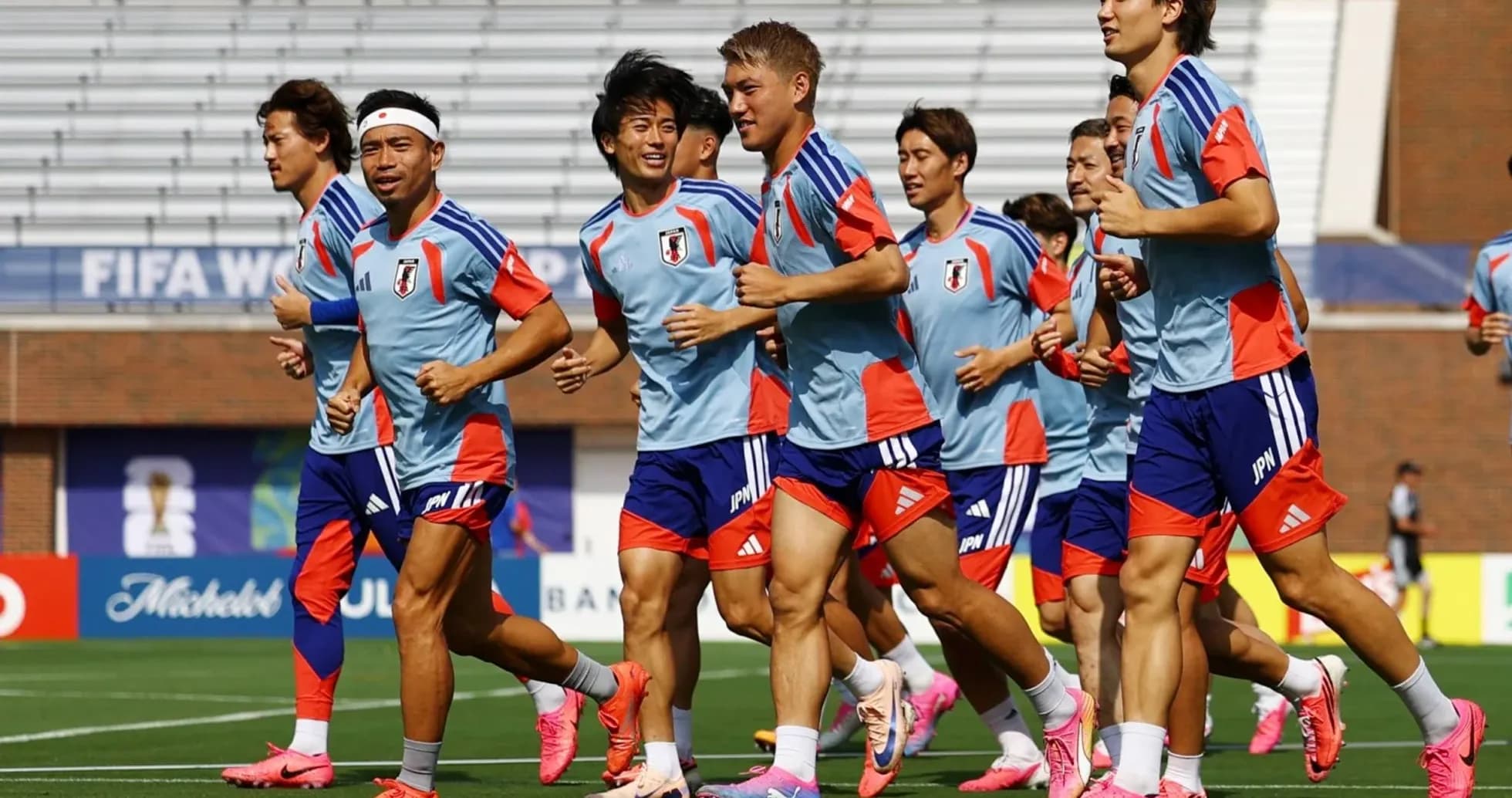
Japan Aims for Top Spot Against Sweden in Group F Clash
Hajime Moriyasu will walk into Japan’s final Group F fixture knowing his side have already taken the long road to the brink of the knockout rounds. Key players gone, plans shredded, expectations dented. The response? Adapt, improvise, and keep winning.
Japan arrive at Thursday’s clash with Sweden on four points, unbeaten and emboldened. They clawed their way back twice to draw 2-2 with the Netherlands, then dismantled Tunisia 4-0, a scoreline that spoke of control and conviction rather than chaos in the ranks.
All of it has come with a sizeable handicap.
Takefusa Kubo, the creative spark so often at the heart of Japan’s attacking play, is expected to miss the Sweden game after picking up a knee problem against the Dutch. Wataru Endo, the former captain and midfield anchor, is not at the tournament at all. Nor are winger Kaoru Mitoma or playmaker Takumi Minamino, both ruled out through injury before a ball was kicked.
On paper, that list should have dragged Japan backwards. On the pitch, it has done the opposite.
“Anyone can play with anyone else, that’s the readiness we wanted to ensure,” Moriyasu said, underlining a philosophy that has underpinned Japan’s campaign. It sounds simple. It rarely is.
“When there’s a change over in the team, it’s not that simple or easy to play with different players and achieve good results or be successful,” he added, quick to shift the spotlight. He praised his staff and squad for developing themselves to meet that standard, and the evidence is there: two games, two strong tactical performances, and a team that looks increasingly sure of itself.
Across those matches, Japan have not just survived. They have functioned. The structure has held, the pressing has remained sharp, and the understanding between new combinations has grown with each minute. The coach sees a group that is “developing and increasing their readiness” at precisely the right time.
The table reflects that work. With four points already banked, Japan are well placed to reach the last 32 even if they stumble against Sweden. The safety net is there. Moriyasu wants nothing to do with it.
“We are basically thinking of winning, that’s what’s in our mind,” he said. The target is not just qualification, but top spot in Group F. Scoring freely is part of that ambition, but he will not rip up the balance of a side that has found its rhythm just to chase an extra goal or two.
“If possible we would like to advance on top of the group by scoring as many goals, but distorting the balance of the team is more of a risk. We will see.”
That word — balance — has become central. Lose it, and the whole structure wobbles. Keep it, and Japan believe they can handle whatever comes next.
They do not yet know who waits for them in the knockout rounds. Moriyasu is not wasting energy on hypotheticals. “What’s important is that we are solid and that we play against a team that we are able to deal with no matter what appears,” he said. First, Sweden. First, the job in front of them.
“First we want to think about ourselves and how we play tomorrow,” he continued. The message to his players is clear: control what you can control. “In terms of our target we would like to win and qualify for the knockout stage on top of the table.”
Standing in their way is a Swedish side that has already shown both extremes of its personality. A 5-1 demolition of Tunisia in their opener suggested a free-scoring, ruthless unit. A 5-1 defeat to the Netherlands in the next game exposed a far more fragile side.
That volatility makes Sweden dangerous and unpredictable in equal measure. It also gives Japan’s defenders a serious examination, particularly against the front-line pairing of Alexander Isak and Viktor Gyokeres.
Moriyasu is not shying away from that challenge. He welcomes it.
“They’re world class, wonderful strikers so I would like us to enjoy facing these players,” he said. For him, this is not just about a result; it is a test of how far his reshaped team has come, and how much higher it can climb. “It’s going to be a good opportunity for our players to develop themselves further.”
Japan have already proved they can absorb setbacks and still move forward. Now comes the next question: with the knockout stage within reach and key men still missing, can this patched-together, unified side seize control of the group and announce itself as something more than a survivor?