Iran's World Cup Match Amidst Political Tensions
The World Cup has seen political tension before, but never like this.
In Los Angeles tonight, Iran’s opening game against New Zealand will be played under the shadow of a war with the host nation and an uprising from its own people. It is football dropped into the middle of a geopolitical fault line, and nobody quite knows what happens if it cracks.
A World Cup under orders
Iran’s captain Mehdi Taremi did not bother to hide his frustration. His team’s build-up has been shredded by their country’s conflict with the United States. Iran have been forced to move their base to Mexico. Visa problems have dogged members of the delegation. Some travelling fans have seen their match tickets stripped away.
“I have felt the tension from the first moment we arrived at this World Cup,” Taremi said. “This kind of tension, it undermines that joy and it undermines the message of Fifa and our people, which is that football brings about peace. I feel like this World Cup could have provided a better atmosphere than it has.”
That message jars with the reality around tonight’s fixture.
Iran head coach Amir Ghalenoei has been given explicit instructions by the regime: if pre‑revolutionary flags appear in the stands or if anti-government chanting is clearly audible, he is to stop the match. The prospect of a World Cup game being halted on the orders of a government, via its coach, hangs over SoFi Stadium like a storm cloud.
Ghalenoei tried to push all that to the edge of the stage during his pre-match press conference.
“We don’t pay attention to any of the hype and anything that goes on around us,” he said. “We are here to represent the respectful people of Iran, be it the Iranians inside Iran or the Iranian diaspora. We are not political people... football is separate from politics.”
The words felt almost ceremonial. The reality in the seats will be anything but.
‘We’re going to make it hell’
Outside the stadium, buses are being organised from San Diego, Orange County and across Los Angeles. Not by fan clubs, but by activists.
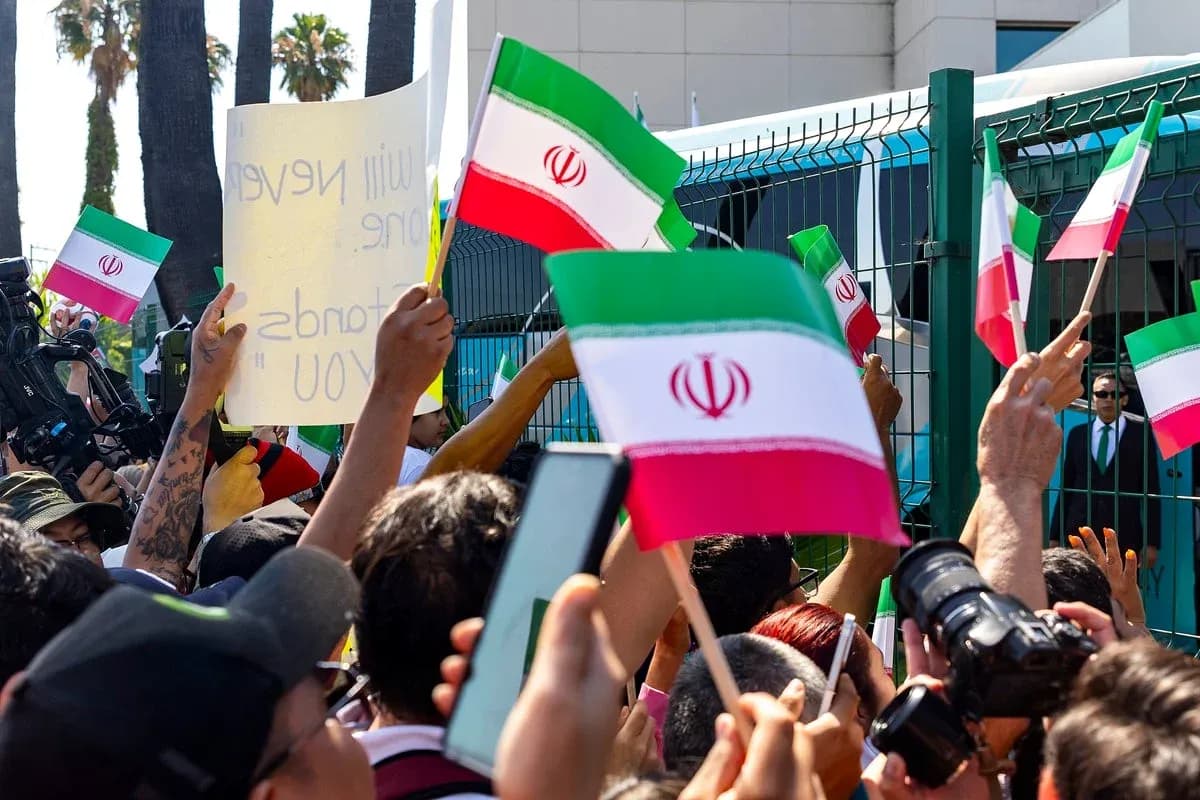
Iranian protesters living in the United States have vowed to turn the game into a direct challenge to the regime. They intend to boo the anthem, turn their backs to the pitch and raise the banned pre‑revolutionary flag, in open defiance of both Tehran and Fifa’s regulations.
“We’re going to make it hell,” one woman, who bought a ticket along with fellow activists, told the Daily Mail. “There are buses scheduled to leave from San Diego, Orange County, and different cities in LA to come to the stadium… we're going to have hell for them.
“We’re going to boo the anthem that is going to play. We're going to turn our backs during the anthem so we will have our flags showing.
“I know Fifa banned it [the flag] but we will make a way to get it in. So we're going to see this flag, not the terrorist regime’s flag.”
This is not a fringe threat. It is organised, loud, and it is coming to the World Cup’s doorstep.
For Fifa, the hard truth remains: in the 96-year history of the tournament, this is the first time a host nation has been at war with one of the participants. Iran’s opener in Los Angeles has become the focal point of a campaign that is as much about visibility and defiance as it is about football.
The surreal possibility looms that a World Cup match could be stopped not for a pitch invasion or crowd trouble, but because a coach, under orders from his government, walks his players off in response to the sight and sound of his own people.
England’s calm amid the chaos
While Iran’s camp wrestles with forces far beyond tactics and team selection, England’s issues feel almost quaint by comparison.
Jordan Henderson has stepped up to defend Jude Bellingham, pushing back against criticism of the midfielder’s performances and personality.
“I know a lot gets written in the media and I really find it hard to read sometimes because I just know how big an influence he is on this team, how good a teammate he is off the field,” Henderson said. “And what he gives us is just something really special, he really gives us the X-factor in our team. We all know what he can do, and how much we all love him inside the camp, and I suppose that’s the main thing.”
England face Croatia on Wednesday, a meeting layered with history after the 2018 World Cup semi-final and the Euro 2020 group-stage rematch. Croatia defender Duje Caleta‑Car has already underlined the threat of Harry Kane, describing the Bayern Munich striker as a “master of the game” and highlighting his movement and positioning, even in matches where he does not score.
Eze refuses to hide
Elsewhere in the England camp, Eberechi Eze is refusing to let one of the most painful moments of his career define him.
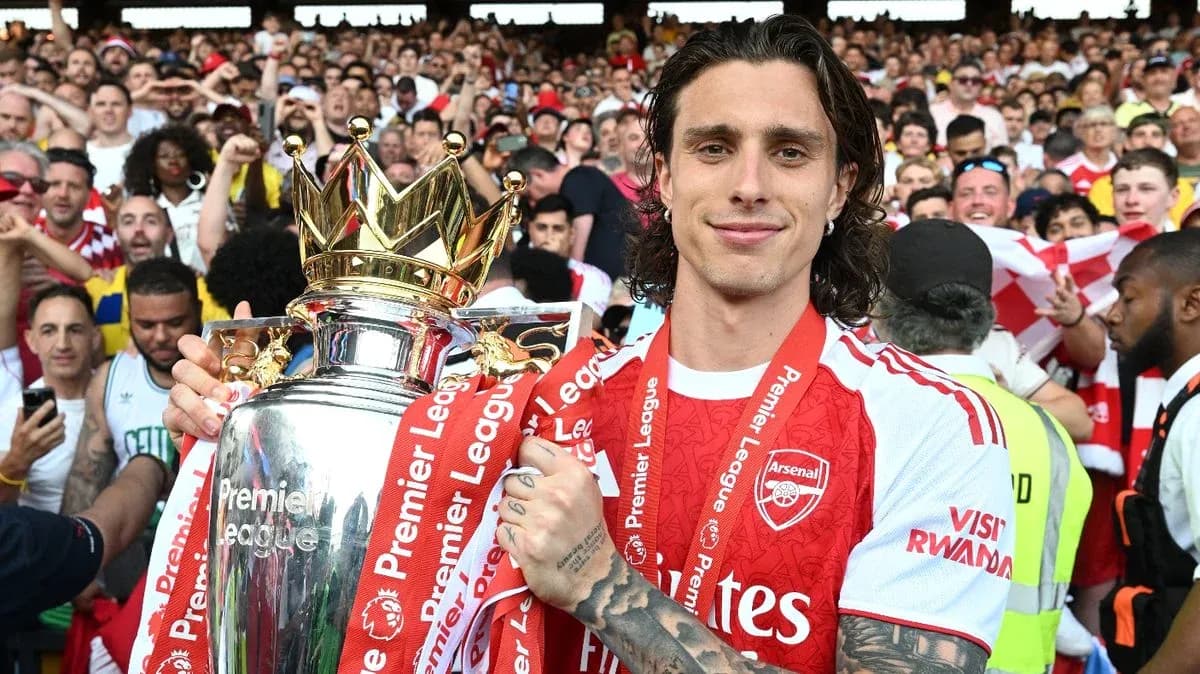
The forward missed a crucial chance for Arsenal in the Champions League final, but says he would still step up for a penalty in a World Cup shootout.
“If called upon, for sure,” he said when asked about taking a spot-kick. “Why wouldn’t I take it? Football is full of everything and you have to try to accept everything as it is, to enjoy it as much as you can. Playing in a Champions League final is where I want to be, it’s what I want to do. We’ll go for it again next season and if there is a penalty to take then I’ll be there again. All the big players have missed big penalties, have experienced these types of moments.
“I’ve had messages from everyone to speak on those moments. For me, it’s not something I wish never happened. I’m grateful it happened. I’m going to grow from it, learn from it and move forward.”
On a day when some players are being asked to carry the weight of a nation’s politics, Eze’s response to sporting pressure sounds almost refreshing in its simplicity: take the hit, learn, go again.
Cucurella’s Bernabeu leap
Away from the World Cup but still very much within its orbit, Marc Cucurella has sealed a major move.
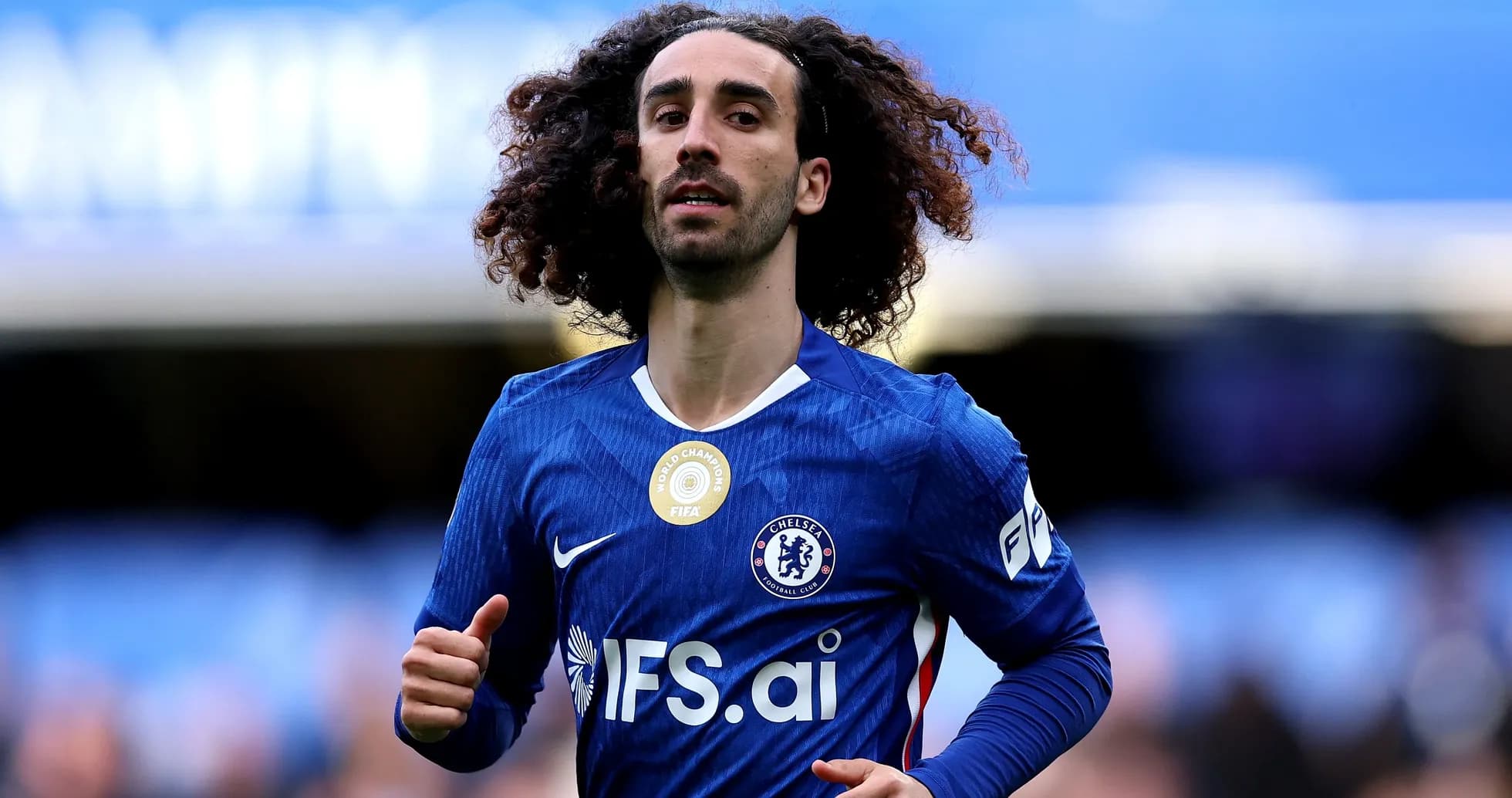
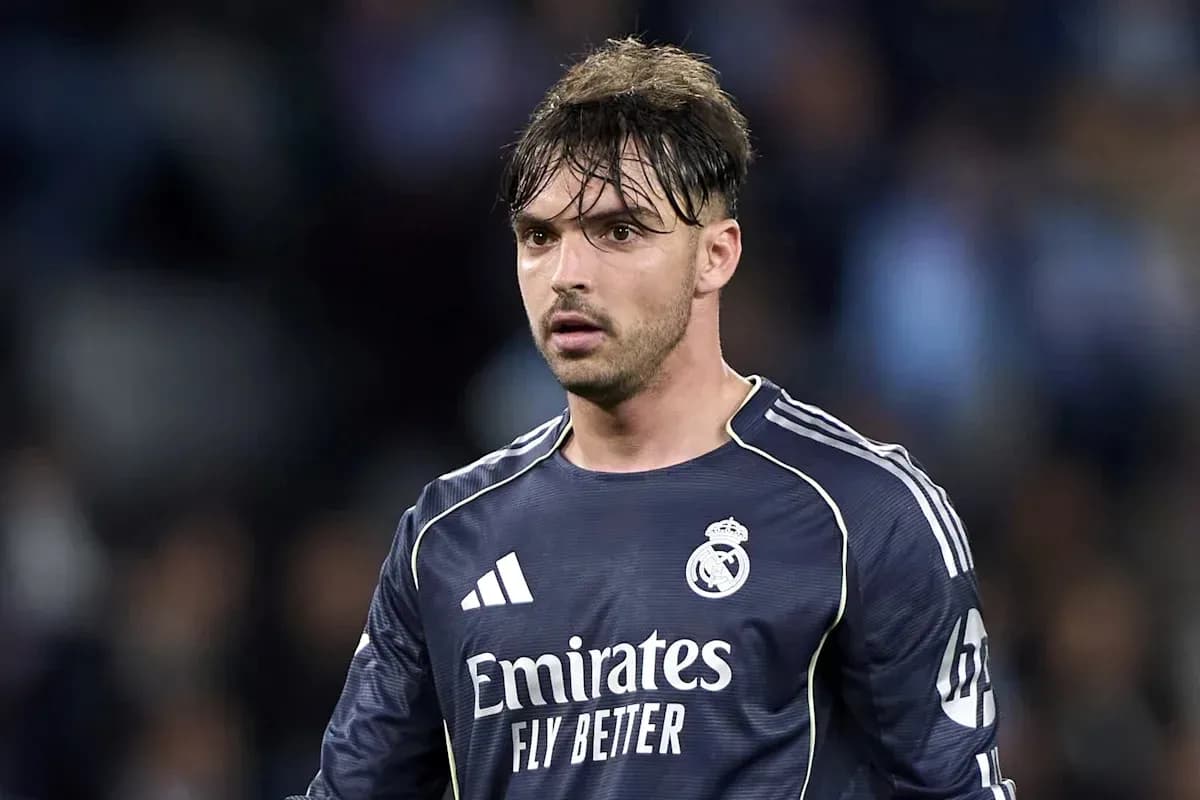
The Chelsea and Spain defender has completed a £52m transfer to Real Madrid, signing a deal that runs until 2032. It is a six-year contract and a striking show of faith from the Bernabeu hierarchy in a player who has had an uneven spell in the Premier League but remains a trusted figure for his national team.
Cucurella is part of Spain’s World Cup squad, and his future now looks settled long term. For Madrid, it is another piece in a squad designed to dominate both domestically and in Europe well into the next decade.
Potter’s bitten ear and a VAR storm
Not all the stories in this World Cup are heavy. Some are just bizarre.
Sweden manager Graham Potter appeared with blood on his right ear after his side’s 5-1 win over Tunisia, later suggesting that someone may have bitten him during the touchline celebrations. An early contender for the strangest subplot of the tournament, and a reminder that the chaos is not confined to the pitch.
There is a more serious storm brewing in the video operations room. Fifa’s discrimination monitor has called for the removal of Australian official Shaun Evans from his VAR duties after he appeared to make a hand gesture resembling a white supremacist symbol during the broadcast of Germany’s opening game against Curaçao in Houston.
Evans was seen forming an “OK” sign with his right hand, thumb and forefinger touching, other fingers outstretched, held in front of his right leg as cameras cut to the team of video analysts working from Dallas. The gesture has been listed as a hate symbol by the Anti‑Defamation League since 2019, and its appearance on an official World Cup feed has sparked immediate calls for action.
Fifa now faces a decision that will be watched closely by anti-discrimination groups and players alike.
Branding battles and off-field fallout
Even stadium names are not escaping scrutiny. Levi’s Stadium in San Francisco, one of the World Cup venues, has been stripped of its commercial branding by Fifa and rebranded simply as San Francisco Bay Area Stadium for the tournament. The governing body even covered the giant Levi’s logo inside the ground, prompting the jeans manufacturer to tweak its Instagram profile picture in a light-hearted response.
The consequences of behaviour in the stands, though, are far from light-hearted elsewhere.
In Mexico, a man identified as Ulises Fernando Bernal Miramontes has lost his job after being filmed making a racist gesture behind Korean influencer Yoon Su Jin, known as Ino Cat, during South Korea’s match against Czech Republic in Guadalajara. He pulled the corners of his eyes back towards his temples, a gesture widely recognised as racist towards people of Asian descent.
The video went viral, drawing hundreds of thousands of likes and tens of thousands of comments. Bernal Miramontes, reported to have been president of Mexico’s engineering guild, has since been removed from his role.
The incident is another stark reminder that the World Cup is not just a mirror for the best of the game, but for some of the worst instincts around it.
A night on a knife-edge
All of this swirls around a tournament that is still finding its rhythm. Goals, upsets, emerging stars – they will come. They always do.
But tonight in Los Angeles, the story is not just about formations or finishing. It is about a national team walking into a stadium where many of their own people plan to turn their backs on them, literally and symbolically, to send a message home. It is about a coach who may be asked to choose between the instructions of his government and the integrity of the match. It is about a World Cup colliding head-on with a war and a revolution in waiting.
When Iran line up for the anthem and the first boos roll down from the stands, when the pre‑revolutionary flags appear in the cameras’ sightlines, the world will see whether this tournament can contain that kind of pressure.
Or whether, in this most perilous of World Cup campaigns, the game finally has to stop.