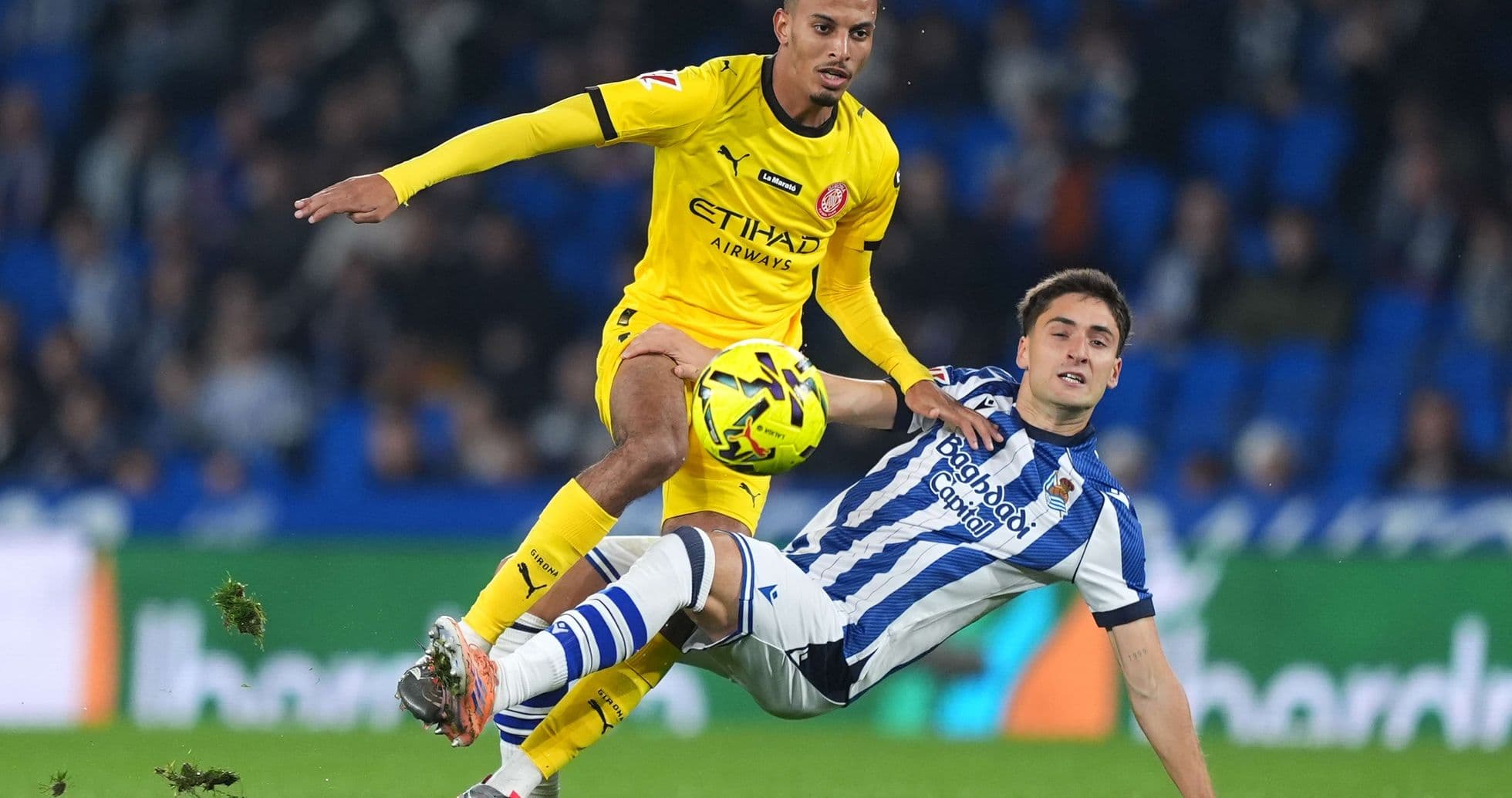
Girona vs Real Sociedad: La Liga Clash at Montilivi
Estadio Municipal de Montilivi hosts a high‑pressure La Liga clash on 14 May 2026 as 17th‑placed Girona welcome 8th‑placed Real Sociedad in Round 36. With Girona hovering just above the relegation zone on 39 points and Real Sociedad chasing European qualification on 44, the stakes are clear: survival versus a late push for the Europa League places.
Context and stakes
In the league, Girona’s position is precarious. They sit 17th with 39 points from 35 matches, a goal difference of -15 and a worrying recent form line of “DLLLD”. Their overall record (9 wins, 12 draws, 14 defeats) underlines a season of struggle, particularly in defence, with 52 goals conceded.
Real Sociedad, by contrast, are 8th with 44 points, a goal difference of -1 and the league table marking them in the band “Promotion - Europa League (League phase)”. Their form is hardly convincing – “DLDLD” – but they have a stronger platform: 11 wins, 11 draws, 13 defeats, scoring 54 and conceding 55 across all phases.
With just three matches left, Girona need points to avoid being dragged into the bottom three, while Real Sociedad know that a strong finish could secure European football. That tension should shape both tactical approaches.
Girona: fragile but stubborn at home
Across all phases, Girona have been inconsistent but not toothless. They have played 35 league games, winning 9, drawing 12 and losing 14. At Montilivi, they have 6 wins, 4 draws and 7 defeats from 17 matches, scoring 19 and conceding 25. An average of 1.1 goals scored and 1.5 conceded per home match paints the picture of a side that often needs to out‑fight rather than out‑score opponents.
Their season‑long form string – a long sequence of “L” and “D” with occasional “W” – confirms a stop‑start campaign. Yet there are signs of resilience:
- Clean sheets: 5 at home and 6 overall, showing they can shut games down when structure and concentration hold.
- Biggest wins: a 3-0 home victory and a 0-2 away success demonstrate they are capable of putting together complete performances.
- Penalties: 7 penalties scored from 7 taken, with a 100.00% conversion rate, make spot kicks a potential lifeline in tight games.
Tactically, Girona are clearly a 4-2-3-1 team first and foremost, using that shape in 19 matches. That suggests a double pivot protecting a back four, with a central attacking midfielder and wide forwards supporting the striker. They have occasionally shifted to 4-3-3 or more conservative variants like 4-5-1 and 4-1-4-1, hinting at a coach willing to adjust the midfield density depending on the opponent.
One concern is discipline and late‑game control. The yellow card distribution shows a spike between 76-90 minutes (29 yellows, 39.19%), and they also pick up reds in several time ranges, including late in games. In a high‑stakes match, that tendency towards late bookings and occasional red cards could be costly if they are forced to defend deep under pressure.
Real Sociedad: attacking edge, defensive leaks
Real Sociedad arrive with more firepower and a clearer individual star. Across all phases they have scored 54 goals in 35 matches (1.5 per game), with a particularly strong home scoring record but still a solid 20 goals in 17 away games (1.2 per away match). They have conceded 55 overall, 28 of those away, for an away average of 1.6 goals against per match – slightly leakier than Girona at home.
Their away record is mixed: 3 wins, 6 draws and 8 defeats from 17 matches. They are difficult to beat at their best, but their tendency to draw and their defensive vulnerabilities away from San Sebastián give Girona some encouragement.
The key figure is Mikel Oyarzabal. In the league this season he has:
- 15 goals and 3 assists in 31 appearances.
- 61 shots, 36 on target, underlining his volume and accuracy.
- 7 penalties scored from 7, with no misses, making him a reliable taker from the spot.
Oyarzabal’s broader contribution is significant too: 731 passes with 40 key passes, 59 dribble attempts with 34 successful, and a solid defensive work rate (24 tackles, 4 interceptions). He is more than just a finisher; he links play, drifts into pockets and can attack from wide or central zones.
Structurally, Real Sociedad are flexible but grounded in back‑four systems:
- 4-4-2 used 12 times.
- 4-2-3-1 used 11 times.
- 4-1-4-1 used 10 times.
That mix suggests they can either mirror Girona’s 4-2-3-1 or switch to a two‑striker shape to pin back the home back line. Their own penalty record is also flawless this season (8 scored from 8), reinforcing the importance of discipline in the box for Girona.
Defensively, though, they share some of Girona’s issues. They have only 3 clean sheets across all phases (2 at home, 1 away) and have suffered heavy defeats, including a 4-1 away loss. Card data shows a lot of yellows between 46-60 and 76-90 minutes, plus red cards in the second half, which could open the door for Girona if the game becomes stretched.
Head‑to‑head: finely balanced recent history
The last five competitive meetings in La Liga show a remarkably even rivalry:
- 12 December 2025, Reale Arena: Real Sociedad 1-2 Girona – Girona win.
- 18 May 2025, Reale Arena: Real Sociedad 3-2 Girona – Real Sociedad win.
- 19 October 2024, Estadi Municipal de Montilivi: Girona 0-1 Real Sociedad – Real Sociedad win.
- 3 February 2024, Estadi Municipal de Montilivi: Girona 0-0 Real Sociedad – draw.
- 12 August 2023, Reale Arena: Real Sociedad 1-1 Girona – draw.
Across these five, Real Sociedad have 2 wins, Girona have 1 win and there have been 2 draws. Home advantage has not been decisive: Girona’s only win came away, while Real Sociedad have taken one of the two recent trips to Montilivi.
Tactical battle
Given Girona’s usual 4-2-3-1 and Real Sociedad’s preference for either 4-4-2 or 4-2-3-1, the midfield zone will be crucial. Girona’s double pivot must screen Oyarzabal’s movements between the lines and prevent him combining with the wide players. Expect the hosts to keep their full‑backs relatively cautious to avoid being exposed by Real Sociedad’s transitions.
For Girona, the route to success likely lies in:
- Compactness without the ball, trying to keep the scoreline tight.
- Maximising set pieces and penalties, where their 7/7 record is a clear asset.
- Using the central “10” and wide players to attack the half‑spaces behind Real Sociedad’s full‑backs, especially if the visitors use an adventurous 4-4-2.
Real Sociedad will try to lean on their attacking numbers – 54 goals, including a highest away win of 1-3 – and on Oyarzabal’s form. They may look to dominate possession, push their full‑backs high and create overloads in wide areas, trusting that Girona’s defence (52 conceded) can be opened up over 90 minutes.
However, both sides’ card profiles and limited clean sheet counts suggest a match where control may ebb and flow, with late incidents highly possible.
The verdict
Data points to a tight, tense contest rather than a one‑sided affair. Real Sociedad have the stronger season overall, more goals and the outstanding individual in Oyarzabal, but their away record (3 wins from 17) and defensive record on the road leave this far from a formality.
Girona’s home record is modest yet competitive, and their perfect penalty conversion plus capacity for occasional big wins at Montilivi mean they are capable of taking something, especially given Real Sociedad’s inconsistent form.
Logically, the balance of evidence leans slightly towards Real Sociedad avoiding defeat, but Girona’s urgency in the relegation fight and the even recent head‑to‑head record make a draw a very plausible outcome. A narrow scoreline with goals at both ends looks the likeliest pattern, with the result potentially decided by discipline and penalty‑area composure.