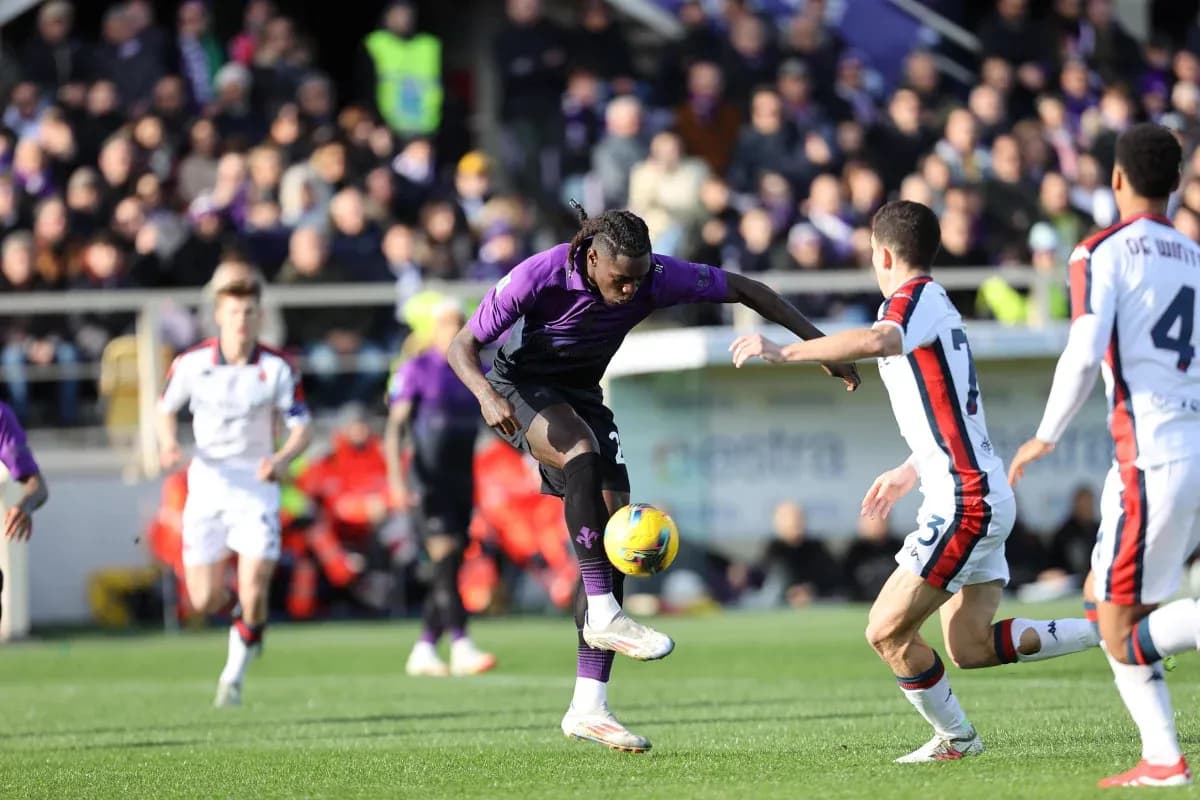
Fiorentina and Genoa Play Tactical Stalemate in Serie A
Under a bright May sky at Stadio Artemio Franchi, Fiorentina and Genoa played out a goalless draw that felt less like a dead rubber and more like a tactical chess match between two sides still defining their identities in this Serie A season. Following this result, the table tells its own story: Genoa on 41 points in 14th, Fiorentina on 38 in 15th, both safely adrift of the drop yet too inconsistent to trouble the European places. The 0-0 scoreline, though, masks some intriguing structural choices and hints at where each squad is heading.
I. The Big Picture – Shapes, context, and seasonal DNA
Fiorentina’s season-long profile is one of balance without edge. Overall they have scored 38 and conceded 49, a goal difference of -11 that matches exactly the standings snapshot. At home they average 1.1 goals for and 1.1 against, a perfectly symmetrical return that explains why their 18 home fixtures have produced 4 wins, 8 draws and 6 defeats. This is a side that rarely collapses, but just as rarely overpowers.
Paolo Vanoli doubled down on that equilibrium with a 4-3-3: D. de Gea behind a back four of Dodo, M. Pongračić, L. Ranieri and R. Gosens; a midfield trio of R. Mandragora, N. Fagioli and C. Ndour; and a front line of F. Parisi, R. Braschi and M. Solomon. It is a structure Fiorentina know well – they have lined up in a 4-3-3 in 13 league matches this campaign – and it leans on the ball-playing security of Pongračić and Ranieri, plus Gosens’ width from deep.
Genoa’s seasonal DNA is different but equally clear. Overall they have scored 40 and conceded 48, for a goal difference of -8, and their away profile – 19 scored, 24 conceded, 4 wins, 7 draws, 7 defeats – is that of a disciplined, reactive side that travels to survive and steal. Daniele De Rossi’s 3-4-2-1 in Florence reflected that: J. Bijlow in goal; a back three of A. Marcandalli, L. Ostigard and N. Zatterstrom; a midfield line of M. E. Ellertsson, Amorim, M. Frendrup and A. Martin; with J. Ekhator and Vitinha floating behind central striker L. Colombo.
The formations mirrored the standings: Fiorentina’s 4-3-3 seeking control and gradual progression, Genoa’s 3-4-2-1 built to absorb and spring.
II. Tactical Voids – Absences and disciplinary shadows
The absentees list explains several of the tactical compromises. Fiorentina were without their leading scorer M. Kean, ruled out with a calf injury. His 8 league goals and direct running are normally the sharp point of their attack; without him, Vanoli was forced into a more collective front three, with Parisi and Solomon tasked to stretch, and Braschi to knit play. The lack of a true penalty-box reference was palpable in the way crosses from Gosens and Dodo often found empty zones rather than a striker’s movement.
T. Lamptey’s knee injury also removed a dynamic full-back option. With no Lamptey, Dodo had to provide both the defensive stability and the vertical thrust on the right, limiting how aggressively he could push on, especially against the double threat of A. Martin overlapping and Ekhator drifting wide.
Genoa’s absences were equally structural. The creativity and half-space guile of T. Baldanzi (thigh injury) were missing, as were the direct wide threats of Junior Messias and B. Norton-Cuffy. M. Cornet and S. Otoa were also unavailable. De Rossi compensated by using Ekhator and Vitinha as hybrid forwards/10s, but without Baldanzi’s ability to receive between the lines, Genoa’s transitions often broke down into longer balls toward Colombo rather than clean, multi-pass counters.
From a disciplinary perspective, both squads carried pre-existing risk. Fiorentina’s defensive spine is combative: Pongračić has accumulated 11 yellow cards this season, and Ranieri 8. Genoa’s main creative midfielder, R. Malinovskyi, sits on 10 yellows. Even though Malinovskyi started on the bench here, that disciplinary profile reflects a Genoa side that is not afraid to foul to break rhythm. The season-long card data reinforces this: heading into this game, Fiorentina’s yellow cards peaked late, with 25.00% arriving between 76-90 minutes, while Genoa’s most card-prone spell was 61-75 minutes at 24.59%. This match, with its tight scoreline, always risked boiling over in those windows, even if no red card actually materialised on the day.
III. Key Matchups – Hunter vs Shield, Engine Room battles
Without Kean, Fiorentina’s “Hunter vs Shield” narrative shifted from a single striker to a more distributed threat. The “Shield” Genoa offered was a compact back three anchored by Ostigard, supported by wing-backs who dropped into a five when out of possession. Given Genoa concede on average 1.3 goals per game both home and away, their defensive record is marginally better than Fiorentina’s overall 1.4 goals against per match, and that solidity showed in the way they restricted clear chances.
The more fascinating duel, though, was in the “Engine Room”. Fiorentina’s central trio – Mandragora as the pivot, with Fagioli and Ndour as shuttlers – faced a Genoa midfield built on Frendrup’s energy and Amorim’s positional discipline, with A. Martin offering width and creativity from the left. A. Martin’s season numbers underline his importance: 5 assists, 60 key passes and 714 completed passes at 78% accuracy, plus 41 tackles and 11 blocked shots. He is Genoa’s top assister and a defensive contributor, and his duel with Dodo and Braschi down Fiorentina’s right was a constant tactical hinge.
On the other side, Fiorentina’s back line leaned heavily on Pongračić and Ranieri. Across the season, Pongračić has blocked 23 shots and made 34 interceptions, while Ranieri has chipped in with 11 blocked shots and 24 interceptions. Together, they form a central pairing adept at reading danger rather than simply reacting to it. Against a Genoa front spearheaded by Colombo, their anticipation kept most of Genoa’s attacks at arm’s length, even when Vitinha and Ekhator tried to drag them out of shape.
The latent threat of Fiorentina’s bench also mattered to the tactical picture. A. Guðmundsson, despite not starting, brings 5 goals, 4 assists and a reputation as a red-card magnet (1 dismissal this season). His profile – 31 key passes, 37 dribble attempts with 19 successes – is that of a line-breaking second striker who can change the geometry of a game. His presence among the substitutes forced Genoa’s back line to manage their line height carefully, wary of fresh pace and aggression entering late.
On Genoa’s side, Malinovskyi’s role as an impact midfielder was always an option. With 6 goals, 3 assists, 37 key passes and 39 shots (15 on target), plus perfect penalty execution (3 scored, 0 missed), he is their most dangerous shooter from distance and set pieces. His 10 yellow cards underline the risk-reward nature of his game: he can tilt a match, but he can also drag it into chaos.
IV. Statistical Prognosis – What this stalemate tells us
From a numbers perspective, this 0-0 fits the broader trends. Fiorentina have failed to score in 11 of their 36 league matches; Genoa in 14. Both teams have collected 9 clean sheets overall. That dual capacity to both shut games down and go missing in the final third made a low-scoring encounter more likely than not, especially with Kean, Baldanzi and several creative wide players absent.
Heading into this game, Fiorentina’s xG profile (implied by their 1.1 goals for per match and relatively modest attacking returns) suggests a side that creates but does not consistently convert. Genoa’s 1.1 goals for per match overall, combined with their 1.3 goals against, points to marginal games decided by moments rather than sustained dominance. In Florence, those moments never quite came.
Defensively, Fiorentina’s central pairing and De Gea’s experience dovetailed with Genoa’s structured 3-4-2-1 to produce a match where penalty-box entries were controlled and shots were often from suboptimal zones. With both teams perfect from the spot this season – Fiorentina have scored all 6 penalties, Genoa all 5, with no misses for either – the absence of any major penalty-box incident also removed one of the likeliest sources of a breakthrough.
The tactical takeaway is that Fiorentina, even in the absence of their main scorer, can still impose a measure of control with their 4-3-3, but they lack a secondary goal source when Kean is missing. Genoa, meanwhile, have a robust defensive framework away from home and a clear creative axis in A. Martin and Malinovskyi, yet their attack can look blunt when Baldanzi is unavailable and when the game demands invention rather than transition.
Looking forward, the underlying numbers hint at a cautious prognosis. Fiorentina’s balanced but low-output attack and Genoa’s compact away structure suggest that, unless either side leans more aggressively into its creative talents – giving more central responsibility to Fagioli and Ndour for Fiorentina, and to A. Martin and Malinovskyi for Genoa – their matches will continue to be tight, decided on fine margins of finishing and discipline.
In Florence, those margins added up to stalemate. The squads, however, revealed enough to suggest that with slight tweaks and key players returning from injury, both Fiorentina and Genoa have the tools to edge away from the lower mid-table grind and toward something more ambitious next season.