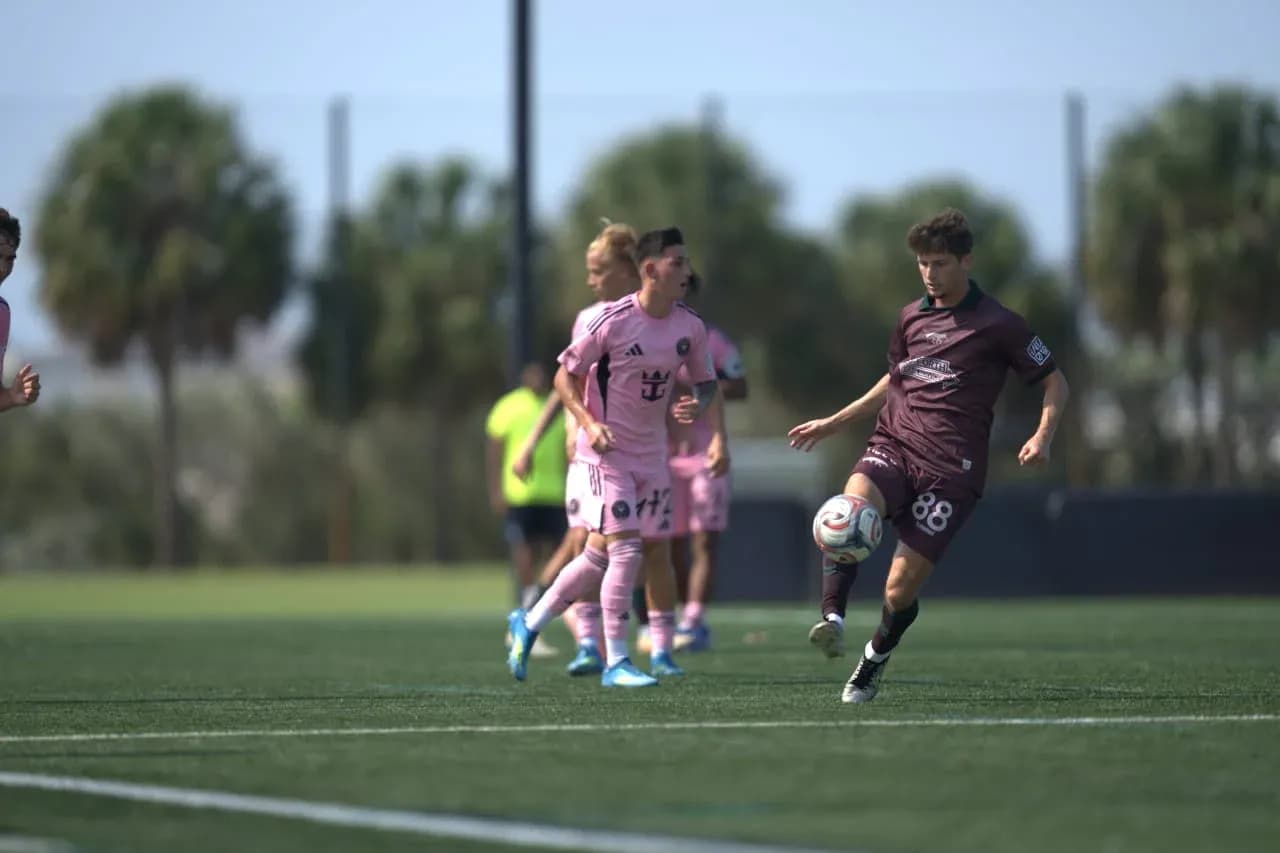
FC Cincinnati II Dominates Toronto II 5–0 in MLS Next Pro Clash
Under the lights at NKU Soccer Stadium, FC Cincinnati II produced the kind of statement performance that can reset an entire season’s narrative. In an MLS Next Pro Group Stage clash that looked, on paper, like a test of their resilience against a higher-ranked Toronto II, the hosts instead delivered a ruthless 5–0 dismantling, a win that echoes far beyond the final whistle.
Heading into this game, the standings painted a clear hierarchy. FC Cincinnati II sat 7th in the Northeast Division and 13th in the Eastern Conference, with 6 points from 7 matches and a negative goal difference of -2, built on 9 goals scored and 11 conceded overall. Their season had been streaky and fragile: a form line of “WLWLL” in the conference table and “LLLLWLW” in the broader stats, underscoring inconsistency and defensive vulnerability, especially on their travels. At home, though, there was a different identity taking shape: 2 wins from 3, 7 goals scored and only 3 conceded, an attacking average of 2.3 goals at home against just 1.0 conceded.
Toronto II arrived as the more stable proposition in the standings. They were 4th in the Northeast Division and 8th in the Eastern Conference, on 11 points from 8 matches, with a goal difference of 0 from 13 goals for and 13 against overall. Their form line “LWWLW” suggested a team capable of surges, and their season numbers hinted at balance: 1.6 goals scored on average overall, 1.9 conceded, with a slight attacking edge but a defense that could be opened up. On their travels, they had been fragile: 1 win and 4 defeats in 5 away games, scoring 7 but conceding 9, an away defensive average of 2.0 goals conceded.
Into that statistical tension stepped a Cincinnati II XI that looked quietly aggressive. F. Mrozek anchored the side from the back, with a defensive core built around F. Samson, S. Lachekar, W. Kuisel and D. Hurtado. In front of them, the spine of C. Sphire, M. Sullivan and C. Holmes gave the hosts a hard-running, flexible midfield. The front line, led by A. Chavez, L. Orejarena and S. Chirila, carried the burden of transforming decent home numbers into something more emphatic.
Toronto II, under Gianni Cimini, fielded a young, mobile group. Z. Nakhly, E. Omoregbe and D. Barrow were part of an attacking cohort asked to stretch the field, while S. Kapor and B. Boneau were tasked with giving structure and bite. Deeper, T. Fortier, D. Adamson and D. Dixon formed the connective tissue between lines, with J. Nugent and E. Khodri completing an XI that needed to be compact and disciplined to cope with Cincinnati II’s improving home form.
The tactical void for Toronto II was less about personnel and more about identity away from home. Heading into this game, they had already shipped 10 goals on their travels, with that 2.0 away goals-against average reflecting a side that often left too much space between its lines. Their biggest away win, a 0–5, showed what they could do when transitions fell their way; but their heaviest away defeat, 5–0, exposed how quickly their structure could collapse when they lost control of tempo. Cincinnati II, whose biggest home win of the season was also 5–0, were perfectly positioned to exploit that volatility.
For the hosts, the main tactical concern was emotional more than structural. Overall, they had conceded 11 goals in 7 matches, an average of 1.6 per game, and their form included a brutal losing streak of 4 straight defeats earlier in the campaign. Yet at home they had been more secure, with 2 clean sheets from 3 fixtures and only 3 goals conceded. The back line, shielded by Sphire and Sullivan, needed to manage Toronto’s bursts without overcommitting.
Discipline was always likely to shape the tone. Cincinnati II’s yellow-card distribution this season has been front-loaded and spiky: 33.33% of their cautions arriving between 0–15 minutes, then another wave in the 46–60’ window at 20.00%. They start games on the edge and often come out of half-time with renewed aggression. Toronto II’s bookings are more evenly spread but with pronounced peaks: 25.00% of their yellows between 31–45 minutes and another 25.00% between 76–90. That pattern suggests a side that struggles to manage emotions just before the interval and again in the closing stretch, precisely when pressure mounts and defensive concentration must be highest.
This is where the “Hunter vs Shield” dynamic crystallised. Cincinnati II, at home, were averaging 2.3 goals scored, while Toronto II’s away defense was allowing 2.0 per game. The hosts’ attacking surges, especially when buoyed by crowd energy, aligned uncomfortably well with Toronto’s tendency to concede in chaotic phases late in halves. Conversely, Toronto II’s away attack, averaging 1.4 goals, ran into a Cincinnati II home defense conceding only 1.0 per match and boasting those 2 clean sheets.
In the “Engine Room” battle, players like Sphire and Sullivan for Cincinnati II had to win duels against Toronto’s central figures such as Boneau and Fortier. With no star playmaker or enforcer statistically highlighted in the data, this became a contest of collective cohesion rather than individual dominance. Cincinnati II’s clean-sheet record at home and their ability to avoid failing to score on their own pitch (0 home games without a goal) suggested a side comfortable imposing their rhythm in front of their supporters.
Following this result, the 5–0 full-time scoreline is more than a freak outlier; it is the logical extreme of the underlying trends. Cincinnati II maximised their home attacking average, hit the ceiling of their “biggest home win” profile, and leaned on a defensive unit that has always looked more assured in familiar surroundings. Toronto II, meanwhile, lived out their worst away fears: a fragile back line, a tendency to unravel when chasing the game, and an away record that now includes multiple heavy defeats by the same 5–0 margin.
From an xG-style lens, even without explicit Expected Goals numbers, the statistical prognosis before kickoff tilted quietly toward a high-variance match with Cincinnati II’s home firepower and Toronto II’s away openness. The eventual scoreline simply stripped away the noise. Cincinnati II’s home identity is no longer a footnote in their season; it is the foundation upon which any playoff push must now be built, while Toronto II leave NKU Soccer Stadium with a clear, uncomfortable truth: until their away structure hardens, their promotion ambitions will always rest on fragile ground.