England's World Cup Opener: Pressure on Tuchel and Squad Dynamics
England stagger towards their World Cup opener against Croatia with more noise swirling around them than rhythm in their legs. Tornado scares, injury worries, selection drama, media hysteria – the usual circus has arrived early. The football has not.
Thomas Tuchel knows the stakes. The message from some corners is brutally simple: reach the semi-finals at least, or be branded a failure. On the eve of a major tournament, with European champions Spain already reminded that this competition bites hard, the demand sounds less like ambition and more like a trap.
Tuchel, Maguire and a Facetime farewell
The first flashpoint came with Harry Maguire. His World Cup hopes ended not in a quiet office or a respectful phone call, but over Facetime. The detail, reported by Tom Coley in The Sun, jarred. Not because the decision itself was shocking – Maguire’s form and fitness have been debated for months – but because of the way it was delivered.
No dressing-room handshake. No sit-down at the training ground. A video call.
Maguire then explained Tuchel’s reasoning: “I think he said that he’s gone with the four lads that he got through the qualifying in the autumn camps where he felt like they did well during those six games,” he said, before adding: “But he did say that he can’t really give me an excuse.”
The contradiction hangs in the air. The “four lads” from qualifying is clearly the logic, yet the manager “can’t really give an excuse”. It’s the kind of muddled messaging that leaves a player feeling both rejected and unconvinced. An explanation dressed up as no explanation at all.
For a coach already under scrutiny, it’s a clumsy look.
Pressure without perspective
The scrutiny on Tuchel is being gleefully amplified. On the Sun website, Martin Lipton’s column carried the line: “Thomas Tuchel can have no excuses as England get World Cup underway – make the semi-finals at least or he has failed.”
No nuance. No allowance for the chaos of tournament football. Just a clear, brutal binary.
The timing is striking. Spain, reigning European champions and one of the pre-tournament favourites, had just been reminded that nothing about this World Cup is straightforward. They were held in their opener, proof that pedigree and possession don’t guarantee a smooth start. Yet in England, the drumbeat is already set: anything short of the last four, and the manager is done.
Saka’s “gamble” and Arsenal’s supposed alarm
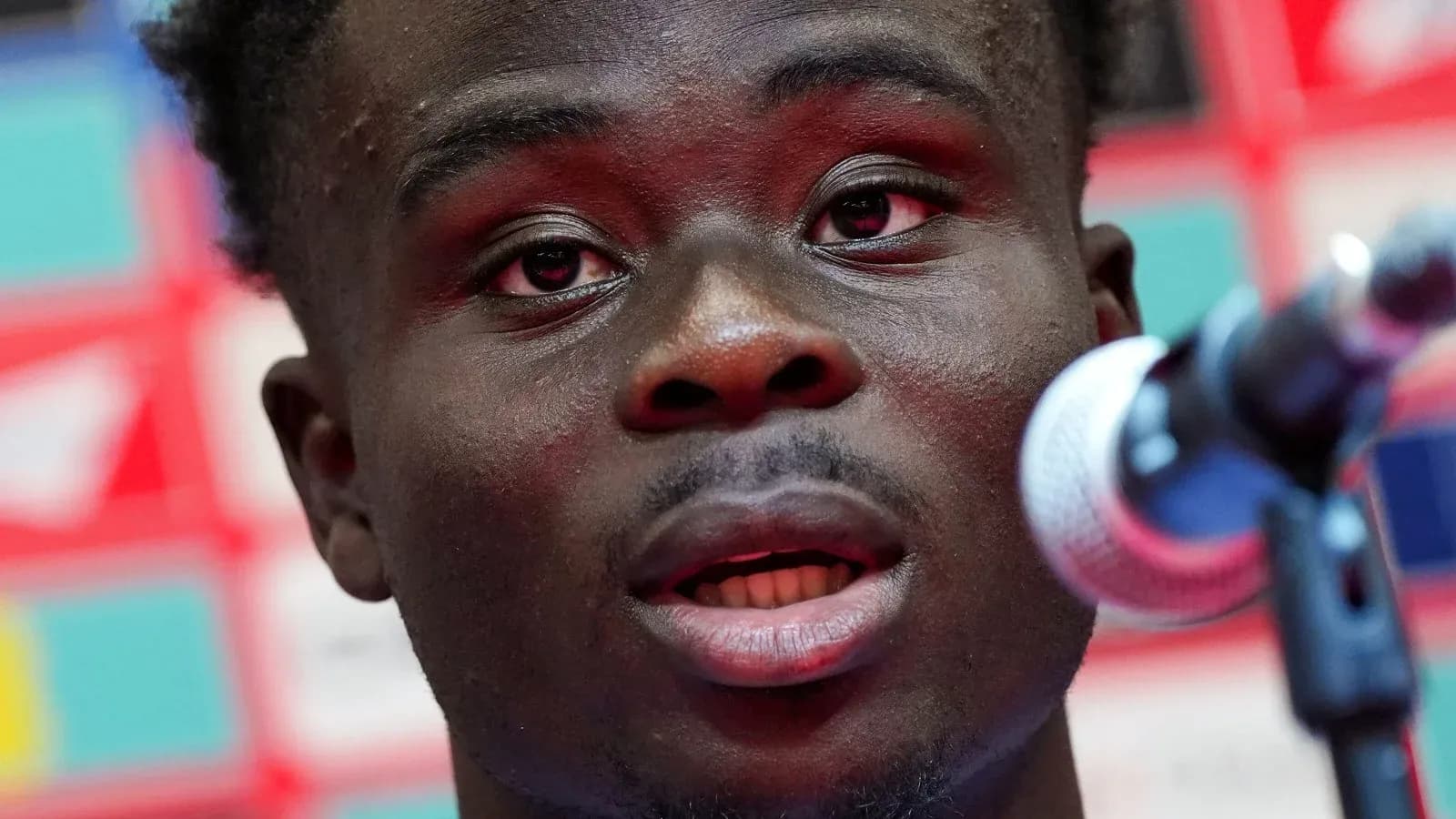
Into this walks Bukayo Saka, still managing an Achilles problem that has shadowed him since March. He has started and finished only one match for club or country in that time. Arsenal eased his minutes in the title run-in. He was carefully handled in the Champions League semi-final. He missed the March England camp, then played less than half an hour across the warm-up games.
Tuchel has already admitted “it is very unlikely he starts and finishes all the matches” at this World Cup. No secrets there.
Saka, though, cut through the caution with typical clarity. He said he felt “ready to go” and “happy to take the gamble” on his fitness for England. Honest, straightforward, the sort of thing international managers want to hear from their best players in tournament week.
John Cross reported the story for the Daily Mirror with an entirely reasonable angle: Saka’s willingness to risk himself is “a huge boost to England’s chances”. The Daily Express website then twisted the same interview into: “Bukayo Saka sparks Arsenal concerns with alarming England comments at World Cup.”
Alarming? Arsenal, who have spent months managing his minutes, working hand-in-hand with the England staff and their own medical team, hardly needed a headline to tell them their star winger is carrying something. Saka himself credited Mikel Arteta and “the Arsenal medical team” for handling him “amazingly since March”, and Tuchel echoed that, praising how “they took very good care of him and were very aware of it at Arsenal.”
Everyone inside the camps knows he is not at 100%. Everyone knows this has been the reality for months. The only thing “sparked” here is another round of manufactured anxiety.
Storms, SWAT and the search for drama
The off-field drama hasn’t stopped at injuries and selection. England’s quiet pre-tournament evening was reportedly “shaken” by a tornado – an event that ultimately forced them to change nothing about their plans to stay indoors. Still, it filled a few columns.
Then came the next instalment from The Sun’s foreign editor Nick Parker: “SWAT team rushes to armed standoff just mile from England World Cup stadium as suspect arrested.”
The scene sounded dramatic. Armed officers. A standoff. A location “a mile from where England’s first match will be played.”
Seven paragraphs in came the crucial line: “There is no indication the incident was connected to the World Cup or posed any threat to the tournament or its venues.”
So, no link to England. No link to the stadium. No threat to the game. Just an incident in the same city, pulled into the orbit of the national team because the word “mile” makes for a punchy headline.
At this rate, fireworks five miles away will be framed as a psychological test for the squad.
Spain stumble, England warned
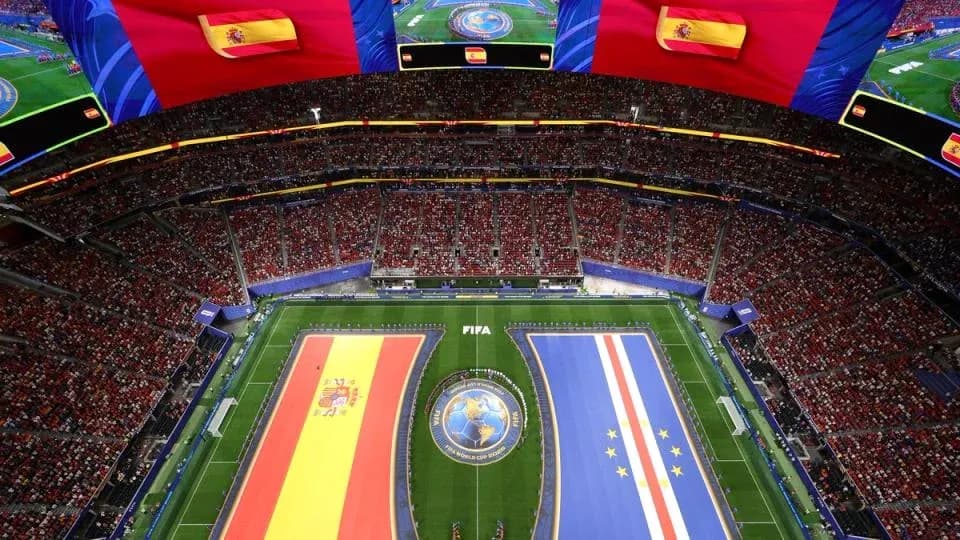
Even Spain’s stumble has been hauled into the English narrative. “Why England and all other World Cup rivals should be worried after Spain are humbled by Cape Verde,” ran one Sun headline.
The conclusion? Spain “still cannot be ruled out of contention for the trophy” despite drawing their opener and having two group games left. In other words: they’re still good, and tournaments are long. Hardly breaking news.
But it feeds the mood. Every result, every storm, every police incident, every half-quote from an England player is turned into a portent. A warning. A reason to panic or to inflate expectations.
By the time Tuchel’s side walk out to face Croatia, you half expect the narrative to be that England have somehow survived a natural disaster, a crime wave, a medical crisis and the psychological warfare of Spain drawing a game.
Crossed lines and confused logic
Away from England, the World Cup has also thrown up some curious thinking closer to home. Jeremy Cross, writing in the Daily Mirror, pointed out that Liverpool will be quietly pleased with how Florian Wirtz and Alexander Isak have started the tournament. Both looked bright, albeit against Curacao and Tunisia.
So far, so reasonable. Then came the odd line: “Iraola will want this to continue. He would never admit it, but the Spaniard will hope Isak uses the biggest stage of all to find himself again, before taking that feeling back to Anfield.”
Why would Andoni Iraola “never admit” that he wants his most expensive forward and best striker to find form? Any manager on the planet would say that out loud. There is no tactical secrecy in hoping your No. 9 scores goals on the biggest stage.
The implication seems to be that, because Iraola is Spanish and Spain might face Sweden later in the tournament, he must somehow keep quiet about wanting his own player to thrive. It’s a stretch. A strange, tangled bit of logic in a week already full of them.
A familiar storm before the first ball
So England head into their opener not just carrying injuries and selection calls, but weighed down by a familiar swirl of narrative: Tuchel’s future tied to a semi-final line in the sand, Maguire cut by video call, Saka framed as a walking alarm bell, natural weather and distant crime scenes drafted in as subplots.
Strip away the noise and the reality is simpler. England have a gifted but bruised squad, a coach under fierce expectation, and a first game against awkward, battle-hardened opponents. That’s more than enough jeopardy on its own.
The question is not whether tornadoes, SWAT teams or Spain’s draw will derail them.
It’s whether, once the whistle blows against Croatia, this England side can finally make the story about the football.