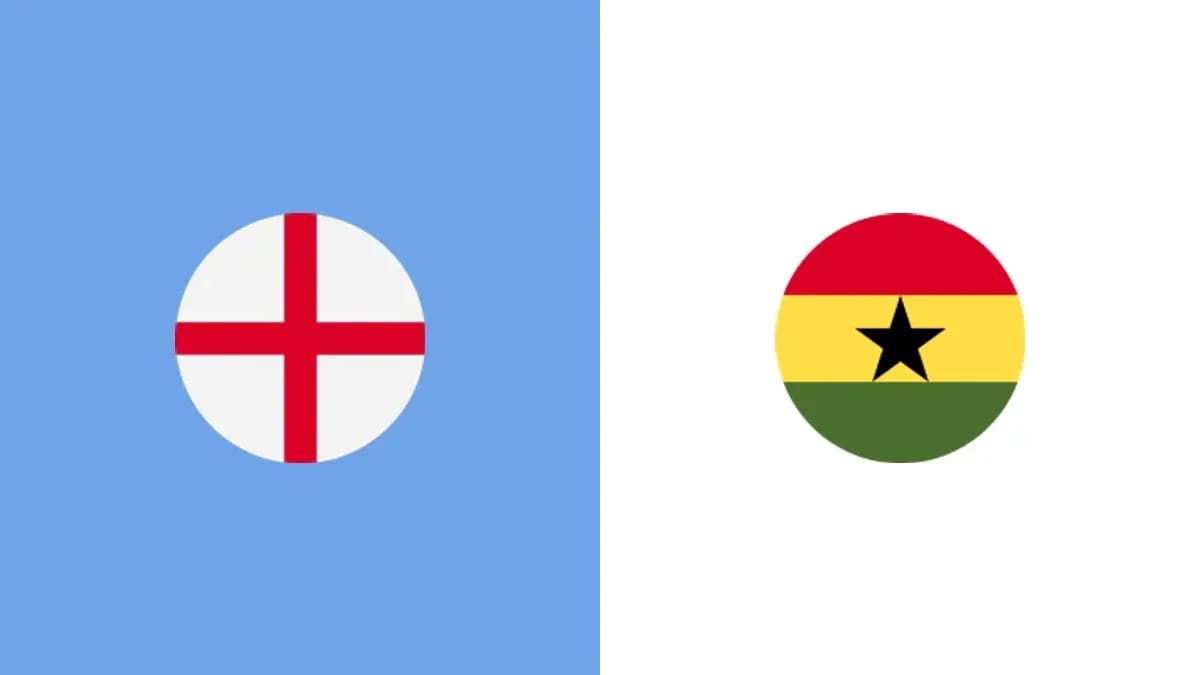
England vs Ghana: Key Matchup in Group L Showdown
On a humid June night in Foxborough, two teams with perfect records and very different personalities will walk out at Boston Stadium knowing there is almost no room left for error. England vs Ghana on 23 June is not just Matchday 2. It is the hinge on which Group L could swing.
Both arrive with three points. Both arrive with belief. Only one can leave feeling truly safe.
Contrasts on a collision course
England burst into this World Cup with the volume turned up to maximum. A 4-2 win over Croatia in Dallas showcased everything Thomas Tuchel has been hired to unleash: Jude Bellingham running games like a veteran playmaker, Harry Kane finishing with ruthless calm, waves of runners attacking from every angle.
It also showed exactly what can go wrong. Croatia twice dragged themselves level, exposing a back line that lost its shape when the full-backs flew forward and a midfield that occasionally left too much green grass behind it. Tuchel’s England are thrilling, but they are not yet watertight.
Ghana arrive from the opposite end of the spectrum. Carlos Queiroz’s side opened with a 1-0 win over Panama in Toronto, a match that felt like a long-distance race in the rain, settled by one last desperate sprint. They defended deep, defended well, and waited. Then, in the 95th minute, Caleb Yirenkyi arrived in the box to force home a winner that changed the mood of an entire campaign.
Where England played in neon lights, Ghana played in shadows and structure. Now they meet in the glare of prime time, with the group’s balance in their hands.
England: Firepower with a warning label
Tuchel will not rip up a plan that produced four goals and constant threat. His 4-2-3-1 remains built around Bellingham as the conductor in the No.10 pocket and Kane as the reference point who does everything: drop, link, drag centre-backs into places they hate, then appear in the box when it matters.
Against Croatia, Kane struck from the spot on 12 minutes, then again just before the interval. Bellingham restored control seconds after half-time with a sharp finish. Marcus Rashford, off the bench, killed the game late on. Around them, Anthony Gordon and Noni Madueke stretched the pitch, while the bench – Rashford, Bukayo Saka and others – reminded everyone how deep this squad runs.
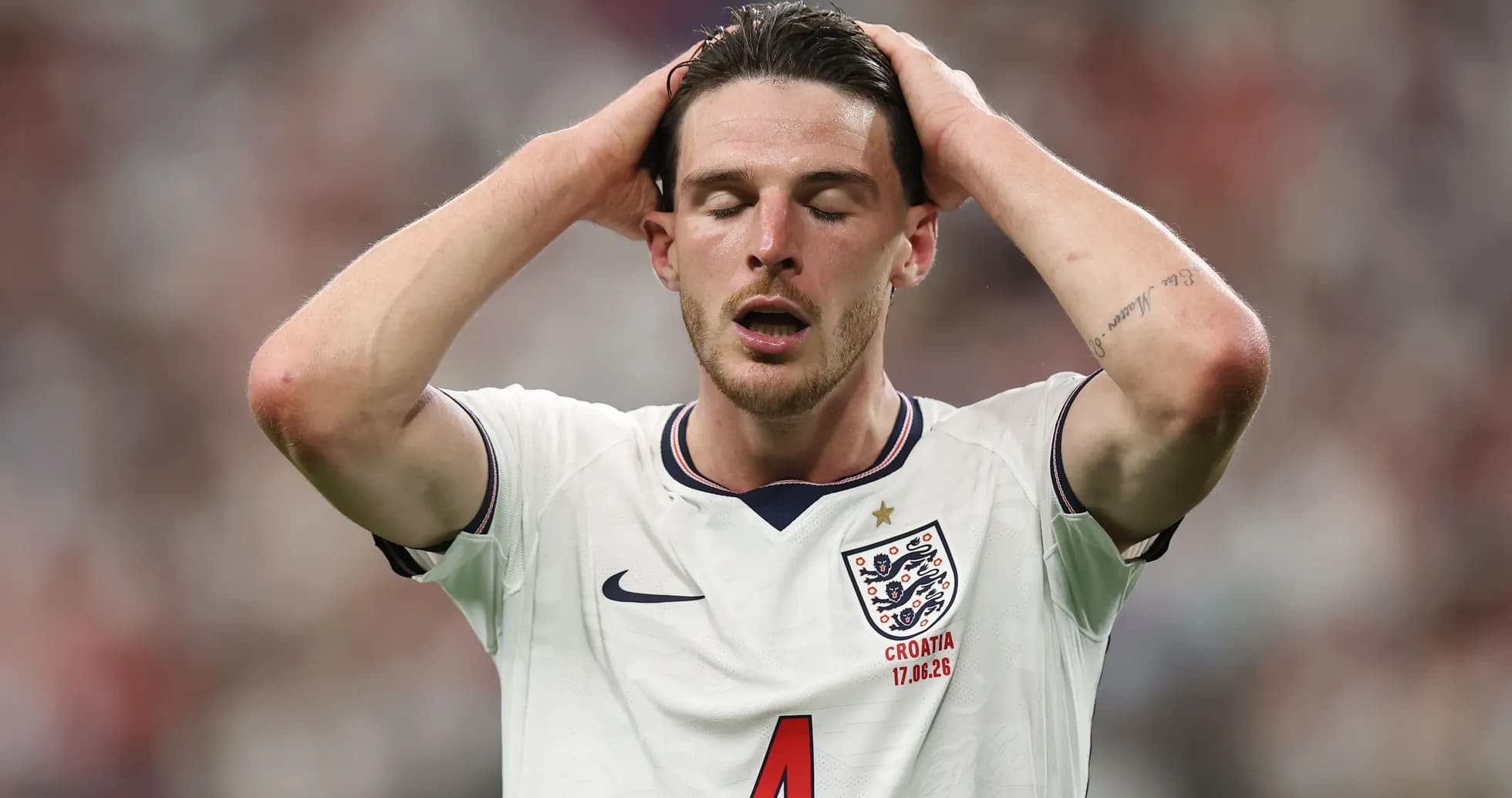
The problem is what happens when England lose the ball. Declan Rice had too much ground to patrol on his own, and the back four, with John Stones and Ezri Konsa in the middle, looked exposed whenever Croatia ran directly at them. In Foxborough, against a Ghana side designed to spring from deep, that kind of looseness could be fatal.
Tuchel’s main adjustment is mental and positional, not stylistic. Rice must sit and shield, locking down the central lanes and protecting his centre-backs when Reece James and youngster Nico O’Reilly push on. Elliot Anderson has to stay switched on in those transition moments, closing passing lanes before Ghana can turn defence into a sprint race.
England have no new injuries, no suspensions, and a full squad to choose from. That brings its own intrigue. Rashford and Saka changed the Croatia game from the bench; both are applying real pressure for a starting place. Tuchel knows he has the luxury of options. He also knows he cannot afford another 10-minute spell of chaos.
Ghana: Discipline first, but the handbrake has to come off
For Queiroz, the blueprint is familiar: organisation, clarity, and a back line that moves as one. Against Panama, the plan held. Ghana absorbed pressure, trusted their shape, and leaned on goalkeeper Lawrence Ati Zigi early, before snatching the points in stoppage time.
But England are a different beast. Sit too deep, move the ball too slowly, and you invite 90 minutes of Bellingham and Kane picking at you until something breaks.
Queiroz has already signalled what needs to change. Ghana must move the ball with more intent. The counter-press has to bite. When they win it, they cannot pass sideways and wait; they must go. Direct, vertical, and fast.
The wide channels are Ghana’s most promising route. With James and O’Reilly eager to overlap, the space behind England’s full-backs will be there if the Black Stars can break England’s first press. Kamaldeen Sulemana and Ernest Nuamah will be key in those moments, turning turnovers into direct runs at back-pedalling defenders. Brandon Thomas-Asante, who provided the crucial late assist in Toronto, is pushing hard to start and could add even more punch to those transitions.
The selection headache sits in goal. Ati Zigi was withdrawn at half-time in the opener, and his replacement Benjamin Asare picked up a knock in stoppage time. Both are being assessed, and Queiroz may have to make a late call on who stands behind centre-backs Jerome Opoku and Jonas Adjetey. Full-backs Gideon Mensah and Marvin Senaya are set to return, tasked with surviving England’s wide overloads while still offering an outlet on the break.
In midfield, Elisha Owusu will anchor the structure alongside Yirenkyi, whose 95th-minute goal against Panama has already etched his name into this tournament for Ghana. Now his job is even harder: he must balance those surging runs with the dirty work of tracking Bellingham, cutting off his angles, and stopping England from flooding the middle third.
The duels that will tilt the night
Harry Kane vs Jerome Opoku
Kane arrives in Foxborough in that ominous mood where every touch looks like it might matter. Two goals against Croatia, constant movement, and the same old story: if you let him turn, you are in trouble.
Opoku is the man standing in his way. He marshalled Ghana’s central block well against Panama, but this is a different level of examination. Kane will not just sit on his shoulder; he will drift wide, drop deep, pull him out, then spin in behind. Opoku’s concentration cannot waver. One lapse, one mistimed step, and England’s captain will punish him.
Jude Bellingham vs Caleb Yirenkyi
Bellingham is the pulse of this England team. Against Croatia he dictated the rhythm, sliding between the lines, driving forward with the ball, and deciding when to accelerate and when to suffocate. Give him time to turn in the middle third and Ghana’s defensive block will start to fray at the edges.
Yirenkyi is the unlikely foil. The hero of Toronto now has to become the spoiler in Foxborough. His rest-defence positioning, his timing when he steps out to press, and his ability to deny Bellingham clean touches on the half-turn will go a long way to deciding whether Ghana can keep the game in their control rather than England’s.
Group L: One game, three storylines
The table is tight, but the scenarios are brutally clear.
England sit top with three points and a +2 goal difference. Ghana trail only on goals, with three points and +1. Croatia and Panama have nothing yet. This match is the pivot.
If England win, they sprint to six points and stand on the brink of the Round of 32. Depending on Croatia vs Panama, they might even seal qualification with a game to spare, turning their final outing into a chance to rotate rather than a test of nerve. Ghana, stuck on three, would then walk into a must-deliver showdown with Croatia.
If Ghana win, the group explodes. The Black Stars would hit six points and seize control of top spot, potentially booking a knockout place before the final whistle blows elsewhere. England, marooned on three, would face a high-pressure final match against Panama, where any slip could drag them into the chaos of third-place calculations.
A draw keeps the tension simmering. Both would move to four points, both unbeaten, both in strong positions but with everything still to decide on the last day. Goal difference would start to whisper in the background. One big win, one heavy defeat, and the entire picture could twist.
Form lines and fragile truths
England arrive with momentum. Across their last five games, they have four wins, one defeat, and seven goals scored with only two conceded. A 3-0 victory over Costa Rica and a 1-0 win against New Zealand in June were steady, controlled tune-ups. The lone loss, 1-0 to Japan, and a 1-1 draw with Uruguay sit alongside a 2-0 qualifying win in Albania. The pattern is clear: they are used to dictating games, used to having the ball, and used to opponents sitting off.
Ghana’s recent record tells a different story. Four defeats in five before this tournament – 2-0 to Mexico, 2-1 to Germany, a bruising 5-1 against Austria, and a 1-0 loss to South Africa – painted a picture of a side still searching for itself. The 1-1 draw with Wales offered only a flicker of balance.
That is what made the win over Panama so important. It did not erase the past, but it gave this group something to cling to: proof that their structure works, that their patience can pay, that they can win tight games in difficult conditions.
History offers no guidance
These nations barely know each other on the pitch. The only previous meeting came in a 1-1 friendly draw back in March 2011. No scars, no patterns, no familiar grudges. Just a blank canvas on the World Cup stage.
At 20:00 GMT in Foxborough, that changes. One of the tournament’s most expansive attacks runs straight into one of its most disciplined defensive structures. England chasing control, Ghana chasing moments. Six points on the line. A group ready to be claimed.
Whose version of football will the night belong to?