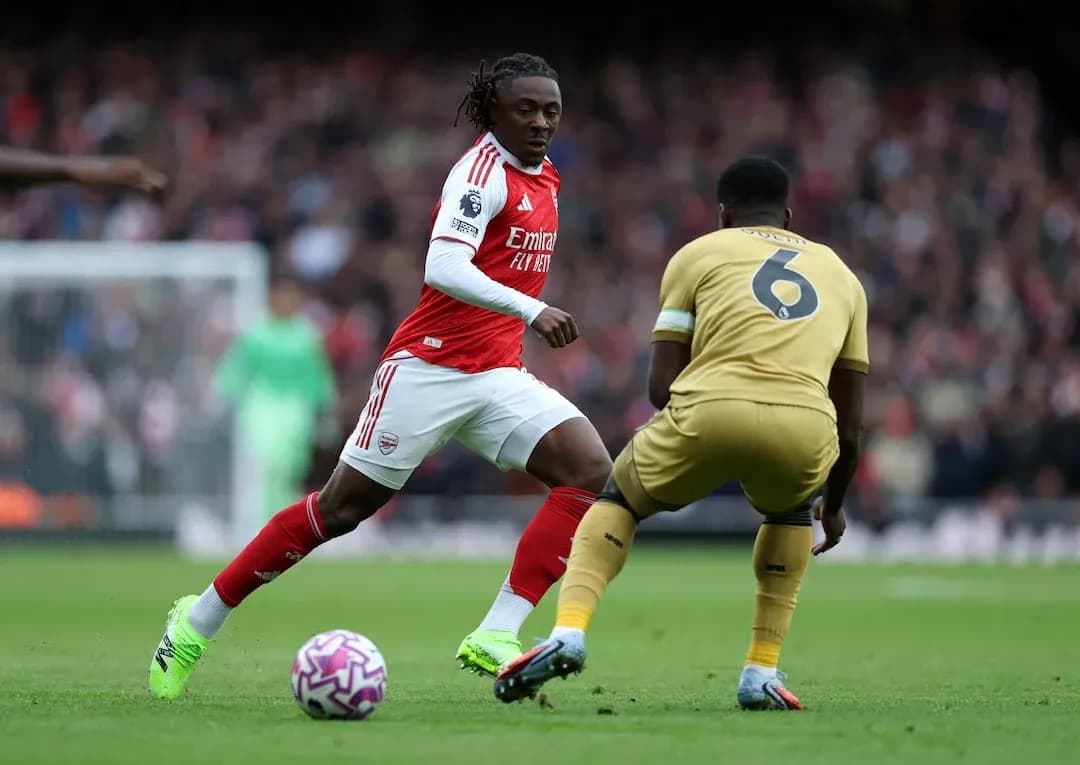
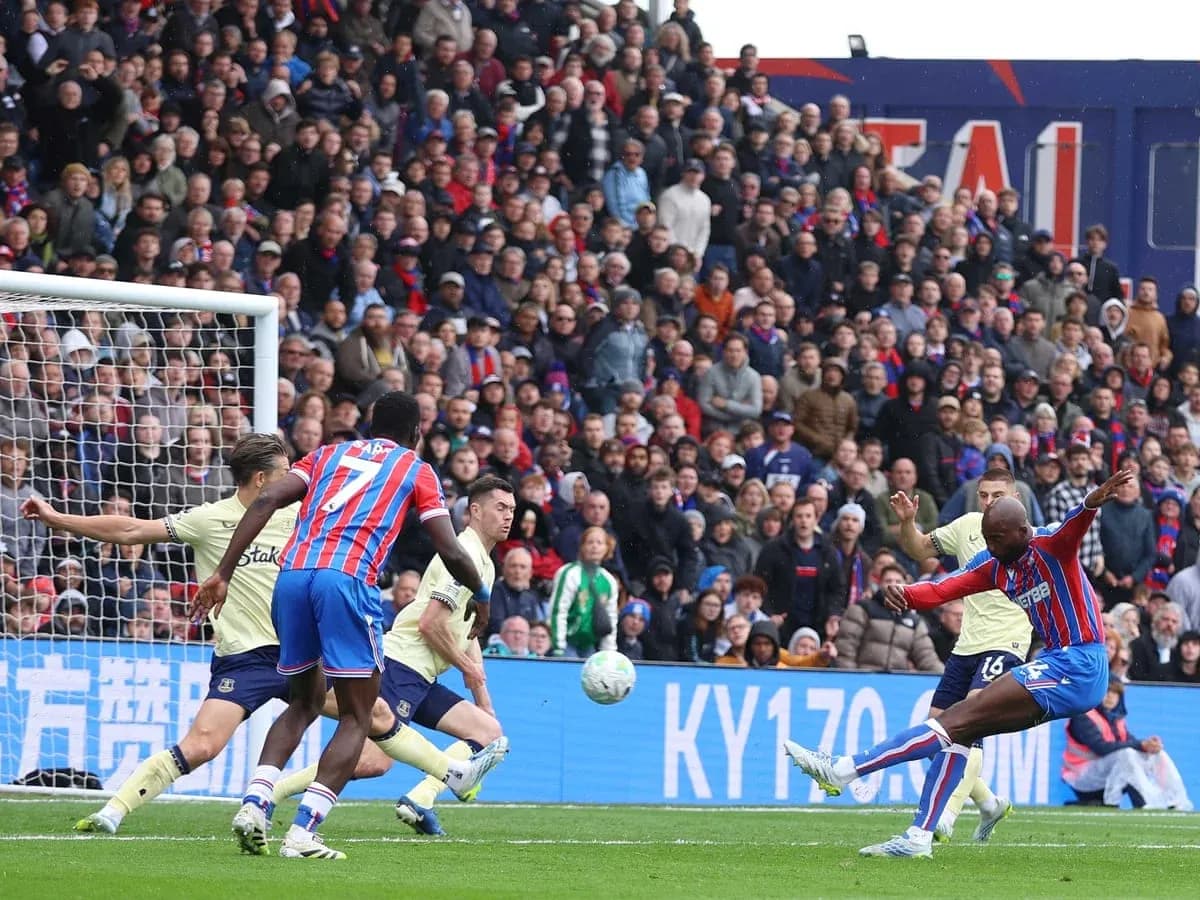
Crystal Palace vs Everton: Tactical Analysis of 2-2 Draw
Crystal Palace and Everton shared a 2-2 draw at Selhurst Park in Premier League Regular Season - 36, a match defined by contrasting structures: Palace’s 3-4-2-1 territorial dominance against Everton’s compact 4-2-3-1 and ruthless set-piece threat. Palace led most key metrics – 59% possession, 21 total shots and higher xG (2.66 to 1.44) – yet Everton’s efficiency and defensive resilience, backed by Jordan Pickford’s six saves and 1.2 goals prevented, ensured the points were split.
Executive Summary
I. Executive Summary complete, the tactical story is one of Palace’s control versus Everton’s vertical punch and set-piece organisation.
Scoring Sequence & Disciplinary Log
Chronologically, Everton struck first. On 6', James Tarkowski (Everton) converted a “Normal Goal”, immediately validating Everton’s early emphasis on dead balls and direct play. Palace responded on 34' through Ismaïla Sarr (Crystal Palace), also a “Normal Goal”, reflecting how their wing-focused 3-4-2-1 eventually broke Everton’s block.
Discipline then began to shape the midfield duels.
- 30' James Garner (Everton) — Foul
- 45' Vitaliy Mykolenko (Everton) — Foul
Both yellow cards came before half-time, underlining Everton’s need to break Palace’s rhythm, particularly as Palace’s possession share and passing control grew. The half-time score was Crystal Palace 1-1 Everton, consistent with the event flow: Everton’s early lead, Palace’s equaliser, and no further goals before the interval.
Early in the second half, Everton again hit quickly. On 47', Beto (Everton) scored a “Normal Goal” assisted by Tarkowski, a classic 4-2-3-1 pattern: strong target forward finishing off play launched from a stable defensive base. Palace’s response came from the bench. At 65', Jørgen Strand Larsen (OUT) was replaced by Jean Philippe Mateta (IN): “Jean Philippe Mateta (IN) came on for Jørgen Strand Larsen (OUT)”. The change paid off; at 77', Mateta (Crystal Palace) scored a “Normal Goal” to level at 2-2.
Further substitutions followed to manage energy and structure.
- 70' Beto (OUT) was replaced by Thierno Barry (IN): “Thierno Barry (IN) came on for Beto (OUT)”.
- 80' Brennan Johnson (OUT) was replaced by Jefferson Lerma (IN): “Jefferson Lerma (IN) came on for Brennan Johnson (OUT)”.
- 80' Merlin Röhl (OUT) was replaced by Tyrique George (IN): “Tyrique George (IN) came on for Merlin Röhl (OUT)”.
- 90+4' Kiernan Dewsbury-Hall (OUT) was replaced by Carlos Alcaraz (IN): “Carlos Alcaraz (IN) came on for Kiernan Dewsbury-Hall (OUT)”.
Card Verification Step:
- Crystal Palace: 0 yellow cards, 0 red cards
- Everton: 2 yellow cards (James Garner — Foul; Vitaliy Mykolenko — Foul)
- Total: 2 cards
Tactical Breakdown & Personnel
Oliver Glasner set Crystal Palace up in a 3-4-2-1 that clearly aimed to dominate the ball and territory. With 459 total passes, 382 accurate (83%), Palace used the back three of Chris Richards, Maxence Lacroix and Jaydee Canvot as a wide platform to circulate possession and draw Everton’s 4-2-3-1 out of shape. The wing-backs Daniel Muñoz and Tyrick Mitchell pushed high, effectively turning the shape into a 3-2-5 in sustained attacks, with Adam Wharton and Daichi Kamada anchoring central circulation.
This structure produced volume: 21 total shots, 15 inside the box and 8 on target, translating into an xG of 2.66. Ismaïla Sarr and Brennan Johnson operated in the half-spaces, looking to exploit the channels between Everton’s full-backs and centre-backs, feeding and combining with Jørgen Strand Larsen as the central reference. Palace’s low foul count (5) and lack of cards underlined a controlled, possession-based approach rather than a disruptive one.
Everton’s 4-2-3-1, by contrast, was about compactness and direct transitions. With only 313 passes, 232 accurate (74%), and 41% possession, they accepted long stretches without the ball. James Tarkowski and Michael Keane defended deep, supported by full-backs Jake O'Brien and Vitaliy Mykolenko staying relatively narrow to protect the box. In front, Tim Iroegbunam and James Garner provided the double pivot, tasked with screening central zones and breaking up Palace’s combinations – the latter’s yellow card for “Foul” emblematic of that role.
In attack, Everton were efficient rather than expansive: 13 total shots, 10 inside the box, 6 on target, yielding 1.44 xG. The pattern was clear: win the ball, progress quickly through Kiernan Dewsbury-Hall and Iliman Ndiaye, and use Beto’s physical presence to attack crosses and second balls. Tarkowski’s goal on 6' and assist on 47' both reflected set-piece and aerial dominance, critical weapons against Palace’s back three.
Goalkeeper reality shaped the final outcome. Dean Henderson (Crystal Palace) recorded 5 saves and, per the data, prevented 1.2 goals. His shot-stopping kept Everton from over-performing their xG further, especially given the quality of chances inside the box. Jordan Pickford (Everton) made 6 saves, also with 1.2 goals prevented, an almost symmetrical goalkeeping battle. Pickford’s interventions were vital as Palace’s pressure mounted, particularly after Mateta’s introduction, when Palace’s box occupation increased and crosses and cutbacks became more frequent.
Personnel changes were tactically coherent. Glasner’s decision to bring on Jean Philippe Mateta for Jørgen Strand Larsen at 65' added a more penalty-box focused striker, ideal against a tiring Everton back line; Mateta’s equaliser on 77' validated that shift. Later, introducing Jefferson Lerma for Brennan Johnson at 80' rebalanced Palace’s midfield, adding defensive presence to protect against Everton counters while still allowing Palace to maintain territorial pressure.
Everton’s substitutions followed a different logic. Replacing Beto with Thierno Barry at 70' refreshed the pressing and running threat up front, while swapping Merlin Röhl for Tyrique George at 80' injected pace and directness in the attacking midfield line. The late introduction of Carlos Alcaraz for Kiernan Dewsbury-Hall at 90+4' was a time-management and fresh-legs move, with limited tactical impact on the overall pattern.
The Statistical Verdict
The numbers frame this as a match Palace should feel they edged in performance, if not in result. Their 59% possession, superior passing volume (459 passes, 382 accurate, 83%) and higher xG of 2.66 versus Everton’s 1.44 indicate sustained control and chance creation. Defensively, Palace conceded fewer fouls (5) and no cards, pointing to structured defending rather than last-ditch interventions.
Everton, however, maximised their moments. With 13 shots (10 in the box) and 6 on target from only 41% possession and 313 passes (232 accurate, 74%), they extracted near-maximum value from their limited phases of attack. Their 10 corner kicks to Palace’s 5 highlight how dangerous they were from set plays, directly tied to Tarkowski’s goal and assist.
Both goalkeepers posting 1.2 goals prevented underscores how finishing quality and elite shot-stopping balanced out the underlying numbers. In tactical terms, Crystal Palace’s overall form was that of a dominant, possession-oriented side; Everton’s defensive index was defined by deep block organisation, set-piece strength and a willingness to foul (13 fouls, 2 yellow cards) to disrupt Palace’s rhythm. The 2-2 scoreline reflects not symmetry of play, but opposing game models both executed well enough to avoid defeat.