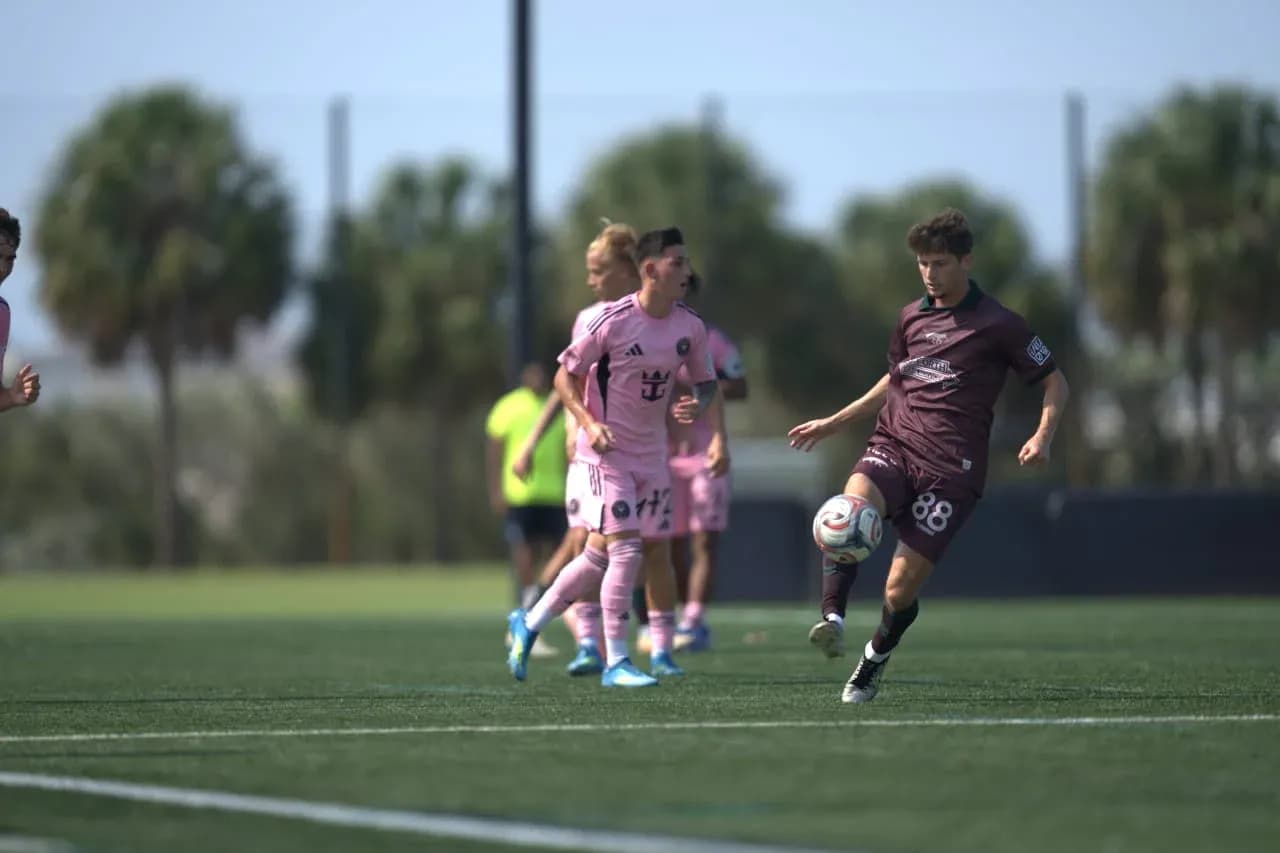

Connecticut FC Edges New England II in Tense Penalty Shootout
Under the Morrone Stadium lights, this Group Stage tie in MLS Next Pro turned into a long, tense chess match. Connecticut FC and New England II went the full 120 minutes without a goal before the home side finally edged it 6-5 on penalties, a razor-thin verdict that said as much about mentality as it did about tactics.
Heading into this game, the numbers had painted New England II as the more stable project. In the Northeast Division they sat 5th with 11 points from 7 matches, a positive overall goal difference of 1 built on 7 goals for and 6 against. Their season DNA was clear: strong at home, more fragile on their travels. At home they averaged 1.6 goals for and only 0.8 against; away, that dropped to 0.5 goals scored and 1.5 conceded.
Connecticut FC, by contrast, arrived as a team wrestling with volatility. In the Northeast Division they were 6th with 8 points from 8 matches, their overall goal difference at -5 from 10 goals scored and 15 conceded. The pattern was similar in the Eastern Conference table. At Morrone Stadium they had only 2 home goals and 5 conceded in 3 league outings, an average of 1.0 scored and 1.7 allowed at home. On their travels they were actually more dangerous, with 8 away goals at an average of 1.6, but shipping 10 at 2.0 per game.
That backdrop made the eventual 0-0 over 120 minutes striking. Connecticut FC, often porous, found a way to hold firm; New England II, usually compact, extended their habit of struggling to impose themselves away from home.
I. The Big Picture: Styles Colliding in a Cagey Cup Night
This was officially a Group Stage fixture, but the penalty conclusion gave it the feel of a knockout. New England II, coached by Richie Williams, arrived with a squad built for structure and short bursts of intensity. Their season form line of WWWWLLL hinted at a side that can ride momentum but is vulnerable when that rhythm breaks.
Connecticut FC, with a form run of WLWLLLLW in all competitions, were more streaky, capable of both explosive wins and heavy defeats. Their season numbers suggested a team that tends to open up games: overall they averaged 1.4 goals for and 1.9 against per match, a recipe for chaos rather than control.
Yet on this night, Connecticut’s squad embraced restraint. With no explicit formations listed, the shape had to be read through personnel: a spine of G. Rankenburg in goal, a defensive line anchored by L. Kamrath, J. Stephenson and J. Medranda, and a midfield built around the energy of S. Sserwadda and the guile of E. Gomez.
New England II mirrored that balance. D. Parisian guarded the posts, with defenders like C. Mbai Assem and S. Mimy in front of him. In midfield, G. Dahlin and J. Mussenden provided industry, while C. Zambrano and M. Wells offered the promise of incision in advanced areas.
II. Tactical Voids and Discipline: Where the Game Tightened
There were no listed injuries or suspensions, so both sides could lean on their full squads. The real absences were conceptual: Connecticut’s usual openness and New England II’s typical home swagger were both muted by the stakes and the setting.
Discipline was a hidden battleground. Across the season, Connecticut FC’s yellow-card distribution shows a clear late-game spike: 29.17% of their bookings arrive between 76-90 minutes, with another 8.33% from 91-105. They also carry a red-card flashpoint in that 76-90 window, with 100.00% of their reds concentrated there. New England II’s yellows cluster from 46-90 minutes, with 26.32% between 46-60 and 21.05% in each of the 61-75 and 76-90 ranges, plus 15.79% from 91-105.
The implication was clear: this match was always likely to get ragged late, with tackles flying and rhythm broken. Instead of a stretched, chance-laden finale, both sides seemed to lean into caution, aware that a single lapse could tilt a finely balanced contest.
III. Key Matchups: Hunter vs Shield, Engine Room vs Engine Room
With no top-scorer data available, the “Hunter vs Shield” duel had to be read from structure and roles rather than raw goal tallies.
For Connecticut FC, Caua Paixao led the line, supported by the creativity of E. Gomez and the intelligent movement of A. Monis and L. Goddard. Their task was to crack a New England II defence that, overall, concedes just 1.0 goal per game and has already produced 2 clean sheets at home. On their travels, New England II are less secure, allowing 1.5 goals per away match, but in Morrone Stadium they leaned on compact distances and disciplined pressing to deny Paixao the spaces he usually exploits.
On the other side, New England II’s front unit of C. Zambrano, M. Wells and M. Morgan had to solve a Connecticut back line that has been leaky all season, conceding 1.9 goals per game overall and 2.0 on their travels. Yet R. Perdomo and J. Medranda screened more intelligently than the numbers suggest, and Rankenburg’s command of his area underpinned the clean sheet.
In the “Engine Room” duel, S. Sserwadda’s role was pivotal. His ability to shuttle, break lines and set tempo gave Connecticut a platform to avoid being pinned back by New England II’s central trio of G. Dahlin, J. Mussenden and A. Oyirwoth. Dahlin and Mussenden are the archetypal enforcers: they compress space, foul tactically when needed and set the tone for New England II’s pressing waves. On this night, the battle felt like a stalemate: Connecticut avoided being overrun, but New England II prevented Sserwadda and Gomez from truly dictating.
IV. Statistical Prognosis and the Penalty Denouement
From a season-long perspective, New England II’s overall averages of 1.3 goals for and 1.0 against per match suggest a side that usually shades tight games. Connecticut’s profile, with more goals at both ends, points to volatility rather than control. Yet over 120 minutes this fixture inverted those expectations: Connecticut found defensive solidity, New England II lacked their usual edge in both boxes.
Both teams had spotless penalty records heading into this match, with 0 total penalties taken, 0 scored and 0 missed in league play. The shootout at Morrone Stadium was therefore a step into the unknown. Connecticut FC embraced it, converting 6 of their attempts to New England II’s 5. The margins were microscopic, but psychologically enormous.
Following this result, Connecticut FC can claim a new identity strand: not just entertainers, but survivors. Rankenburg’s presence, the composure of Kamrath and Stephenson, and the calm of Sserwadda and Gomez under pressure all fed into a narrative of a team learning to win ugly.
For New England II, the story is more nuanced. Their away fragility remains an unresolved thread: on their travels this season they have scored only 1 goal and conceded 3 in league play, and this goalless, losing effort on penalties fits that pattern of attacking inhibition outside their own ground. Richie Williams will look at the performances of Mbai Assem, Mimy and Parisian as positives, but he will also know that the front line must find a way to translate structure into ruthlessness when the margins tighten.
In tactical terms, the prognosis for the rest of the campaign is clear. Connecticut FC, if they can graft this newfound defensive discipline onto their usual attacking output of 1.4 goals per game overall, become a far more dangerous proposition. New England II, meanwhile, remain a well-drilled unit whose underlying numbers still point to a side that wins more than it loses—but one that must solve the riddle of how to carry their home authority into hostile stadiums like Morrone when the game drifts toward the lottery of penalties.