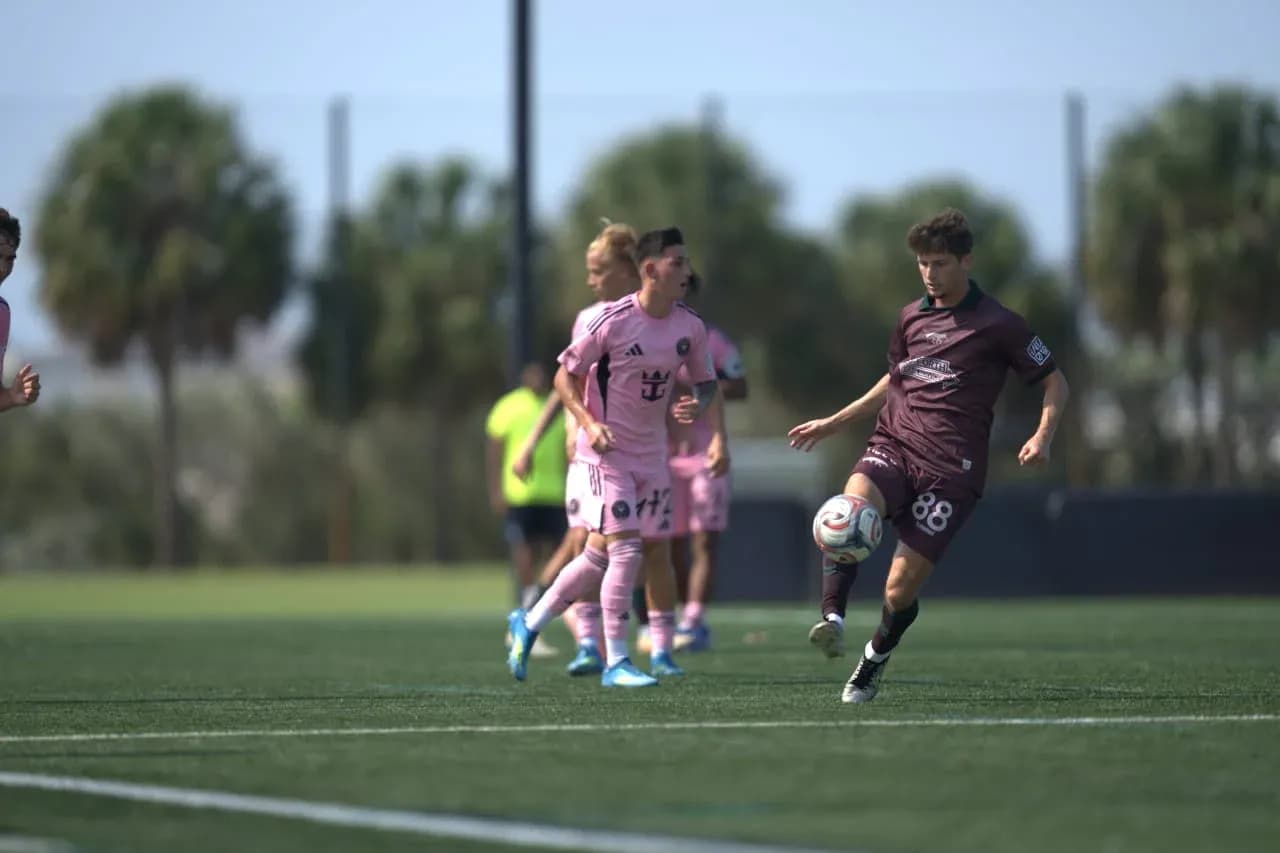
Columbus Crew II Dominates Inter Miami II in MLS Next Pro Clash
Under the lights at Historic Crew Stadium, this MLS Next Pro Group Stage clash finished with a scoreline that felt like a verdict on two very different projects. Columbus Crew II, already shaping the season in the Northeast Division, turned a 1-1 half-time into a 3-1 full-time win over Inter Miami II, a side still searching for a stable identity in the Central Division.
Following this result, the numbers behind Columbus’s rise tell a clear story. Across the season in total they have played 9 matches, winning 6 and losing 3, with 17 goals for and 15 against. The goal difference of 2 is modest, but the trajectory is not. At home they have been flawless: 5 wins from 5, 11 goals scored and only 4 conceded, an average of 2.2 goals for and 0.8 against at Historic Crew Stadium. This latest victory simply underlined that their home ground has become a proving ground for young players and a fortress for the team’s ambitions.
Inter Miami II arrive at a very different crossroads. Overall they have played 8 matches, winning just 1 and losing 7, with 10 goals scored and 23 conceded; the goal difference of -13 encapsulates a campaign defined by defensive strain. On their travels they have at least shown some attacking life, with 7 away goals and an average of 1.4 goals scored per away game, but that is drowned out by the 15 they have conceded away, an average of 3.0 per match. This 3-1 defeat fits the pattern: flashes of talent, but too often overwhelmed by structural issues.
Tactical Overview
Tactically, the squads named by Federico Higuain and Raul Ledesma Cristian framed the contest as a clash between a settled, ruthless home side and a visiting team trying to hold back the tide. Columbus’s starting eleven, anchored by goalkeeper L. Pruter and a defensive line featuring O. Presthus, C. Ruvalcaba, R. Aoki and C. Rogers, had the profile of a group comfortable building from the back. In front of them, T. Brown and O. Taylor offered the connective tissue, while J. Chirinos, N. Rincon, I. Ewing and Z. Zengue provided the attacking thrust.
On the bench, Higuain had different types of levers to pull: the energy and pressing of B. Adu-Gyamfi, the technical security of M. Nyeman, and the fresh legs of G. De Libera, Z. Lloyd, K. Gbamble and G. Di Noto. It is a bench that reflects a broader truth about Columbus Crew II this season: depth and internal competition are driving standards up. With 2 clean sheets in total and only 1 match all season where they have failed to score, the collective reliability is obvious.
Inter Miami II’s lineup, by contrast, felt more like a resistance plan than an attacking manifesto. M. Marin in goal stood behind a defensive unit including R. White, T. Hall, N. Almeida and S. Basabe, with T. Vorenkamp and I. Urkidi tasked with shielding and linking. The creative and attacking responsibility fell to J. Convers, A. Flores, M. Saja and I. Zeltzer-Zubida, a group capable on the ball but often forced into long stretches of defending.
Ledesma’s bench — with options like L. Barker, A. Ristano, L. Garcia, D. Rey and D. Lagos — offered some variety but little in the way of proven game-changers in a season where the side has yet to record a single clean sheet, home or away. Across the campaign in total they have failed to score 3 times; the problem is not that they never threaten, but that their attacking moments rarely coincide with defensive stability.
Discipline and Game Management
Discipline and game management have been quiet undercurrents in both teams’ seasons, and they shaped the tone of this match as well. Columbus’s yellow-card profile across the season is spread but telling: 25.00% of their yellows arrive between 31-45 minutes and another 25.00% between 61-75 minutes, with a further 12.50% in the closing 76-90 window. There is also a single red card in the 0-15 minute range, a reminder that their aggressive edge can occasionally boil over early. Here, though, their control of the second half suggested a group learning to manage those emotional spikes.
Inter Miami II’s disciplinary curve is more alarming. In total, 23.81% of their yellow cards come between 46-60 minutes and another 23.81% between 76-90, the two periods when matches most often tilt decisively. Add a red card in the 76-90 range and a picture emerges of a team that frays as fatigue and pressure mount. In a match where they had to absorb waves of Columbus pressure, that late-game vulnerability was always likely to be exposed.
Match Analysis
From a “Hunter vs Shield” perspective, Columbus’s attack at Historic Crew Stadium has been relentless. At home they average 2.2 goals scored per match, while Inter Miami II concede 3.0 goals per away game. The intersection of those curves was always going to be brutal for the visitors. Even without explicit xG data, the underlying patterns — Columbus’s home dominance, Miami’s away fragility, and the absence of any clean sheet for the visitors — point to a game where the expected goals balance would heavily favor the hosts.
In the “Engine Room”, the contest between Columbus’s midfield axis of T. Brown and O. Taylor and Miami’s central figures like T. Vorenkamp and I. Urkidi was decisive. Columbus’s season-long form line of LWWWLWWLW hints at a side that, when it wins the midfield, turns that control into goals with ruthless regularity. Miami’s run of LLLLWLLL tells the opposite story: even when they do piece together phases of possession, the structure behind the ball rarely holds.
Following this result, the tactical prognosis for both squads is clear. Columbus Crew II look like a side built for the sharp end of the Eastern Conference, their home form and goal metrics matching the description of promotion contenders. Inter Miami II, meanwhile, must treat this as another data point in a season-long diagnosis: until the defensive block is tightened and the late-game disciplinary spikes are tamed, their flashes of attacking quality will continue to be swallowed by the tide.