Burnley vs Aston Villa: Tactical Insights from 2-2 Draw
Burnley and Aston Villa shared a 2-2 draw at Turf Moor in Premier League Regular Season - 36, a match that tactically split into Villa’s territorial control and Burnley’s punchier attacking efficiency. Burnley led 1-0 early, were pegged back to 1-2, and then recovered to 2-2, with the score level 1-1 at half-time and unchanged in the final half hour. Under referee Anthony Taylor, the game remained relatively clean, with one yellow card per side and no reds, but was rich in structural adjustments and contrasting approaches to the 4-2-3-1 system both coaches selected.
Disciplinary Log
(chronological, with reasons locked from data):
- 49' Tyrone Mings (Aston Villa) — Foul
- 60' Zian Flemming (Burnley) — Persistent fouling
Card verification: Burnley: 1, Aston Villa: 1, Total: 2.
Scoring Sequence
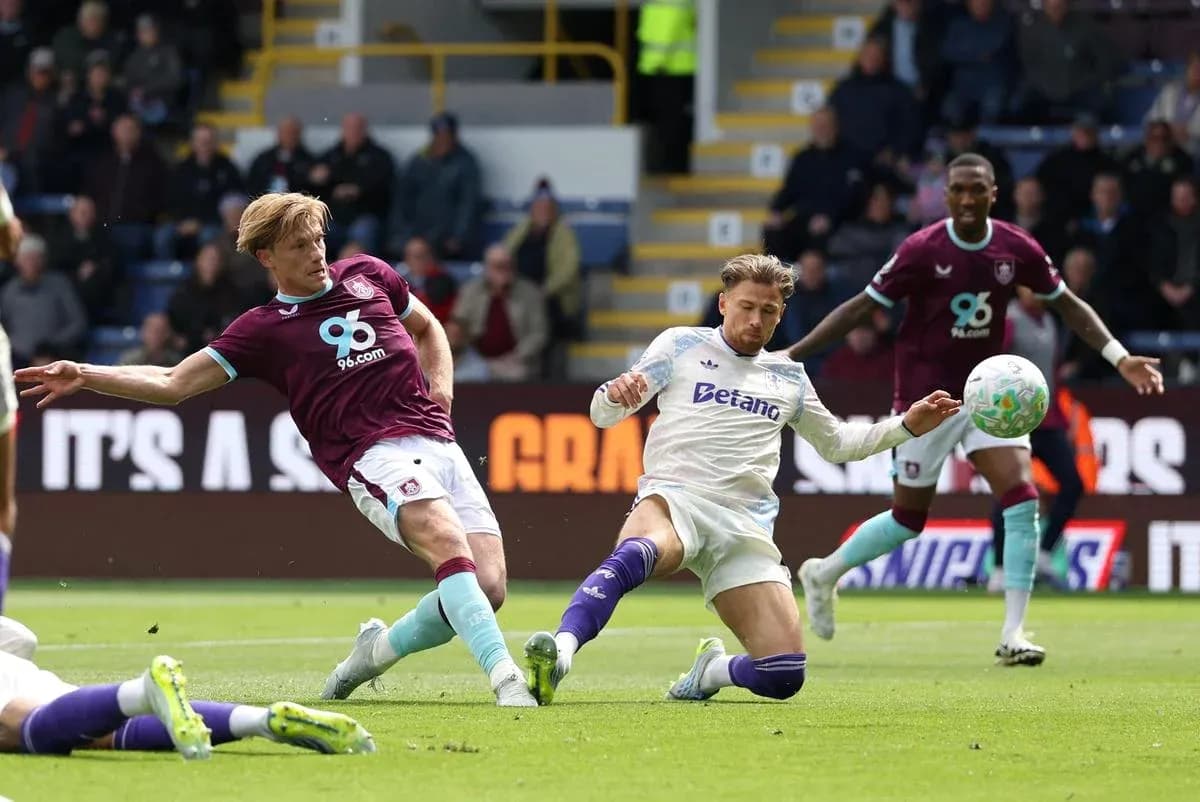
The scoring sequence began with Burnley striking early. On 8', Jaidon Anthony converted a Normal Goal for the hosts, giving Mike Jackson’s 4-2-3-1 an ideal platform to sit a little deeper and threaten in transition. Villa thought they had levelled on 40', but a potential goal by Ollie Watkins was disallowed by VAR, preserving Burnley’s lead. The reprieve was brief: on 42', Ross Barkley equalised with a Normal Goal, assisted by John McGinn, sending the sides into the break at 1-1.
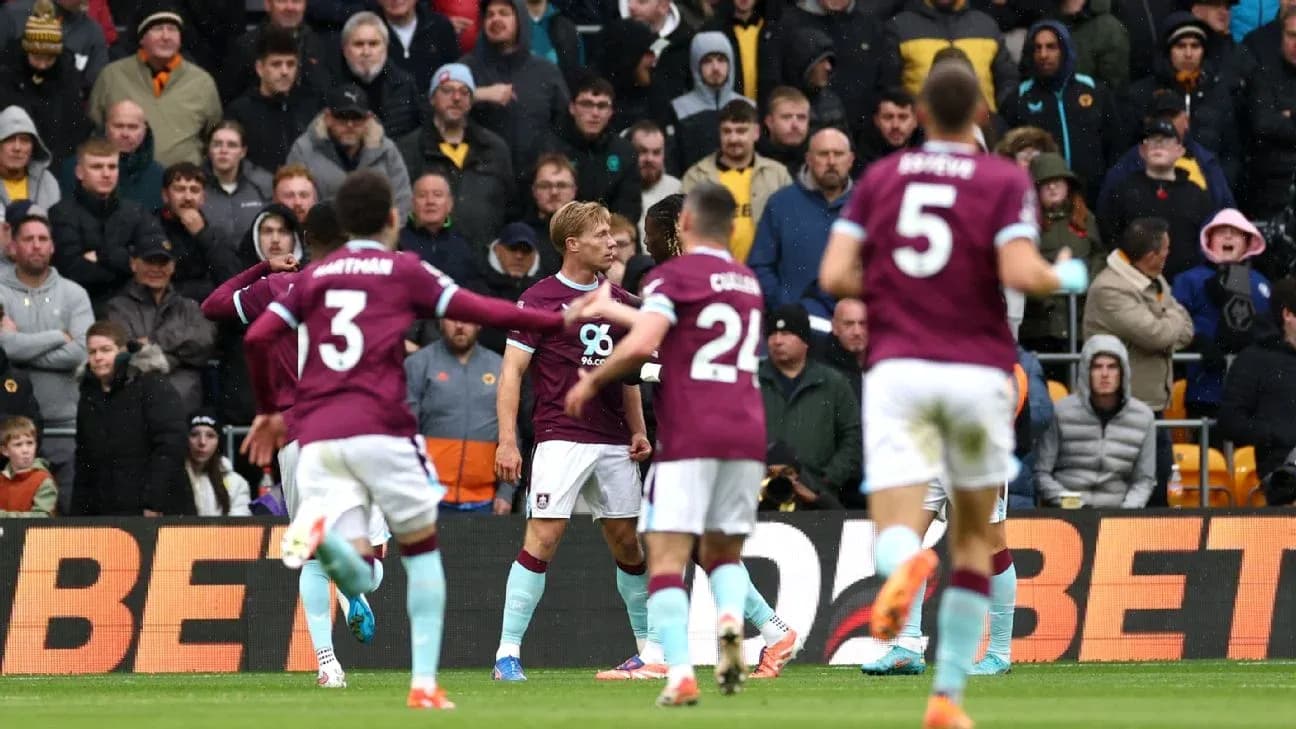
Unai Emery’s side then flipped the score after half-time. On 56', Ollie Watkins finally did register on the scoresheet, finishing a Normal Goal assisted by goalkeeper Emiliano Martínez, a direct pattern that highlighted Villa’s willingness to go long when Burnley’s press stepped up. Burnley responded almost immediately: on 58', Zian Flemming made it 2-2 with a Normal Goal, assisted by Hannibal Mejbri, restoring parity and forcing both benches into a phase of tactical substitutions rather than further scoring.
From there, the game’s rhythm was shaped more by tactical tweaks than major incidents. Mings’ yellow on 49' for Foul reflected Villa’s need to defend higher and more aggressively after the interval. Flemming’s booking on 60' for Persistent fouling captured Burnley’s physical attempt to disrupt Villa’s possession rhythm once they had drawn level again.
Team Lineups
Mike Jackson’s Burnley lined up in a 4-2-3-1 with Max Weiss in goal; a back four of Lucas Pires, Maxime Estève, Axel Tuanzebe and Kyle Walker; a double pivot of Florentino Luís and Lesley Ugochukwu; and an attacking band of Jaidon Anthony (left), Hannibal Mejbri (central), Loum Tchaouna (right) behind Zian Flemming as the striker. Aston Villa mirrored the 4-2-3-1, with Emiliano Martínez behind Matty Cash, Ezri Konsa, Tyrone Mings and Ian Maatsen; Victor Lindelöf and Youri Tielemans as the double pivot; John McGinn, Ross Barkley and Morgan Rogers supporting Ollie Watkins.
Statistical Profile
The statistical profile underlines Villa’s territorial dominance: 66% Ball Possession to Burnley’s 34%, and 510 passes, 439 accurate (86%) compared to Burnley’s 255 passes, 186 accurate (73%). Emery’s side built systematically through Tielemans and Lindelöf, using McGinn and Barkley between the lines, and full-backs Maatsen and Cash to stretch the pitch. Burnley, by contrast, were compact and vertical, accepting long spells without the ball but seeking direct access to Flemming and the wide trio as soon as possession was regained.
Despite Villa’s control, the shot profile was relatively close: Villa had 18 Total Shots (7 on Goal, 6 off, 5 blocked) to Burnley’s 15 (6 on Goal, 4 off, 5 blocked). That balance reflects Burnley’s effective use of counters and set attacking patterns in the final third. Their 7 Shots inside the box, only two fewer than Villa’s 9, show that Jackson’s side were able to reach high-quality zones even with limited possession. The xG figures reinforce this: Burnley at 1.77 versus Villa’s 1.42 suggests the hosts carved slightly better chances per attack, fitting with the two well-constructed open-play goals.
Goalkeeper reality was symmetrical in outcome but different in texture. Max Weiss made 5 Goalkeeper Saves, while Emiliano Martínez made 4. Both posted the same goals-prevented value at -0.16, indicating each conceded marginally more than the modelled expectation of the shots they faced. Weiss’s workload came in waves as Villa sustained pressure and forced him into a series of stops, especially around the periods before and after half-time. Martínez, meanwhile, was more exposed to fewer but higher-quality Burnley breaks; his long assist for Watkins at 56' illustrated Villa’s dual identity as both a possession side and a team capable of exploiting direct transitions.
Substitutions
Substitutions became central in the final 20 minutes as both coaches tried to tilt a finely balanced tactical battle. On 69', Lyle Foster (IN) came on for Hannibal Mejbri (OUT), shifting Burnley towards a more orthodox two-forward dynamic in some phases, with Flemming able to drop and link while Foster stretched the back line. At 79', Josh Laurent (IN) replaced Lesley Ugochukwu (OUT), adding fresh legs and more box-to-box energy, while Zeki Amdouni (IN) came on for Zian Flemming (OUT), maintaining a mobile central presence but with more face-to-goal tendencies.
Emery’s response focused on refreshing wide and midfield lanes. At 74', Lucas Digne (IN) came on for Ian Maatsen (OUT), offering more crossing from deep, while Emiliano Buendía (IN) replaced Victor Lindelöf (OUT), effectively rebalancing the midfield towards creativity and pushing Tielemans into greater defensive responsibility. On 80', Douglas Luiz (IN) came on for Ross Barkley (OUT), adding control and tempo management, and Lamare Bogarde (IN) replaced Matty Cash (OUT), slightly altering the right side’s defensive profile. Finally, at 85', Leon Bailey (IN) came on for John McGinn (OUT), injecting direct pace and one‑v‑one threat from wide in search of a late winner.
Burnley’s late double switch on 87' further reconfigured their structure: James Ward-Prowse (IN) came on for Florentino (OUT), adding set-piece quality and long passing range in the pivot, while Jacob Bruun Larsen (IN) replaced Jaidon Anthony (OUT), keeping the left flank dangerous in transition while freshening the pressing unit. These changes turned the final minutes into a more stretched, transition-heavy game, but neither side’s adjustments could break the 2-2 deadlock.
Final Statistics
Statistically, Villa’s 8 Corner Kicks to Burnley’s 2 and their lower Fouls count (8 vs Burnley’s 17) underline their control phase and slightly cleaner defensive approach. Yet Burnley’s higher xG and near-parity in Shots on Goal (6 vs 7) show how effectively they converted limited possession into meaningful threat. In season terms, this match would read as a classic case of a possession-dominant side failing to fully convert control into clear superiority on the scoreboard, while a lower-possession team leveraged structure, directness, and timely substitutions to extract maximum value from fewer attacks.