Burnley vs Aston Villa: 2–2 Draw Analysis
Burnley 2–2 Aston Villa at Turf Moor, a result that slightly steadies Burnley’s season but does little to change their grim outlook near the bottom, while Villa’s push for the Champions League places is checked by dropped points against a relegation-threatened side.
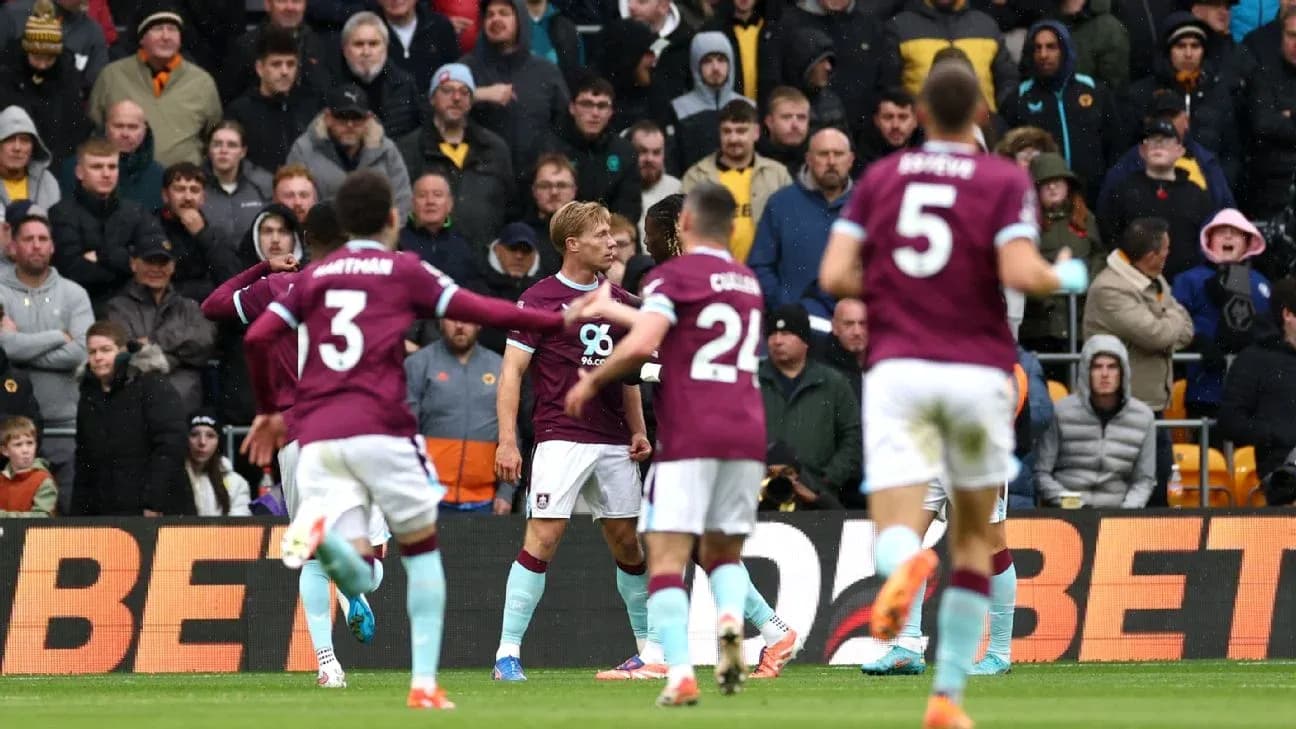
Burnley struck first on eight minutes when Jaidon Anthony produced a solo effort, finishing without an assist to give the hosts an ideal start. Aston Villa thought they were level in the 39th minute, only for Ollie Watkins’ strike to be ruled out by VAR for offside, a warning that Burnley failed to heed. Three minutes later, in the 42nd minute, Villa did equalise: Ross Barkley arrived to finish a move crafted by John McGinn, who provided the assist from midfield to make it 1–1 before the interval.
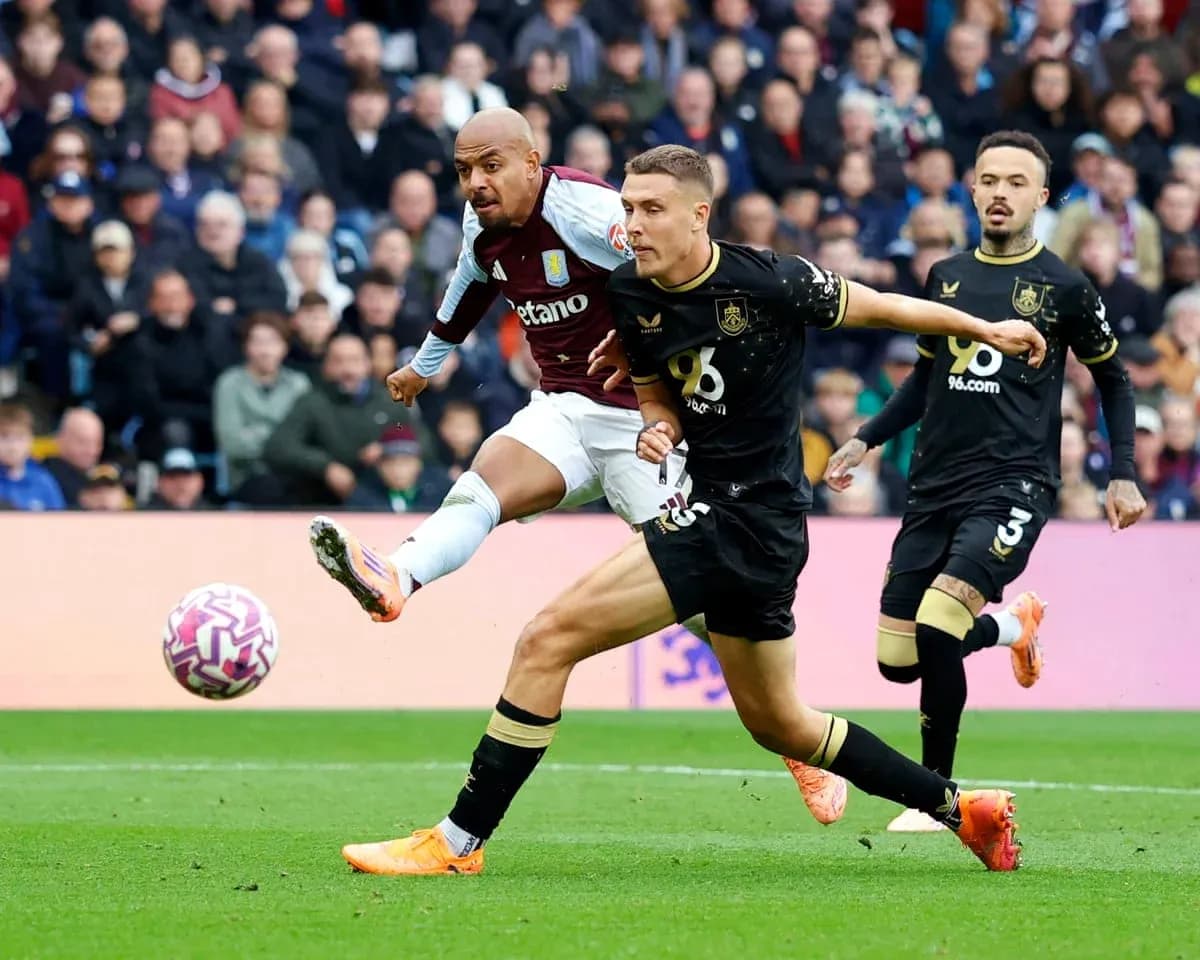
The second half opened with increased physicality, and Tyrone Mings went into the book for roughing in the 49th minute, signalling Villa’s intent to defend aggressively as they pushed on. Their pressure told in the 56th minute when Watkins legitimately got on the scoresheet, finishing a move initiated from deep by goalkeeper Emiliano Martínez, whose long distribution turned into an assist as Watkins converted to put Villa 2–1 up.
Burnley responded almost immediately. In the 58th minute, Zian Flemming restored parity, finishing from close range after being supplied by Hannibal Mejbri, whose assist unlocked the Villa defence to make it 2–2. Just two minutes later, Flemming’s intensity spilled over; he received a yellow card for roughing in the 60th minute, underlining the edge in Burnley’s attacking focal point.
The first substitution came on 69 minutes for Burnley, with Lyle Foster replacing Hannibal Mejbri to add fresh legs up front and slightly alter the attacking profile. Villa then made a double change in the 74th minute: Lucas Digne replaced Ian Maatsen at left-back, and Emiliano Buendía came on for Victor Lindelöf, a move that pushed Villa towards a more creative midfield setup. Burnley answered with a double switch of their own on 79 minutes, as Josh Laurent replaced Lesley Ugochukwu in midfield and Zeki Amdouni replaced Zian Flemming in the forward line, tweaking both the engine room and the attacking reference point.
Villa continued to refresh their side on 80 minutes, with Douglas Luiz replacing Ross Barkley to stabilise central midfield and Lamare Bogarde coming on for Matty Cash, adding energy on the right. The visitors’ final attacking adjustment came in the 85th minute when Leon Bailey replaced John McGinn, injecting pace and directness on the flank for the closing stages. Burnley made their last changes in the 87th minute: Jacob Bruun Larsen replaced Jaidon Anthony out wide, and James Ward-Prowse came on for Florentino Luís, giving Burnley a set-piece specialist and fresh passing range for the run-in. Neither side, however, could find a decisive goal as the match closed at 2–2.
Fixture Statistics & Tactical Audit
- xG (Expected Goals): Burnley 1.77 vs Aston Villa 1.42
- Possession: Burnley 34% vs Aston Villa 66%
- Shots on Target: Burnley 6 vs Aston Villa 7
- Goalkeeper Saves: Burnley 5 vs Aston Villa 4
- Blocked Shots: Burnley 5 vs Aston Villa 5
The underlying numbers suggest a broadly balanced contest, with Villa controlling the ball and territory but not overwhelmingly out-creating Burnley in chance quality. Villa’s dominance of possession (66% vs 34%) reflects their structured build-up and sustained pressure, yet Burnley’s slightly higher xG (1.77 vs 1.42) indicates that the hosts carved out marginally better shooting opportunities when they did attack. The shots on target tally (7 for Villa, 6 for Burnley) and the near-identical volume of total and blocked shots underline a game where both sides regularly worked shooting positions, but neither could fully translate spells of control into a winning margin. Given the xG and shot profile, a draw is a fair reflection of the balance of chances and pressure.
Standings Update & Seasonal Impact
Burnley began the day on 21 points with a goal difference of -36, having scored 37 and conceded 73 across 36 matches. The 2–2 draw adds one point and two goals scored while conceding two, moving them to 22 points with 39 goals for and 75 against, and a goal difference of -36 maintained. They remain 19th in the Premier League, still firmly in the relegation zone and reliant on a sharp upturn and favours elsewhere in the final weeks.
Aston Villa started on 59 points with a goal difference of +4, having scored 50 and conceded 46. This draw moves them to 60 points, with their goals for rising to 52 and goals against to 48, leaving their goal difference unchanged at +4. They stay 5th, keeping them in the Champions League race but missing a valuable opportunity to close the gap on the sides above them; dropped points against a bottom-two team could prove costly if the battle for the top four tightens in the final two rounds.
Lineups & Personnel
Burnley Actual XI
- GK: Max Weiss
- DF: Kyle Walker, Axel Tuanzebe, Maxime Estève, Lucas Pires
- MF: Florentino Luís, Lesley Ugochukwu, Loum Tchaouna, Hannibal Mejbri, Jaidon Anthony
- FW: Zian Flemming
Aston Villa Actual XI
- GK: Emiliano Martínez
- DF: Matty Cash, Ezri Konsa, Tyrone Mings, Ian Maatsen
- MF: Victor Lindelöf, Youri Tielemans, John McGinn, Ross Barkley, Morgan Rogers
- FW: Ollie Watkins
Expert's Post-Match Verdict
From a tactical standpoint, this was a contest between Villa’s possession-heavy, structure-first approach and Burnley’s more direct, opportunistic model. Villa’s control of the ball and passing accuracy (510 total passes at 86% vs Burnley’s 255 at 73%) underlines how Unai Emery’s side dictated tempo and territory, but their inability to turn that dominance into a decisive xG advantage (1.42 vs Burnley’s 1.77) points to a lack of cutting edge in the final third relative to their control. Burnley, by contrast, were efficient in turning limited possession into meaningful threat, with a comparable number of shots on target (6 vs 7) despite far less of the ball, showing effective counter-attacking and set-play use (1.77 xG from just 34% possession).
Defensively, both teams had vulnerabilities. Villa’s back line, even with their territorial dominance, allowed Burnley to generate slightly better-quality chances, suggesting issues in rest defence and transition coverage (Burnley’s higher xG despite lower volume). Burnley’s unit, meanwhile, conceded 18 shots and allowed Villa to repeatedly work the ball into the box (9 shots inside the area), reflecting their ongoing struggle to protect their penalty area. In the end, neither manager fully solved the opponent’s strengths, and the 2–2 scoreline reflects a match where Villa’s control and Burnley’s punchy attacking moments cancelled each other out, leaving both sides with a point that feels insufficient for their respective objectives.