Brighton Dominates Wolves 3-0 in Premier League Clash
Under a sharp south-coast light at the Amex Stadium, Brighton’s 3–0 dismantling of Wolves felt less like a routine home win and more like a live demonstration of where these two clubs stand heading into the final stretch of the 2025–26 Premier League season. One is tightening its grip on Europe; the other is staring down the inevitability of relegation.
Following this result in Round 36, Brighton sit 7th on 53 points, their overall goal difference locked at +10 from 52 goals scored and 42 conceded. At home they have been quietly ruthless: 18 matches, 9 wins, 6 draws, only 3 defeats, with 30 goals for and 17 against. Wolves, by contrast, remain 20th with 18 points and a brutal overall goal difference of -41, the product of 25 goals scored and 66 conceded. On their travels they are winless in 18, with 0 wins, 5 draws, 13 losses, 7 goals scored and 33 shipped. This was a meeting of Brighton’s controlled ambition against Wolves’ season-long fragility, and the scoreline simply traced that gap in bolder ink.
Brighton’s Identity
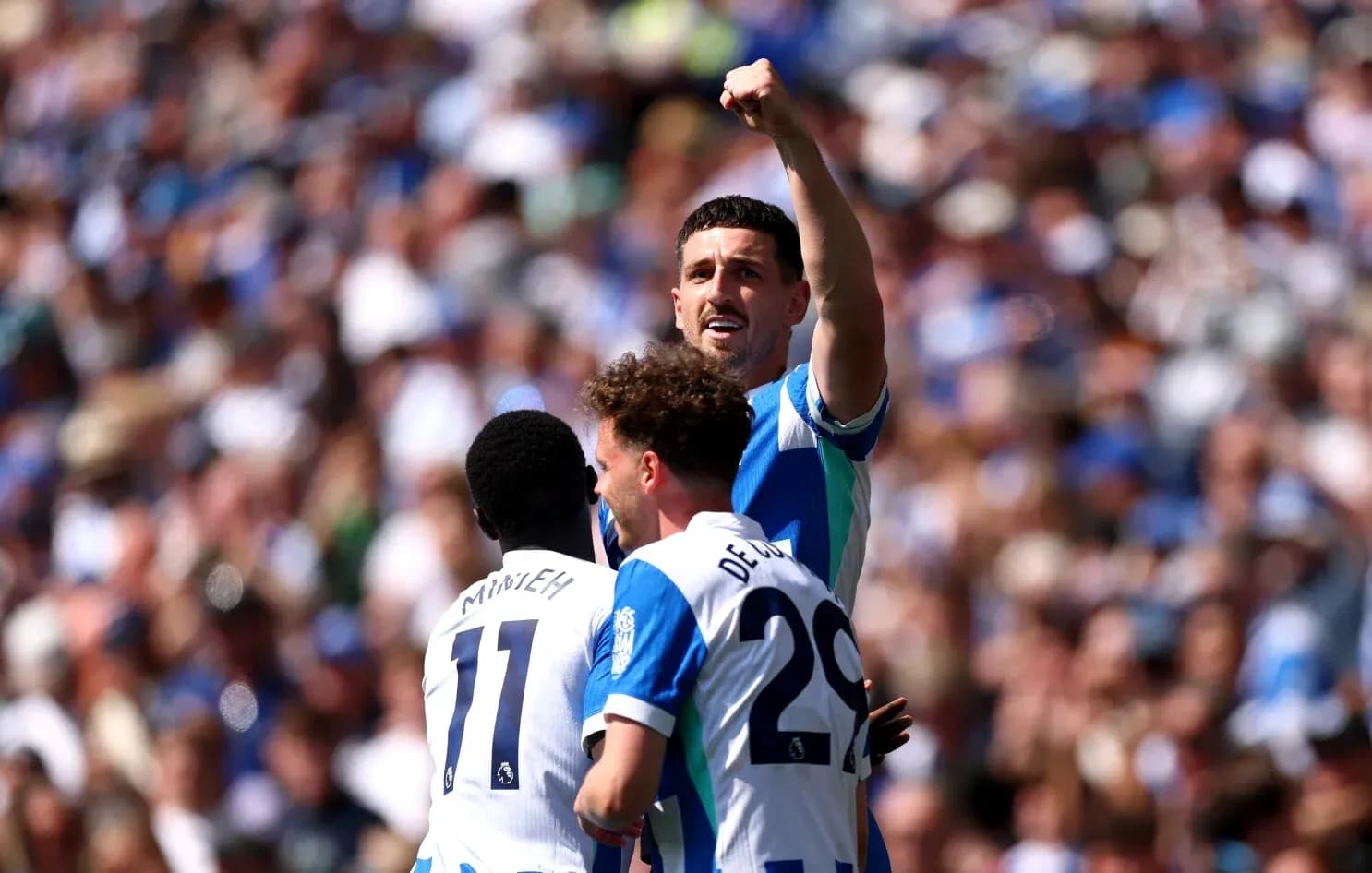
Fabian Hurzeler’s starting XI underlined Brighton’s identity. Bart Verbruggen anchored the side, shielded by a back four of Ferdi Kadıoğlu, Jan Paul van Hecke, Lewis Dunk and Maxim De Cuyper. In midfield, Carlos Baleba and Pascal Groß offered the double pivot’s blend of bite and brains, with a fluid band of Yankuba Minteh, Jack Hinshelwood and Kaoru Mitoma orbiting behind Danny Welbeck. There was no formal formation listed, but the personnel screamed a 4-2-3-1 in keeping with Brighton’s season-long preference: they have lined up that way 31 times in the league.
The absences could have destabilised them. Diego Gómez, a key midfield presence with 30 league appearances and 77 tackles in total, missed out through a knee injury, as did S. Tzimas, Adam Webster and M. Wieffer. That stripped Hurzeler of both depth and some ball-winning edge. Yet Brighton’s squad architecture – with Baleba’s physicality and Hinshelwood’s intelligence – allowed them to keep the central structure intact.
Wolves’ Emotional Space
Wolves arrived in a very different emotional space. Rob Edwards’ side set up with Daniel Bentley in goal behind a defensive trio of Yerson Mosquera, Santiago Bueno and Toti Gomes, supported by a line of Pedro Lima, João Gomes, André and Hugo Bueno, with Adam Armstrong, Mateus Mané and Hwang Hee-chan tasked with somehow conjuring goals for a team averaging just 0.4 away goals per game and 0.7 overall. Their season-long shape-shifting – 11 games in a 3-4-2-1, 9 in a 3-5-2, 5 in a 3-4-3 – has yet to yield a coherent attacking identity.
Injuries had bitten hard here too. L. Chiwome and E. Gonzalez were both ruled out with knee injuries, while S. Johnstone and José Sá were also missing, forcing Bentley into a role as undisputed No.1. For a side that has kept only 4 clean sheets overall, and just 1 away from home, that instability in goal only heightened the sense of vulnerability.
Discipline and Tactical Tone
Discipline has been another subplot to both seasons, and it coloured the tactical tone. Brighton’s yellow card profile shows a clear spike between 46–60 minutes, where 27.91% of their bookings arrive. Wolves are even more combustible in that same window, with 28.57% of their yellows and a worrying spread of reds across 31–75 minutes. André’s 11 yellows and João Gomes’ 10 frame Wolves’ midfield as an aggressive, sometimes reckless engine room, while Dunk’s 10 yellows and van Hecke’s 9 reveal a Brighton back line that defends on the front foot but walks a disciplinary tightrope.
Hunter vs Shield
That set the stage for the “Hunter vs Shield” narrative to play out. Welbeck, Brighton’s leading scorer with 13 league goals, entered this match as a veteran forward in good rhythm: 45 shots, 27 on target, and a willingness to graft, evidenced by 23 tackles and 167 duels overall. He was up against a Wolves defence conceding 1.8 goals per game both at home and on their travels, and already scarred by a worst away defeat of 4–0. The pattern was predictable but still compelling: Brighton’s home attacking average of 1.7 goals per game against a back line that has leaked 33 away.
The twist in Welbeck’s story is from the spot. His penalty record this season – 1 scored, 2 missed – means Brighton cannot claim perfection from 12 yards, even though as a team they boast 3 penalties scored from 3 overall with 0 missed. Any future spot-kick will carry that tension between collective reliability and individual fallibility.
Engine Room Duel
In the “Engine Room” duel, Pascal Groß and Baleba faced André and João Gomes. André’s numbers are striking: 76 tackles, 12 blocked shots and 18 key passes overall, all wrapped in a 91% passing accuracy. João Gomes adds 108 tackles and 34 interceptions, turning Wolves’ midfield into a combative, ball-winning block. But their industry has not translated into control; Wolves still average 1.8 goals conceded per match overall, and their inability to protect the back three was exposed again here.
On Brighton’s side, Dunk and van Hecke form a quietly dominant axis. Dunk has blocked 26 shots and made 29 interceptions overall, while van Hecke has blocked 28 and intercepted 43. Those numbers underpin Brighton’s 10 clean sheets overall, split evenly between home and away, and help explain how they were able to keep Wolves’ timid away attack – just 7 goals in 18 trips – at arm’s length en route to another shut-out.
Statistical Prognosis
Statistically, the prognosis before a ball was kicked pointed firmly in Brighton’s direction: a side averaging 1.4 goals per game overall and conceding 1.2, with strong home form and a consistent 4-2-3-1 structure, against a Wolves team scoring 0.7 and conceding 1.8, winless away and tactically unsettled. The 3–0 final score simply aligned with that Expected Goals logic, even if the raw xG numbers are not provided here.
Following this result, the trajectories feel locked in. Brighton, with their controlled possession, disciplined yet proactive defending and a focal point in Welbeck, look every inch a side ready to close out a European-chasing campaign. Wolves, burdened by injuries, disciplinary strain and a chronic lack of away firepower, resemble a team whose season-long numbers have finally caught up with them. At the Amex, the story was not just about 90 minutes; it was about two seasons crystallised into one clear, unflinching scoreline.