Bay FC and Utah Royals W Battle to Tactical Stalemate in Goalless Draw
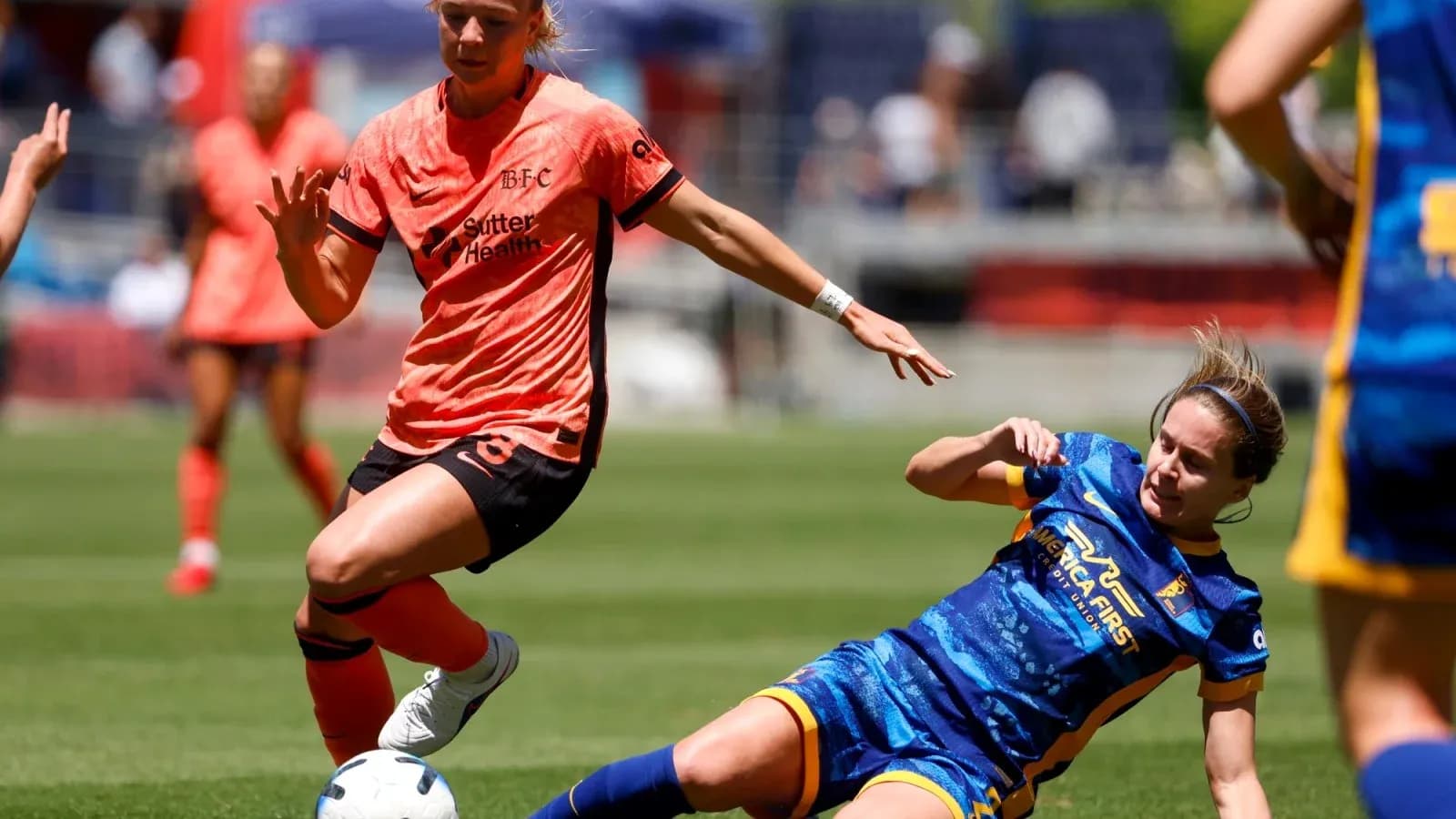
Under the San Jose lights at PayPal Park, Bay FC and Utah Royals W played out a goalless draw that felt anything but empty. In a NWSL Women group-stage meeting refereed by Cristian Campo, the 0-0 final score was the surface layer of a deeper tactical duel: a clash between a home side still defining its identity and an away team arriving with the swagger of a contender.
Heading into this game, the league table framed the narrative. Bay FC sat 10th with 10 points from 7 matches, their overall goal difference at -3 after scoring 7 and conceding 10. Utah Royals W, by contrast, travelled as one of the form teams in the competition: 4th place, 17 points from 9 games, and a robust overall goal difference of +6, built on 12 goals for and only 6 against. It was, on paper, the meeting of a fragile defence and a disciplined, playoff-chasing unit.
Both coaches leaned into familiarity. Emma Coates kept Bay FC in their now-standard 4-2-3-1, a shape they had used in all 7 league outings so far. Jimmy Coenraets mirrored that with Utah’s own 4-2-3-1, a structure that has underpinned 8 of their 9 league appearances. The symmetry of the formations made this less about systems and more about individual matchups and execution.
Bay FC Structure
For Bay FC, the spine was clear. In goal, J. Silkowitz anchored a back four of S. Collins, A. Cometti, J. Anderson and A. Denton. Ahead of them, the double pivot of H. Bebar and C. Hutton was tasked with both shielding and sparking transitions. Hutton, in particular, arrived with a reputation: 7 appearances, 504 minutes, 262 passes at 75% accuracy, and a combative profile of 18 tackles, 2 blocked shots and 14 interceptions. Her 3 yellow cards this season underline a willingness to play on the edge, and Bay’s disciplinary data backs that up: yellow cards spike late, with 23.53% coming between 76-90 minutes and another 23.53% between 91-105. This is a team that often finishes games in the red zone of risk.
Ahead of them, the creative band of three – T. Huff, D. Bailey and the explosive R. Kundananji – floated behind central forward K. Lema. Huff’s season has been high-impact and high-stakes: 1 goal, 1 assist, 6 shots on target from 6 appearances, but also a yellow plus a yellow-red, reflecting her dual role as a runner and disruptor. Kundananji, deployed as an attacking midfielder here, offered verticality and threat between the lines, the player most capable of stretching Utah’s disciplined block.
Utah Royals W Structure
Utah Royals W answered with their own carefully assembled structure. M. McGlynn started in goal behind a back four of J. Thomsen, K. Del Fava, K. Riehl and N. Rabano. In front, the double pivot featured Ana Tejada Jiménez, one of the league’s most combative defenders-turned-holding-players this season. Tejada came into the fixture with 9 appearances, 16 tackles, 1 blocked shot, 10 interceptions and 3 yellow cards – the league’s leading yellow-card collector. She is Utah’s enforcer, the player who steps into passing lanes and breaks rhythm, but also a disciplinary risk.
The attacking line of three – C. Delzer, Minami Tanaka and C. Lacasse – behind forward K. Palacios gave Utah a potent mix of creativity, pressing and direct running. Statistically, Lacasse is the headline act: 3 goals and 2 assists in 9 appearances, 8 shots with 6 on target, 20 key passes and 71 duels contested, winning 33. She is simultaneously Utah’s top scorer, one of their leading creators, and a front-line presser. Tanaka complements her perfectly: 1 goal, 3 assists, 9 shots (7 on target), 176 passes at 70% accuracy and 19 fouls drawn. She is the connector, constantly finding pockets and inviting contact.
Tactical Duel
The “Hunter vs Shield” battle, then, was Lacasse and Tanaka against a Bay FC defence that, heading into this game, had conceded 10 goals overall at an average of 1.5 per match at home and 1.4 overall. Utah’s attack, by contrast, had produced 12 goals in total, with a steady scoring average of 1.3 at home, 1.3 away and 1.3 overall. Add in Utah’s defensive record – just 6 goals conceded in 9 games, averaging 0.7 at home, 0.7 away and 0.7 overall – and the away side arrived with the numbers of a side that expects to control both penalty areas.
Yet Bay FC’s season profile hinted at volatility rather than inevitability. On their travels they had been bolder, but at home they had managed only 3 goals from 4 games, averaging 0.8 per match, while conceding 6 at an average of 1.5. They had already kept 2 clean sheets overall and failed to score 3 times, a team oscillating between resolute and blunt. This match ultimately settled into the former category.
In the engine room, the duel between Bay’s Hutton and Utah’s Tejada shaped the tempo. Hutton’s 80 duels contested this season, with 43 won, show a midfielder who relishes contact and second balls. Tejada’s 66 duels and 33 wins, alongside 14 fouls committed and 10 drawn, mark her as a constant friction point. Every Utah progression had to navigate Hutton’s front-foot aggression; every Bay transition had to escape Tejada’s tackle radius.
Discipline
Discipline was always going to be a subplot. Utah’s yellow cards cluster in the middle and late phases of games: 22.22% between 46-60 minutes and 27.78% between 61-75, with another 16.67% in the 76-90 window. Bay, by contrast, have that late-game surge of cautions and even a red card in the 91-105 range, where 100.00% of their reds have come. In a tight contest, those patterns matter: the longer the match stayed level, the more likely it became that a late card – from Hutton, Tejada or another high-contact player – could tilt the balance.
From a statistical prognosis perspective, Utah entered with the stronger xG profile implied by their scoring and defensive trends: a team that averages 1.3 goals for while conceding only 0.7 per game tends to control shot quality and volume. Bay’s 1.0 goals for and 1.4 against overall suggest they often play from behind the numbers. That this fixture finished 0-0 speaks to Bay’s tactical discipline on the night: the back four stayed compact, Silkowitz commanded her box, and the double pivot closed central lanes well enough to keep Lacasse’s influence in check.
For Utah, the draw will feel like two points dropped, but the performance fits their broader identity: compact, structured, rarely conceding big chances. For Bay FC, it is a clean sheet at home against one of the league’s form sides, a result that hints at a defensive platform they can build on. The story of this match was less about the goal that never came and more about two midfields and two back lines refusing to blink – a tactical stalemate that, in its own way, revealed why Utah sit near the top and why Bay, even from 10th, may yet grow into a far more stubborn proposition.