Bay FC's Tactical Masterclass Shocks San Diego Wave
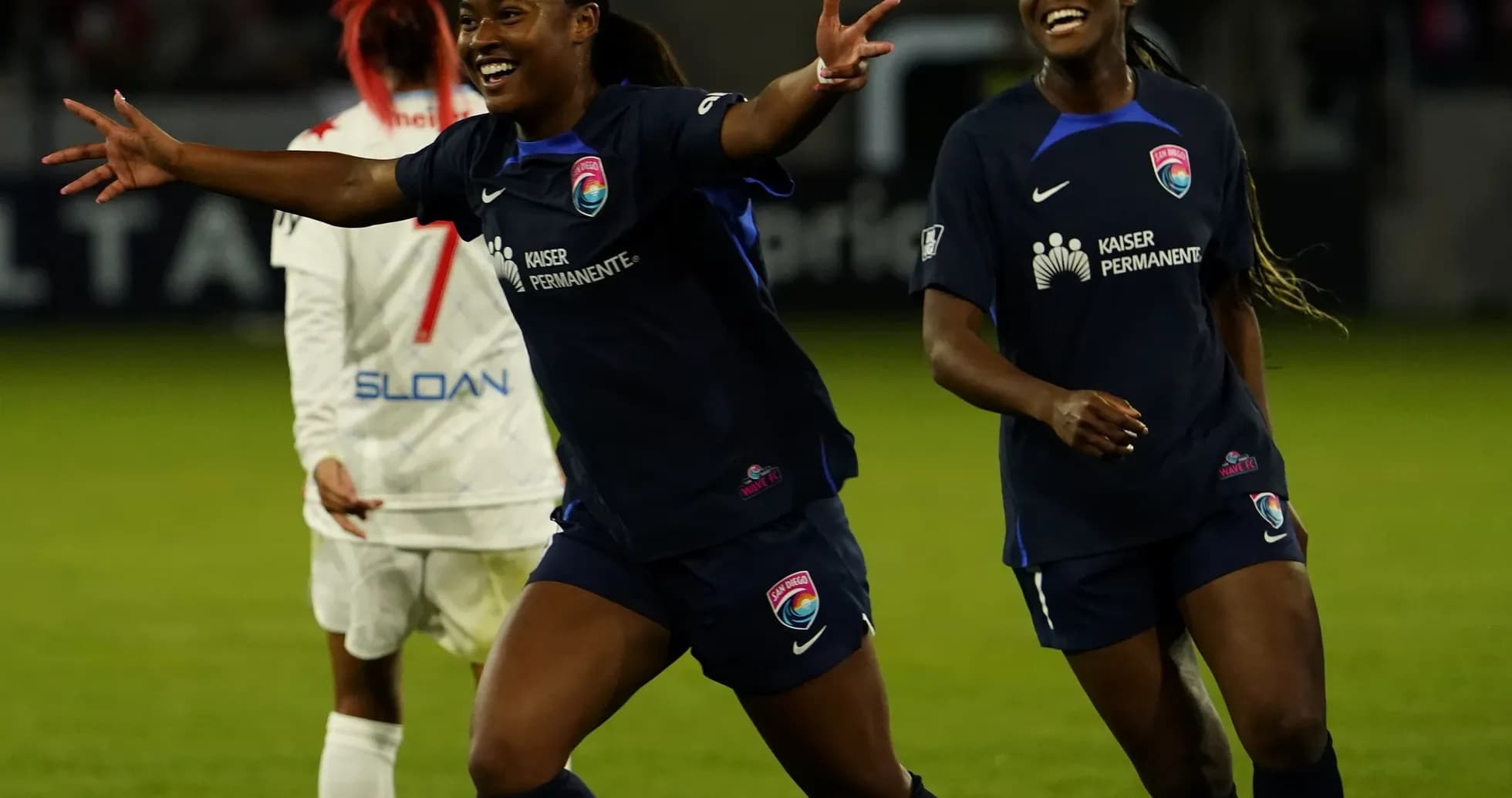
Snapdragon Stadium under the San Diego lights felt built for a statement, but by the time Ekaterina Koroleva blew for full time, it was Bay FC who had quietly rewritten the script. A 1–0 away win, carved out in the group stage of the NWSL Women season, lands like a tactical manifesto: compact, disciplined, and ruthlessly pragmatic against a San Diego Wave W side that had arrived with the numbers – and the ambition – of a contender.
Heading into this game, San Diego sat 3rd in the table with 15 points from 8 matches, their overall goal difference of 3 built on 11 goals for and 8 against. At home they had been solid if not spectacular: 2 wins and 2 defeats, 5 goals scored and just 3 conceded, averaging 1.3 goals for and 0.8 against at Snapdragon. Bay FC, by contrast, came in as an unpredictable mid-table threat. Tenth in the standings with 9 points from 6 games, their overall goal difference of -3 (7 scored, 10 conceded) told of a side oscillating between incisive and exposed. Yet away from home they had already claimed 2 wins from 3, scoring 4 and conceding 4, with an away average of 1.3 goals for and 1.3 against – a team comfortable living on the edge.
I. The Big Picture: Structures and Identities
The lineups crystallised the clash of ideas. Jonas Eidevall set San Diego in a 4-3-3, leaning into verticality and wide aggression. D. Haracic anchored the side in goal behind a back four of A. D. Van Zanten, K. Wesley, K. McNabb and the ultra-competitive P. Morroni. In midfield, the balance of craft and control came from L. E. Godfrey, K. Dali and L. Fazer, while the front three of Gabi Portilho, Ludmila and Dudinha promised direct running and one-v-one chaos.
Emma Coates countered with Bay FC’s now-familiar 4-2-3-1, the structure that has underpinned all 6 of their league fixtures this season. J. Silkowitz started in goal, protected by a back line of S. Collins, A. Cometti, J. Anderson and A. Denton. The double pivot of H. Bebar and C. Hutton sat as the stabilising axis, with T. Huff and D. Bailey flanking the influential R. Kundananji in the band of three behind forward K. Lema.
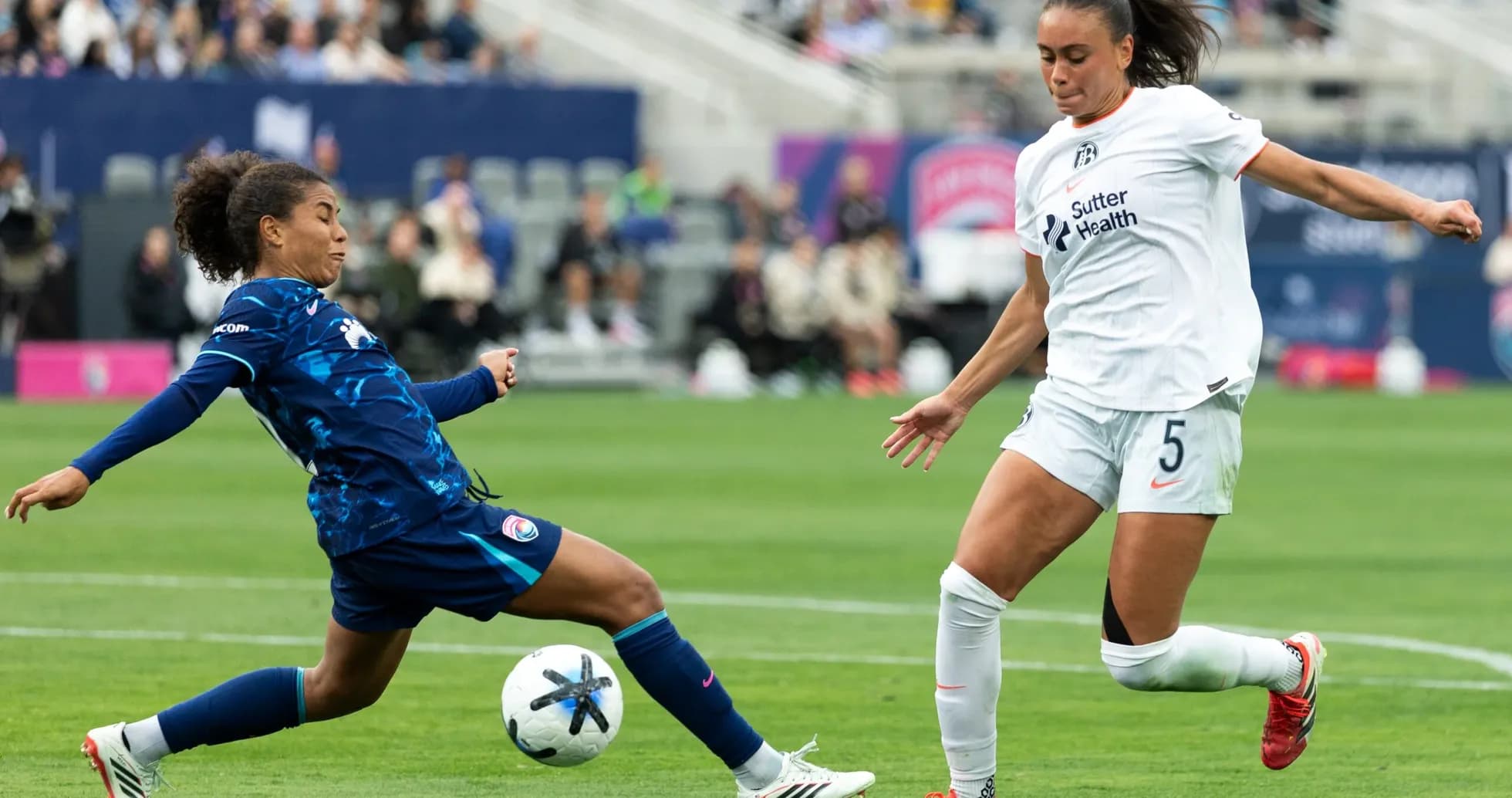
The first half unfolded exactly as the shapes suggested. San Diego tried to push their full-backs high, especially Morroni, to pin Bay back and create isolation for Dudinha and Ludmila. But Bay’s 4-2-3-1 compressed the central channels, forcing the Wave into wide areas where crosses were more hopeful than surgical. Bay, meanwhile, were patient, waiting for the moments when Kundananji could slip between the lines and connect with Lema on the break. The away side’s first-half goal – the only one of the night – was the product of that patience: a transition, a vertical lane exploited, and San Diego’s high line punished.
II. Tactical Voids and Discipline
With no official injury or suspension list provided, both coaches had their core available. The tactical voids, then, were less about absentees and more about what each side could not quite impose.
For San Diego, the main absence was fluency between lines. Despite their overall average of 1.4 goals per match this campaign, they failed to score here – the third time in total this season they have drawn a blank, and the second time at home. When the full-backs advanced, the pivots behind them were slow to cover, which made the team hesitant to commit numbers forward. That hesitation turned promising possession into sterile dominance.
Bay’s void was different: a lack of sustained attacking pressure. Overall they concede 1.7 goals per match, and even away they allow 1.3 on average. Yet here, they bet everything on defensive concentration and game management. Their disciplinary profile underlines the risk: they are one of the more combustible sides in the league, with yellow cards spread across the timeline and a notable late-game spike – 21.43% of their yellows arriving between 76–90 minutes, and 28.57% between 91–105, plus a red in that same late window this season. That volatility never quite boiled over in San Diego, but it shaped their approach: foul when necessary, compress space, live with the bookings if it protects the lead.
San Diego’s own card pattern is more controlled but revealing. Forty percent of their yellows this season arrive between 46–60 minutes, with further clusters later on. It hints at a team that ramps up aggression after the break, often chasing games. In this match, that second-half edge came, but without the precision to unlock Bay’s block.
III. Key Matchups: Hunter vs Shield, Engine vs Enforcer
The “Hunter vs Shield” narrative revolved around San Diego’s scoring core against Bay’s fragile defensive record. L. E. Godfrey, with 4 goals and 1 assist this season from midfield, is one of the league’s most efficient shooters: 6 total shots, 5 on target, plus 145 passes at 82% accuracy and 10 key passes. Her late surges into the box and ability to strike from range are usually the Wave’s hidden weapon. Yet Bay’s double pivot, particularly Hutton, muted that threat. Hutton’s season profile – 212 passes at 74% accuracy, 13 tackles, 13 interceptions, and 2 yellow cards – describes a classic enforcer, and in this match she screened the space Godfrey loves to attack.
Out wide, the duel between Dudinha and Bay’s right side was supposed to tilt the game. Dudinha arrives as both scorer and creator – 2 goals, 3 assists, 14 shots (7 on target), 12 key passes, and 27 dribbles attempted with 14 successful. She is the chaos engine of this San Diego attack. But S. Collins and the covering movements of Huff did just enough to turn her into a volume dribbler without end product. Every time she shaped to drive inside, Bay’s compact 4-2-3-1 folded around her, forcing her into traffic.
On the other flank, P. Morroni’s story was about balance and risk. With 353 passes at 84% accuracy, 22 tackles, 2 blocked shots and 3 yellow cards this season, she embodies San Diego’s front-foot defending. Her overlapping runs aimed to stretch Bay’s block, but each surge forward left transition channels that Kundananji and Lema could sniff out. The one time Bay truly punished that space, the game’s only goal was born.
For Bay, the “Engine Room” was the triad of Hutton, Bebar and Huff. Huff, who already has 1 goal and 1 assist this season, is a risk-taker in every sense – 49 duels, 12 tackles, and a disciplinary line that includes both yellow and yellow-red. Her presence between lines gave Bay just enough ball progression to relieve pressure and connect their counters, even as the team largely bunkered in.
IV. Statistical Prognosis and Tactical Verdict
Across the season, the numbers had pointed toward San Diego as the more stable project: 5 wins from 8, no draws, a clear attacking identity, and just 8 goals conceded overall. Bay, with 3 wins and 3 losses from 6, a negative goal difference, and a defensive record of 10 goals conceded, seemed the more volatile proposition.
Yet this match turned those probabilities on their head. Even without explicit xG data, the patterns are clear. San Diego generated territory and likely a higher volume of low-to-medium quality shots, but Bay engineered the one high-value moment that counted and then defended it with a compact, risk-managed block. For a side that concedes 2.0 goals per game at home and 1.3 away, to leave Snapdragon with a clean sheet is more than an upset; it is a tactical breakthrough.
Following this result, the story of both teams subtly shifts. San Diego remain a top-three side with a strong underlying attacking profile, but their reliance on wide individualism from Dudinha and late surges from Godfrey leaves them vulnerable against disciplined low blocks. Bay, meanwhile, prove that their away record is no accident. Their 4-2-3-1, anchored by Hutton’s defensive intelligence and Huff’s two-way energy, can suffocate even one of the league’s more potent midfields.
In a knockout context – a hypothetical 1/8 final down the line – this template would matter. San Diego’s ceiling is higher, powered by Godfrey’s finishing and Dudinha’s creativity, but Bay’s defensive solidity, willingness to absorb pressure, and knack for surviving late, card-strewn phases make them a dangerous underdog. On this night in San Diego, the numbers and the narrative converged: the side with the sharper structure, not the louder attack, walked away with the only goal that mattered.