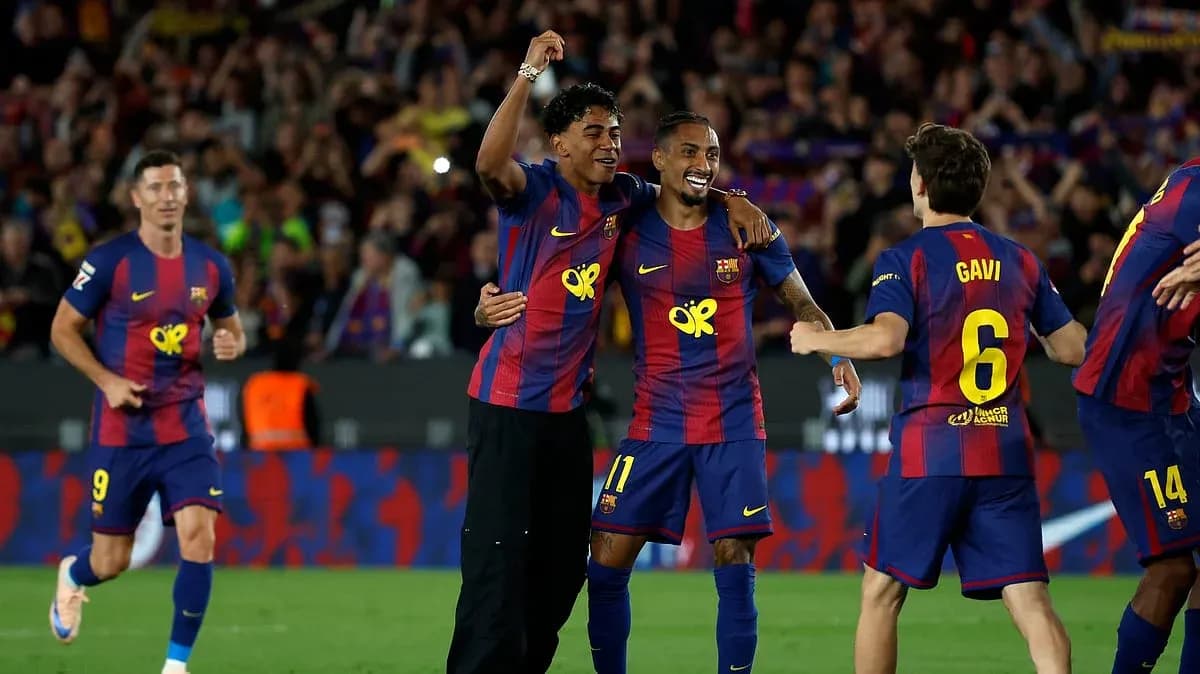
Barcelona Dominates Real Madrid in La Liga Clásico
Camp Nou under the May lights felt less like a league ground and more like a stage for a coronation. Following this result, Barcelona’s 2–0 win over Real Madrid in La Liga’s Regular Season – 35th round did more than settle a clásico; it underlined a season-long power shift. The league table tells the story with brutal clarity: Barcelona sit 1st on 91 points, Real Madrid 2nd on 77. The goal differences, 60 for Barcelona and 37 for Real Madrid, are the numerical signatures of two very different footballing identities.
Barcelona came into the night with a perfect home record: 18 wins from 18 at Camp Nou, 54 goals scored at home and only 9 conceded. That is an average of 3.0 goals scored and 0.5 conceded at home, a domestic fortress in every statistical sense. Real Madrid arrived as the only plausible challengers, but even their strong away profile – 10 wins, 4 draws, 4 defeats on their travels, with 31 goals scored and 19 conceded (1.7 for, 1.1 against away) – felt a tier below the champions-elect.
Hansi Flick’s 4-2-3-1 was less a formation and more a script. J. Garcia in goal sat behind a back four of J. Cancelo, G. Martin, P. Cubarsi and E. Garcia, a line built for circulation as much as resistance. Ahead of them, the double pivot of Pedri and Gavi was the brain and heartbeat: Pedri the metronome, Gavi the accelerator. In front, the line of three – Fermín, Dani Olmo and M. Rashford – moved like a rotating carousel behind F. Torres as the nominal striker.
Alvaro Arbeloa mirrored the shape on paper, but not in essence. Real Madrid’s 4-2-3-1 had T. Courtois behind F. Garcia, A. Rudiger, R. Asencio and T. Alexander-Arnold. E. Camavinga and A. Tchouameni anchored midfield, with B. Diaz, J. Bellingham and Vinicius Junior supporting G. Garcia up front. It was a line-up that leaned heavily on improvisation from J. Bellingham and Vinicius Junior, and on the idea that their individual chaos could overcome Barcelona’s collective order.
The tactical voids were starkest in the absentees list. For Barcelona, A. Christensen and Lamine Yamal were both missing through injury, stripping Flick of a key ball-playing centre-back and his most explosive one‑v‑one winger. Yet the squad depth softened the blow. Ferran Torres arrived in this game as one of La Liga’s most efficient finishers, with 16 goals in total this campaign and a willingness to work the last line. Behind him, Dani Olmo (7 goals, 8 assists in total) and Fermín (6 goals, 9 assists in total) ensured that creativity did not depend on a single prodigy.
Real Madrid’s absences cut deeper. D. Carvajal, D. Ceballos, Eder Militao, A. Guler, K. Mbappe, F. Mendy, Rodrygo and F. Valverde all missed this fixture. That list effectively removed a spine: an elite right-back, a first-choice centre-back, the league’s top scorer Kylian Mbappé (24 goals in total), a key creator in Arda Güler (9 assists in total), plus Rodrygo’s movement and Valverde’s two-way engine. Arbeloa was left to construct a clásico side without his primary goal threat, his best transitional runner and a major source of vertical passing from deep.
Disciplinary patterns framed the risk profiles. Heading into this game, Barcelona’s yellow-card distribution showed a spike between 46–60 minutes, where 27.59% of their yellows arrived, and a late surge between 76–90 minutes at 20.69%. Real Madrid’s yellows peaked between 61–75 minutes at 22.06%, with steady aggression across 31–45 and 76–90. The red-card story was more ominous for Madrid: they had reds spread across 31–45, 61–75, 76–90 and 91–105, each accounting for 14.29% or more of their dismissals, while Barcelona’s reds were concentrated entirely in the 91–105 window (100.00% of their reds). This hinted at a Madrid side more liable to lose control in the heat of the contest, and a Barcelona side whose rare meltdowns came in the emotional afterburn of regulation time.
On the pitch, the “Hunter vs Shield” duel crystallised around Ferran Torres and Real Madrid’s away defence. Torres’s 16 league goals in total fed into a Barcelona attack averaging 2.6 goals per game overall, 3.0 at home. Real Madrid’s defence, conceding 0.9 goals per game overall and 1.1 on their travels, had been resilient but not unbreakable. Without Militao and F. Mendy, the Shield was thinner than usual. A. Rudiger and R. Asencio had to hold an unusually high line against a side that had failed to score in 0 home games this season.
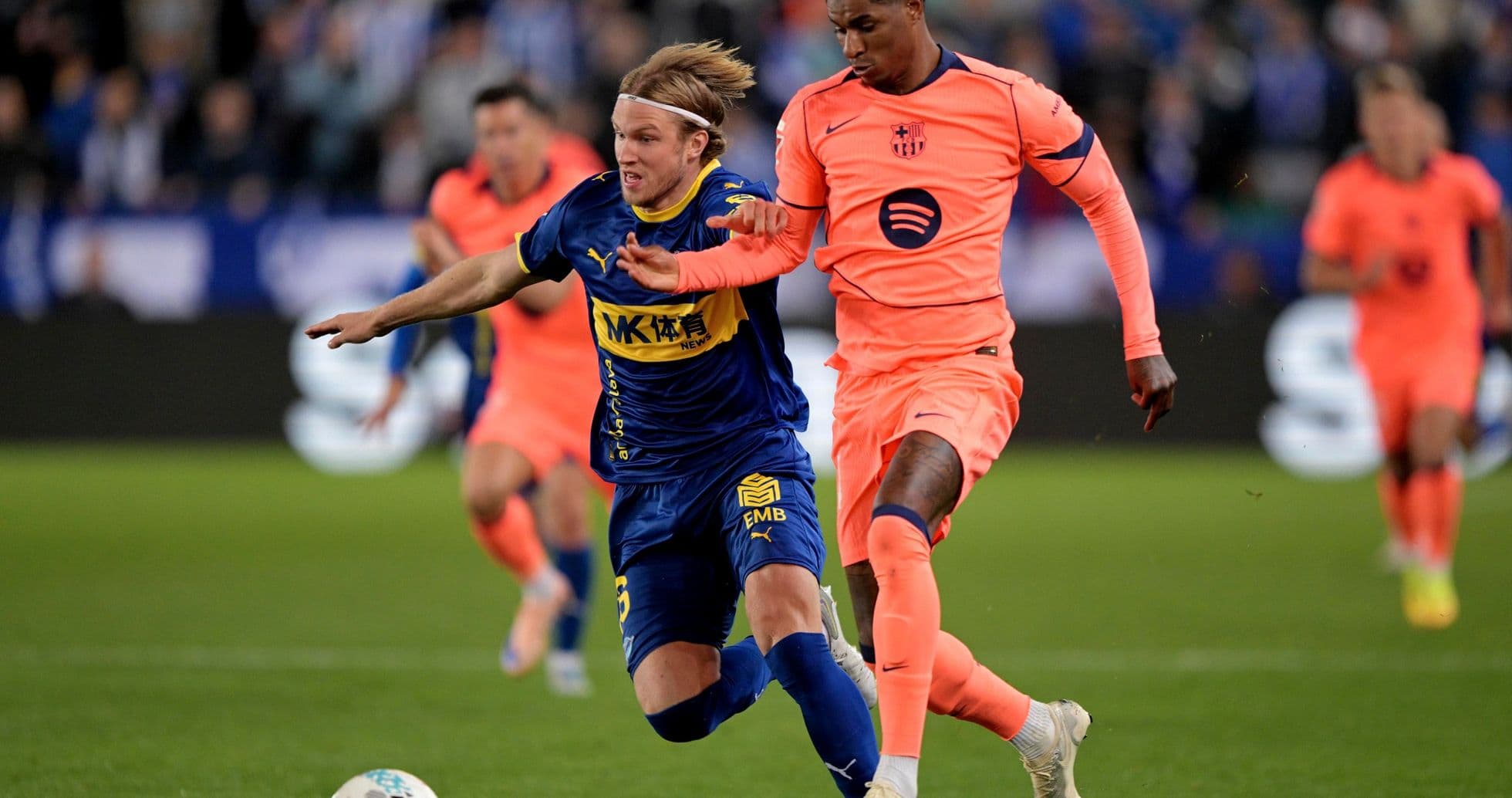
The “Engine Room” battle was even more nuanced. Pedri arrived with 8 assists in total and a passing accuracy of 91%, a pure controller whose 59 key passes in the league underline his status as the conductor of Flick’s 4-2-3-1. Opposite him, A. Tchouameni and E. Camavinga were tasked with being both screen and springboard. Yet without F. Valverde’s 8 assists and 2656 minutes of high-intensity pressing, Madrid’s midfield lost a crucial layer of coverage. B. Diaz and J. Bellingham could drift into pockets, but the double pivot was constantly being stretched side-to-side by Barcelona’s rotations, particularly as M. Rashford drifted inside from the right and Dani Olmo dropped between the lines.
Barcelona’s season-long statistical profile suggested that once they went ahead at home, the game would bend to their tempo. With 15 clean sheets in total and only 9 goals conceded at Camp Nou, their defensive block – led by P. Cubarsi’s calm distribution and E. Garcia’s anticipation – was built to suffocate comebacks. Real Madrid, for all their 70 goals in total and 2.0 goals per game overall, were missing their most ruthless finisher in Mbappé and one of their primary late runners in Valverde. Vinicius Junior, with 15 goals and 5 assists in total, carried the burden almost alone, his 189 dribble attempts (86 successful) a testament to the volume of responsibility he shouldered.
In the end, the 2–0 scoreline felt like the logical outcome of the underlying numbers. Barcelona’s xG profile this season – implied by 91 goals from 35 matches and a relentless home average – pointed to a side that consistently creates high-quality chances and converts them. Real Madrid’s defensive solidity kept the score respectable, but the absence of their own top-end xG generators blunted any real threat of a comeback.
Following this result, the tactical verdict is clear: Barcelona are not just top of La Liga; they are structurally superior. Their 4-2-3-1, with Pedri and Gavi in the engine room and a rotating cast of creators like Dani Olmo, Fermín and M. Rashford behind Ferran Torres, has become the league’s reference model. Real Madrid, even with a deep squad, were exposed as overly dependent on a handful of absent stars. On a night where numbers and narrative aligned, Camp Nou hosted not just a clásico, but a confirmation of hierarchy.